
 Written by Zoltan Vardaistaff writerEdited by Bryan O'Sheastaff editor
Sam Bankman-Fried claims Biden DOJ silenced witnesses during FTX trial
Latest NewsPublishedFeb 11, 2026
Sam Bankman-Fried seeks a new FTX trial, alleging DOJ witness pressure and citing a declaration disputing the prosecution’s insolvency claims, according to a new filing.
Sam “SBF” Bankman-Fried claims to have “new evidence“ that the US Department of Justice (DOJ) under former President Joe Biden silenced key witnesses in his fraud case, as he pushes for a new trial.
“New evidence shows that Biden’s DOJ threatened multiple witnesses into silence or into changing their testimony. My conviction should be thrown out,“ said SBF in his latest X post from prison on Wednesday.
He linked to a court filing seeking a new trial under Federal Rule of Criminal Procedure 33. The motion, submitted Thursday, references a declaration from a former FTX employee and follows earlier reporting that SBF is attempting to challenge his fraud conviction through previously unavailable witness testimony.
The filing marks SBF’s latest effort to overturn the conviction that led to his 25-year prison sentence after the collapse of FTX and its 150 subsidiaries. SBF was convicted on seven counts tied to the misuse of customer funds at FTX and its sister trading company, Alameda Research. Prosecutors said customer funds were diverted to Alameda to cover trading losses, contributing to an $8.9 billion shortfall.
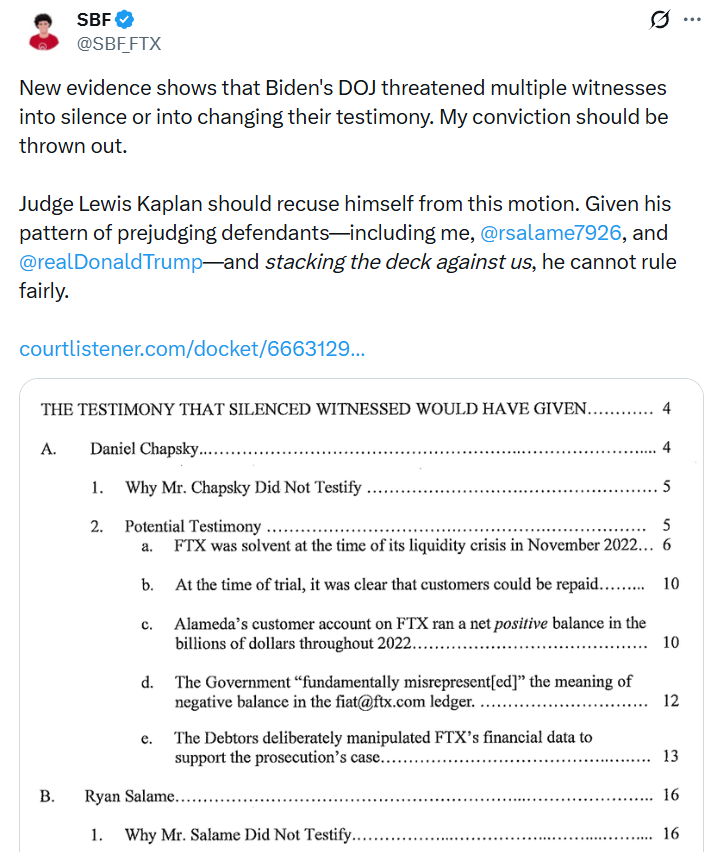
Source: Sam Bankman-Fried
Related: Trump rules out Sam Bankman-Fried pardon in NYT interview
SBF alleges witness intimidation
The new filing centers on a declaration from Daniel Chapsky, identified as a former head of data science at FTX. According to the motion, Chapsky outlined testimony he said he would have offered at trial had he felt safe doing so.
The filing shared a newly surfaced declaration made on July 13, 2023, where Chapsky said his attorneys “strongly advised“ him not to testify as he would be exposed to “media attacks and face potential retaliatory action by the prosecution.“
“Other former FTX employees I spoke with told me that they had received similar warnings,“ said Chapsky in the attached declaration.
“Out of concern for my well-being and those around me, I directed my counsel to tell Sam Bankman-Frid’s team I was not willing to testify.“
Chapsky also claimed that his testimony would have “refuted the errors in the prosecution’s representation about FTX’s financial condition and provided the jury with more accurate information.“
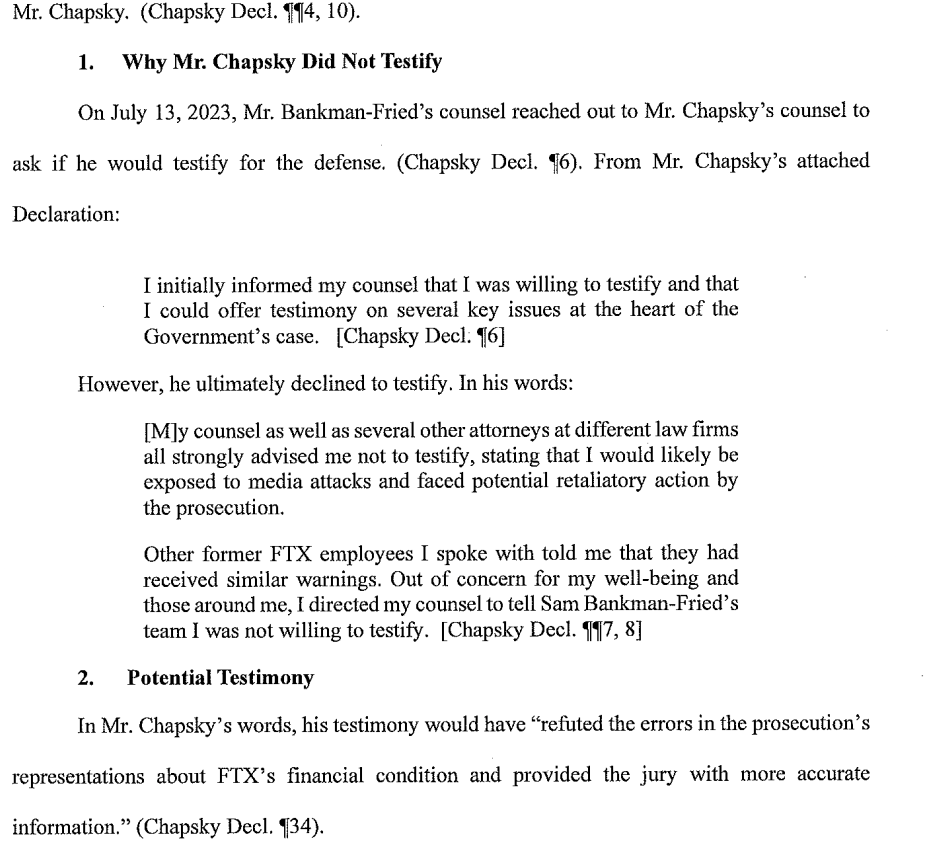
Bankman-Fried court filing on testimony allegedly withheld by Chapsky. Source: Courtlistener
Related: Fenwick agrees to settle lawsuit alleging role in FTX collapse
New declaration challenges insolvency
The filing argues that Chapsky’s testimony would have countered the prosecution’s depiction of FTX’s financial condition, including claims that the exchange was insolvent before its November 2022 bankruptcy filing.
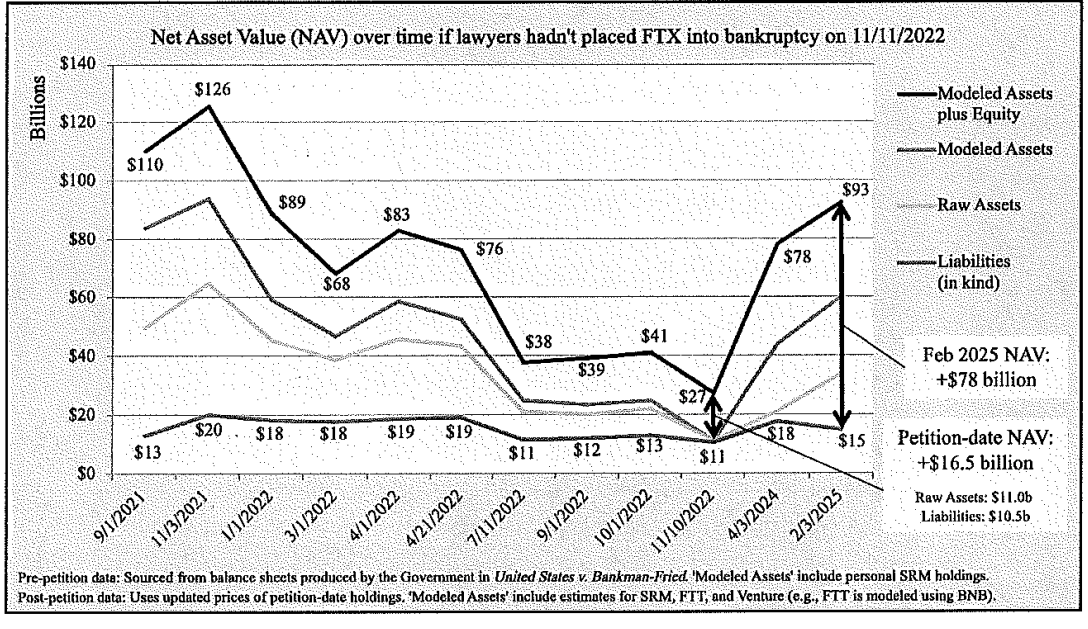
Net Asset Value over time if lawyers hadn't placed FTX into bankruptcy. Source: Courtlistener
The filing states that Chapsky “attests“ to FTX and Alameda being solvent and that its assets always exceeded its liabilities, even in November 2022, “contrary to what the prosecution told the jury.“
This is not the first time that Bankman-Fried claimed FTX was solvent. In an interview in October 2025, he alleged that he received a call about an external investment that would have saved the company, shortly after transferring control of the company to bankruptcy specialist John J. Ray III on Nov. 11, 2022, which he called his “biggest mistake.“
Magazine: How crypto laws changed in 2025 — and how they’ll change in 2026


Subscribe to daily byte-sized crypto news from Cointelegraph
Cointelegraph is committed to independent, transparent journalism. This news article is produced in accordance with Cointelegraph’s Editorial Policy and aims to provide accurate and timely information. Readers are encouraged to verify information independently.
More on the subject