


 Written by Stephen Katteformer writerEdited by Felix Ngstaff editor
BoE open to scrapping stablecoin limit idea after backlash
Latest NewsPublishedMar 12, 2026
Industry groups have criticized the UK’s proposed stablecoin holding limits, arguing they would signal that the UK is hostile to crypto and stifle innovation.

Update March 18, 12:53 AM UTC: This article has been updated to include comments from Tim Fosh, financial regulatory partner at Eversheds Sutherland.
Bank of England Deputy Governor Sarah Breeden told UK lawmakers that the central bank is open to alternative ways to manage stablecoin risks other than imposing holding limits.
Speaking before the House of Lords Financial Services Regulation Committee on Wednesday, Breeden said the proposed holding limits are designed to prevent a mass migration of deposits from banks into stablecoins, arguing it could curtail lending and reduce credit availability for businesses and households.
“We are genuinely open to other ways of achieving the objective. I think you've heard from other people as part of your inquiry that this risk to the provision of credit is real.”
“We proposed holding limits as a way of managing that risk. We are open to feedback on other ways of achieving it. But I think you would expect us as the financial stability authority to ensure that there isn't a precipitous drop in credit to the businesses and households in the UK,” Breeden added.
Industry groups have criticized the proposed limits, floated at between 10,000 and 20,000 British pounds ($13,368 to $26,733), arguing it would signal that the UK is hostile to crypto and drive businesses offshore, while stifling innovation and undermining economic growth.
Ban on unhosted wallets holding “systemic” stablecoins
Last November, the Bank of England released a consultation paper outlining its proposed regulatory framework for sterling-denominated systemic stablecoins, inviting public feedback through Feb. 10.
The central bank flagged that it would continue monitoring the risks associated with unhosted wallets, such as reduced oversight of transactions.
Tim Fosh, the financial regulatory partner at UK law firm Eversheds Sutherland, told Cointelegraph that one of the BoE’s main concerns was their “ability to assist pseudonymity,” and the bank made several suggestions for regulatory options, such as requiring issuers to hold backing assets with the central bank.
However, Breeden has now ruled out self-custody wallets holding stablecoins, telling lawmakers that users holding stablecoins in self-custody wallets outside regulated entities such as exchanges won’t be covered by the UK’s regulatory regime.
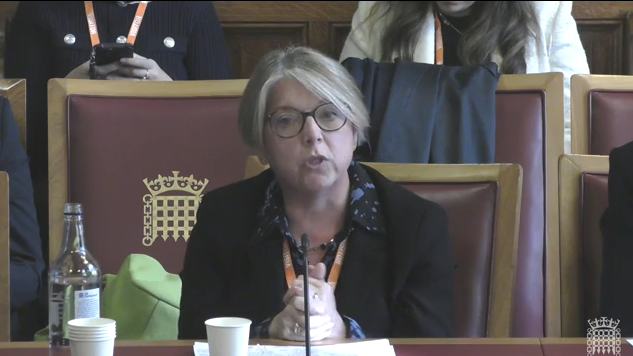
Bank of England Deputy Governor Sarah Breeden spoke to the House of Lords Financial Services Regulation Committee on Wednesday. Source: UK Parliament
“There is this concept of an unhosted wallet, you haven't got a wallet provider who is a regulated entity who is ensuring that AML [anti-money laundering] KYC [know your customer] criteria are complied with. Unhosted wallets will not be permissible in the UK; they are permissible in the US regime,” Breeden said.
There are no systemic stablecoins yet
Fosh said Breeden’s comments mean it won’t be possible to hold sterling-denominated systemic stablecoins in self-custody wallets, but it will be limited to sterling-denominated stablecoins designated specifically as systemically important by the BoE, and “there are no such stablecoins at present.”
“Preventing unhosted wallets from holding systemic sterling stablecoins means these assets will function more like digital forms of traditional money, which has to be held in accounts which can be subjected to AML checks,” he added.
“This appears to be part of the BoE’s intended approach, positioning this type of stablecoin as future payment‑system infrastructure. It’s worth bearing in mind that stablecoins of the type which appear relevant here is a very specific type of digital asset.”
Sterling stablecoin applications will open before end of 2026
The Financial Conduct Authority, which regulates the UK financial services industry, has established a regulatory sandbox that will allow several firms to test stablecoin products and services in Q1 2026.
Related: Stablecoin inflows rebound to $1.7B as Washington battles over yield rules
Even though the Bank of England is still consulting and finalizing rules for sterling stablecoins, companies can start applying to launch their coins before the end of 2026.
“I hear some say that the UK is behind. I simply don't recognize that. We'll be welcoming applications from stablecoin issuers by the end of this year,” Breeden said.
“On the substance of our regime, the guiding principle is that a stable coin used as money in the economy should be as robust as the money we use today issued by banks.”
Magazine: How crypto laws changed in 2025 — and how they’ll change in 2026


Subscribe to daily byte-sized crypto news from Cointelegraph
Cointelegraph is committed to independent, transparent journalism. This news article is produced in accordance with Cointelegraph’s Editorial Policy and aims to provide accurate and timely information. Readers are encouraged to verify information independently.