


 Written by Biraajmaan Tamulystaff writerEdited by Ray Salmondformer editor
Bitcoin averages 100% return after down years: Will the pattern repeat in 2026?
MarketsPublishedJan 7, 2026
History shows Bitcoin’s rare down years have been followed by triple-digit rebounds, keeping 2026 firmly on traders’ watchlists.

Bitcoin (BTC) ended 2025 slightly in the red with a -6.36% return after a strong start earlier in the year. While the annual loss appears modest, historical patterns suggest that down years have often preceded some of Bitcoin’s strongest rallies.
Key takeaways:
- Bitcoin has historically averaged close to 100% gains in the year following a down year.
- Long-term models project a substantial target near $300,000 if liquidity conditions turn supportive.
Bitcoin history hints at upside after rare red years
According to Jesse Myers, Bitcoin strategy head at Smarter Web Company, Bitcoin has shown a consistent tendency to recover sharply after negative annual closes. Data from the past decade highlighted four down years: 2014, 2018, 2022 and, most recently, 2025.
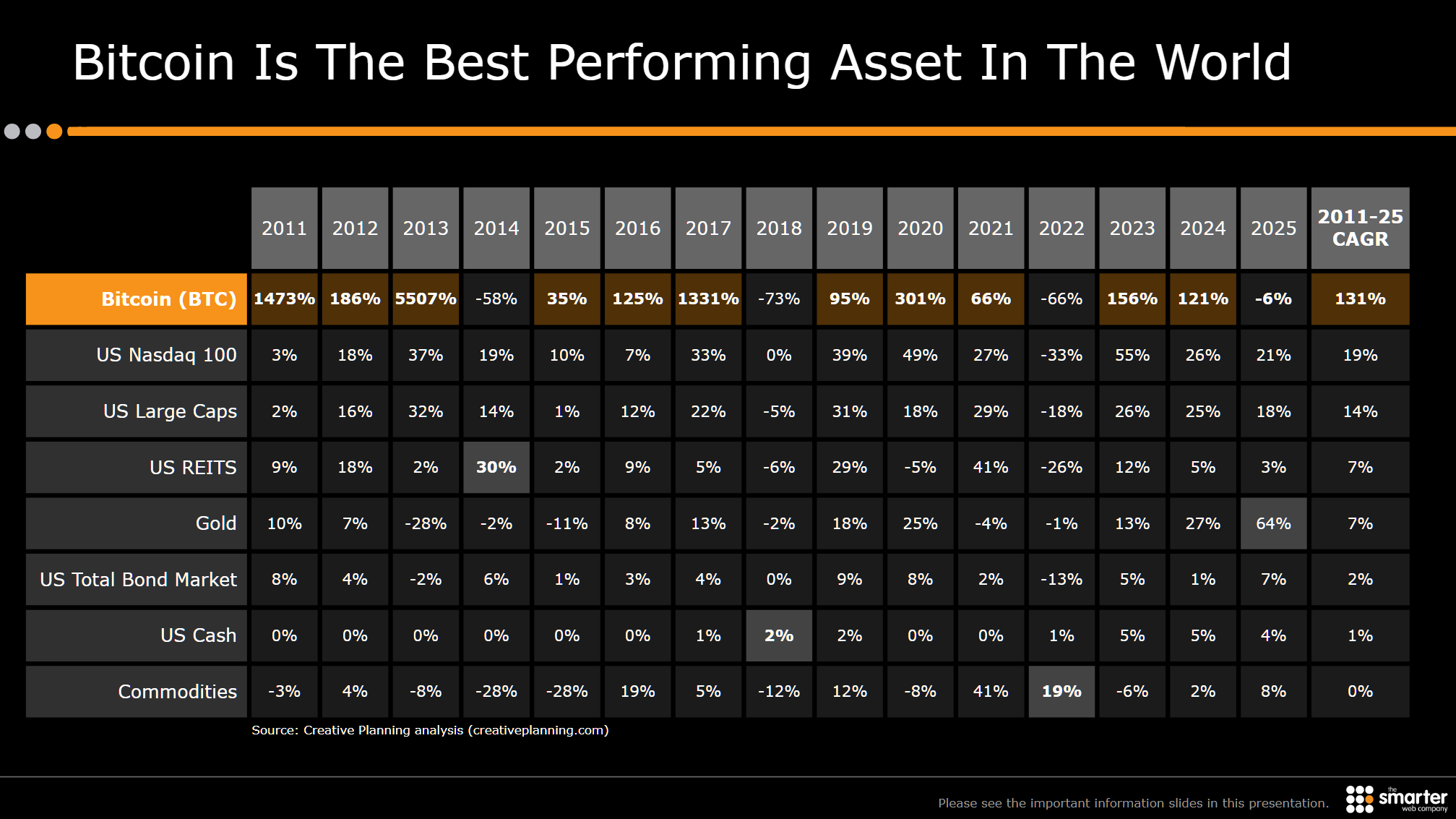
Bitcoin’s performance after a down year. Source: Jesse Myers/ X
The years immediately following those drawdowns delivered gains of 35%, 95% and 156% respectively. Averaged together, these recoveries approach 95%, rounded to a 100% historical benchmark. While past performance does not guarantee future results, the repetition of this pattern continues to shape expectations for 2026.
Adding to the longer-term bullish case, Bitcoin researcher Sminston With noted that Bitcoin’s base-case valuation for 2026 sits between $200,000 and $300,000. With’s Bitcoin Decay Channel model uses quantile regression on historical price data to account for diminishing volatility across cycles.
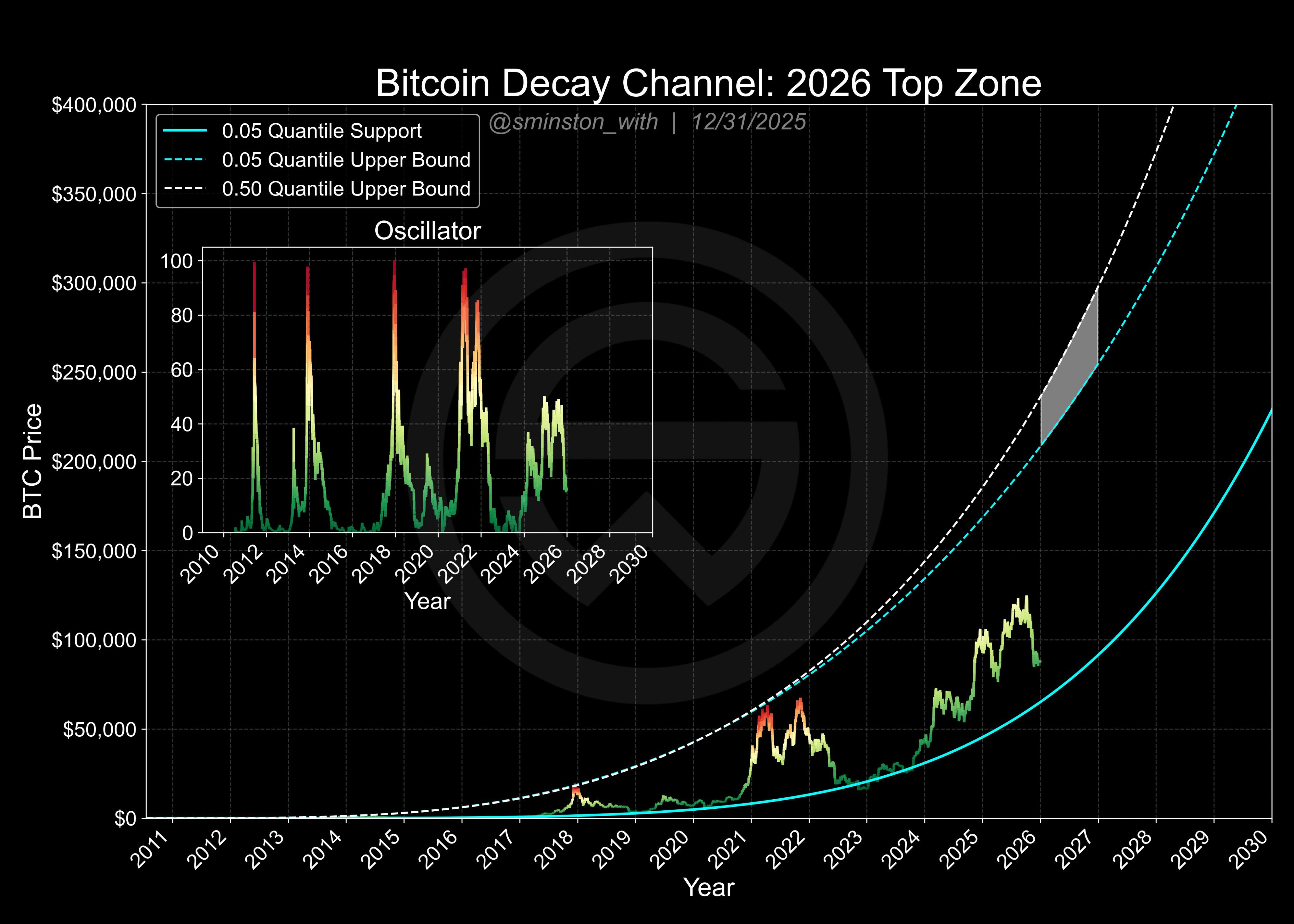
Bitcoin Decay Channel. Source: Sminston With/X
With explained that the model’s oscillator remains near 20%, a level historically associated with early expansion phases. The projected 2026 target zone contrasts with Bitcoin’s stagnation near $88,000 at the end of 2025, which With attributed to delayed liquidity cycles rather than a definitive cycle peak.
Related: 2025 crypto bear market was ‘repricing’ year for institutional capital: Analyst
Momentum data signals a cautious market
Short-term indicators suggest patience may still be required. Data from CryptoQuant indicated that the 30-day average return of Bitcoin on Binance is at 0.0016, reflecting subdued momentum compared to earlier phases. At the same time, volatility remains elevated near 0.018, highlighting continued sensitivity to short-term price movements.
The Sharpe-like ratio, hovering around 0.09, remains positive but close to neutral. This ratio measures risk-adjusted returns, with higher readings reflecting stronger reward relative to volatility and near-zero levels signaling weaker efficiency.
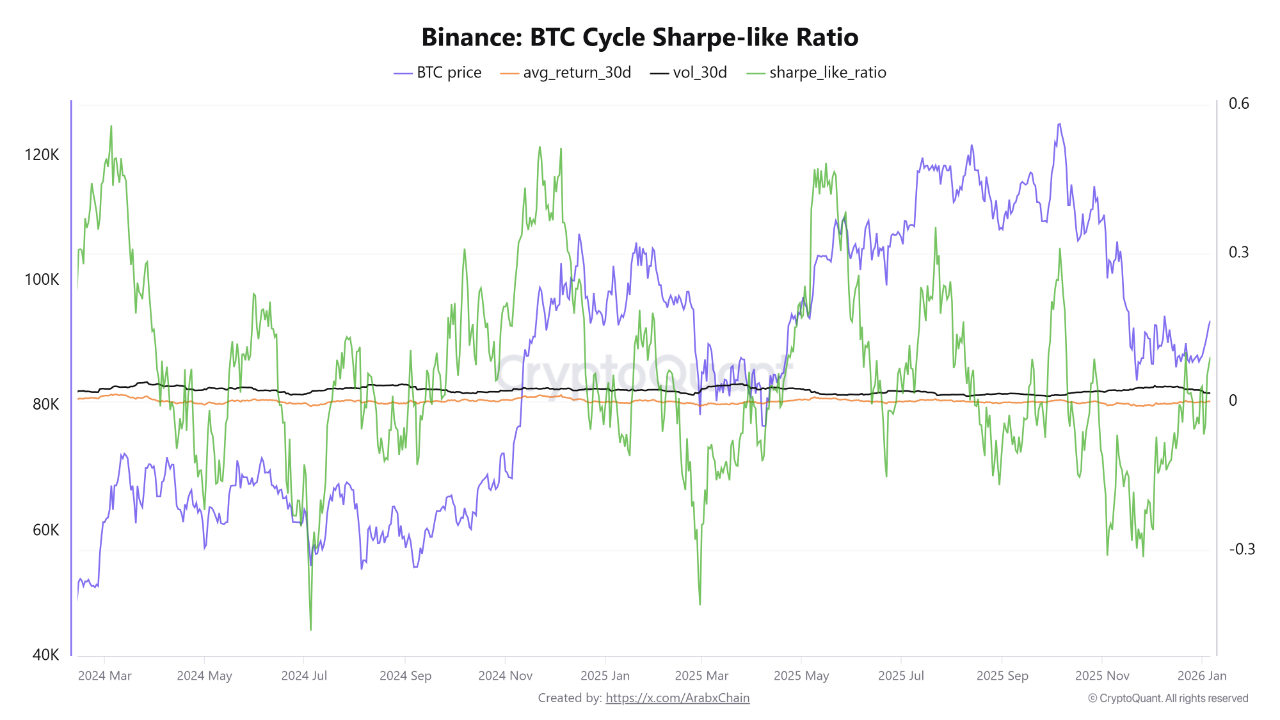
BTC Cycle Sharpe Ratio on Binance. Source: CryptoQuant
Historically, such readings align with transitional market phases, where risk-adjusted returns deteriorate even as broader trends remain intact. From a cyclical standpoint, Bitcoin remains in a pivotal spot, where price needs to lead further investment flows or risk a deeper consolidation.
Related: Why XRP is outperforming Bitcoin and Ether at the start of 2026
This article does not contain investment advice or recommendations. Every investment and trading move involves risk, and readers should conduct their own research when making a decision. While we strive to provide accurate and timely information, Cointelegraph does not guarantee the accuracy, completeness, or reliability of any information in this article. This article may contain forward-looking statements that are subject to risks and uncertainties. Cointelegraph will not be liable for any loss or damage arising from your reliance on this information.


Subscribe to daily byte-sized crypto news from Cointelegraph
This article is produced in accordance with Cointelegraph's Editorial Policy and is intended for informational purposes only. It does not constitute investment advice or recommendations. All investments and trades carry risk; readers are encouraged to conduct independent research.
More on the subject