


 Written by Nancy Lubaleformer writerEdited by Fernando Quirósformer editor
Bitcoin price in 2026: Predictions vs. charts and reality
MarketsPublishedDec 31, 2025
Bitcoin faces clashing forecasts for 2026: tempered institutional targets around $150,000 versus bearish charts warning of major declines.

Looking to 2026, Bitcoin (BTC) forecasts clash with historical chart patterns and evolving market realities, as traditional finance plays a bigger role in the cryptocurrency space.
Key takeaways:
- Standard Chartered and Bernstein forecast Bitcoin to hit $150,000 in 2026, revising down earlier higher targets due to slower ETF inflows.
- Grayscale predicts a new BTC all-time high in H1/2026, driven by institutional adoption ending the traditional four-year cycle.
- Technical point to a potentially deep drawdown to $40,000-$70,000 if historical patterns repeat.
Expert outlooks for Bitcoin price going into 2026
The post-2024 halving cycle brought significant gains earlier in the year; however, late-2025 consolidation and volatility have led to a pullback amid macroeconomic uncertainty and fluctuations in ETF flows.
The 47% drawdown from $126,000 all-time highs in October saw Bitcoin price drop to $80,500 in November.
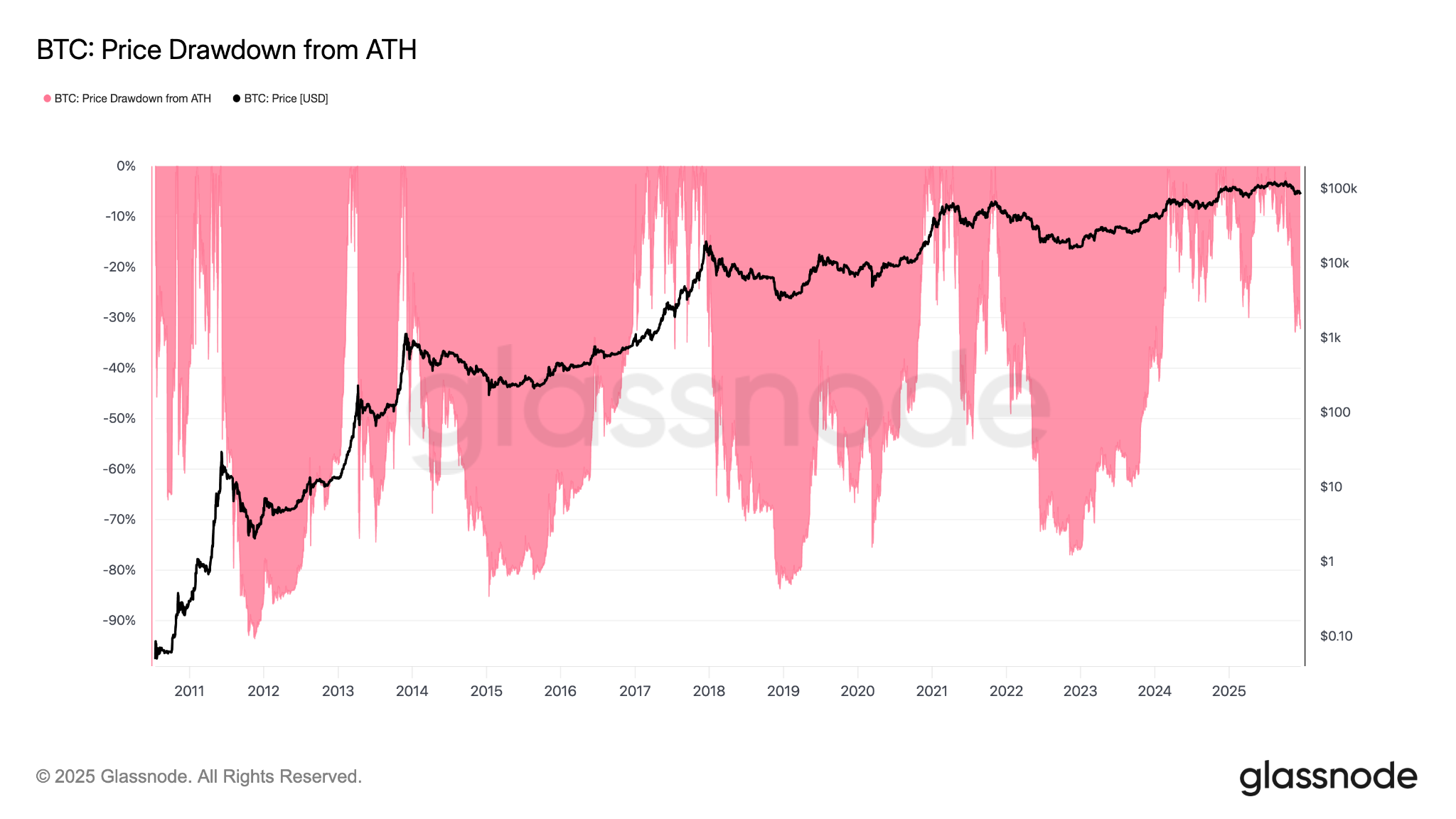
Bitcoin price drawdown from all-time high. Source: Glassnode
Analysts are largely bullish for 2026, though their predictions are tempered compared to earlier euphoria.
Standard Chartered has cut its 2026 Bitcoin target from $300,000 to $150,000 after spending 2024 and early 2025 calling for moonshots, citing slower institutional buying through ETFs.
Related: Coinbase ‘cautiously optimistic’ on 2026 as crypto nears institutional inflection point
Bernstein analysts also expect Bitcoin to reach $150,000 by the end of 2026, with an anticipated price of $200,000 by the end of 2027.
Although the recent downturn prompted them to retract their earlier forecast of a $200,000 peak this year, they maintain the view that Bitcoin has moved beyond its historical four-year cyclical pattern, suggesting a more durable growth trajectory.
Strategy executive chairman Michael Saylor predicts $150,000 for Bitcoin going into 2026, arguing that the cryptocurrency has been “getting a lot less” volatile despite the recent price correction, contradicting the outlook of many crypto analysts.
More optimistic views, such as from Fundstrat, see potential for $200,000–$250,000, while conservative estimates hover near $110,000–$135,000.
Polymarket predicts a 41% chance of BTC rising above $130,000 and a 25% chance of it reaching $150,000 before the end of 2026.
There’s a 79% chance of Bitcoin’s price reclaiming $100,000 and an 80% possibility of it falling to $75,000 in 2026, based on the current odds.
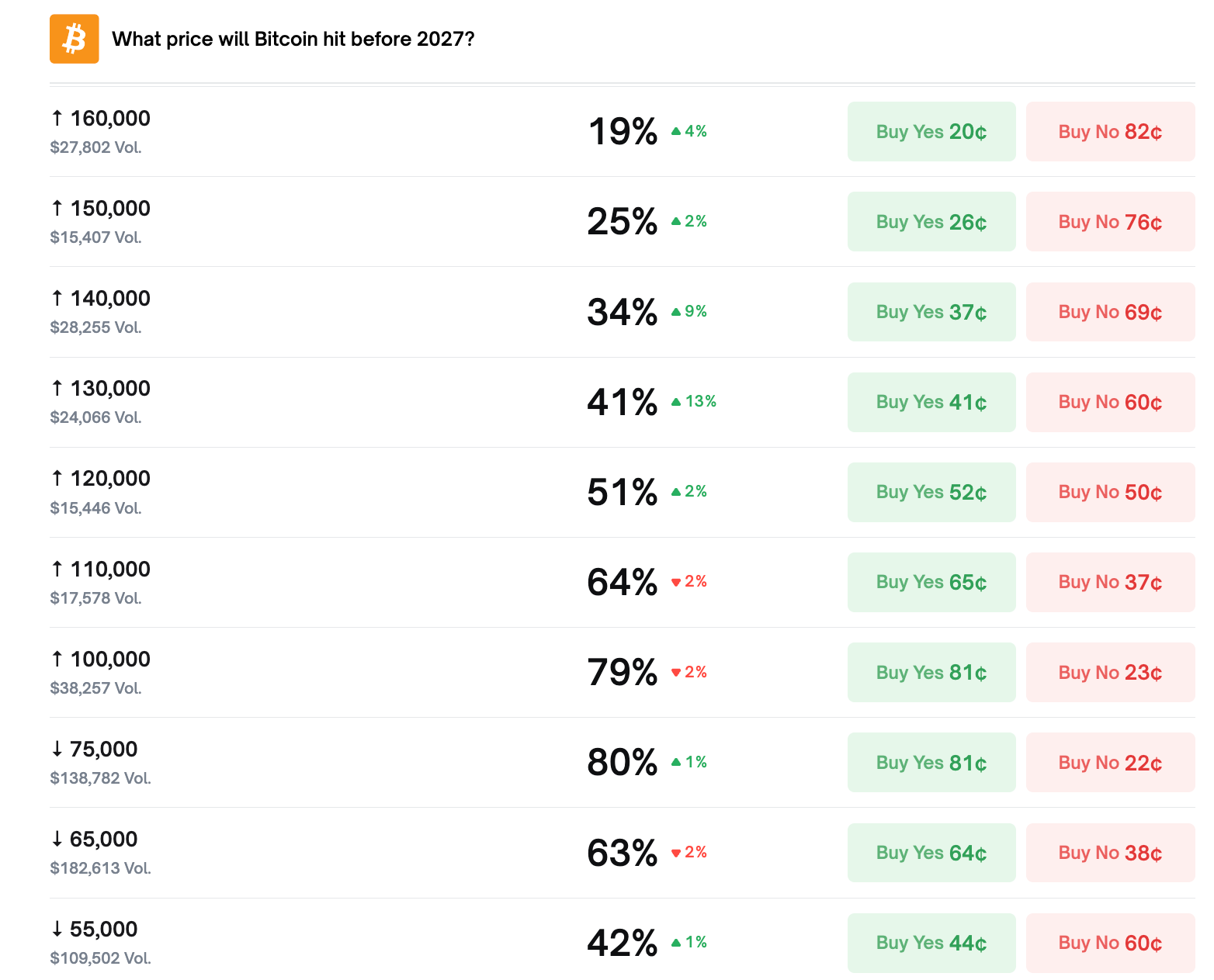
Bitcoin price targets before Dec. 31, 2026. Source: Polymarket
Overall, consensus leans toward the upside, sustained by structural changes rather than traditional boom-bust cycles.
BTC price technicals clash with bullish forecasts
Past halving patterns suggest that BTC price peaks 12–18 months thereafter, as reduced issuance takes effect — and this is starting to be reflected in the charts.
Analyst and trader Rekt Capital suggested that the current cycle was over 93% complete, with the possibility of the market topping out in Q4/2025.
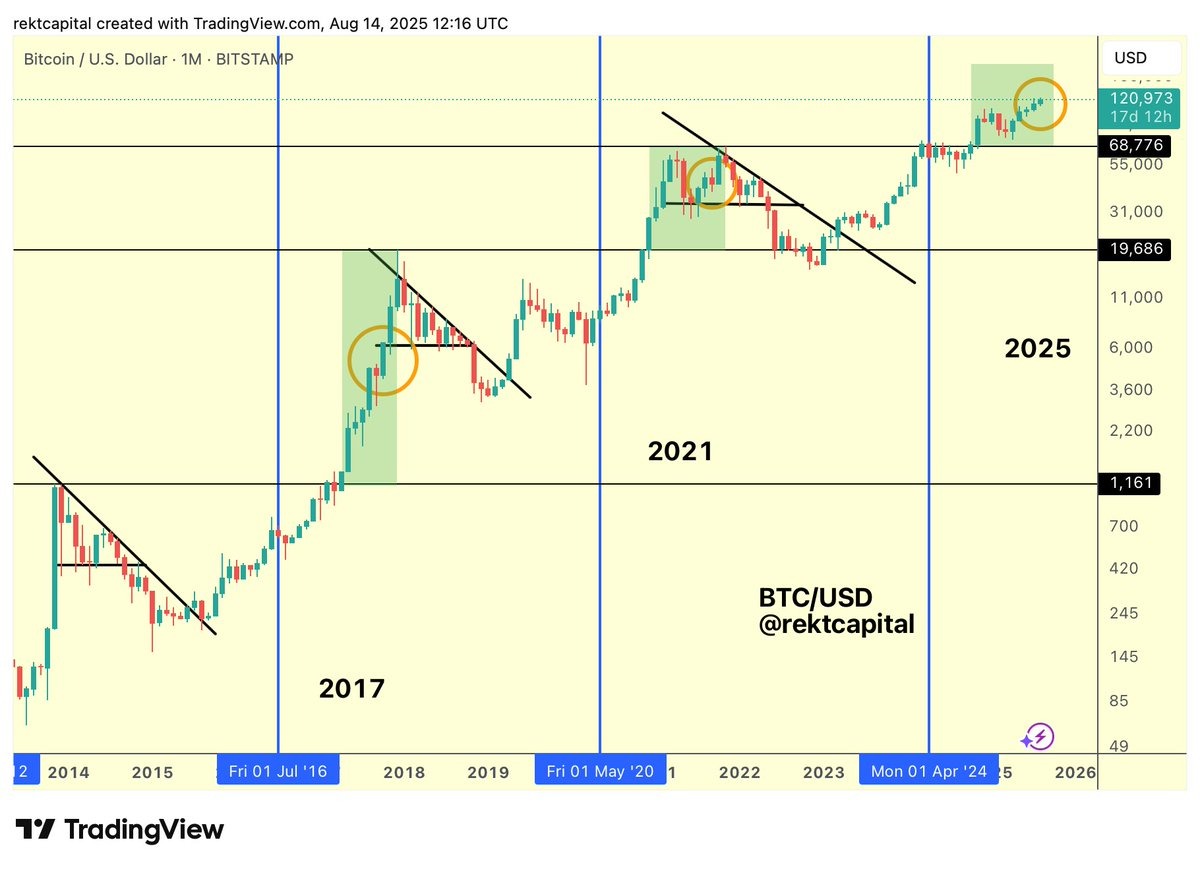
Bitcoin halving cycle progress. Source: Rekt Capital
Other technical indicators also reflect bear market conditions, suggesting that Bitcoin’s four-year cycle remains intact and that BTC could extend its downtrend into 2026.
Bitcoin’s weekly chart shows that the SuperTrend indicator flashed a bearish signal, with its “sell” signal confirmed by BTC’s drop below the 50-week moving averages (MAs) (see chart below), a scenario that has historically marked the end of bull markets.
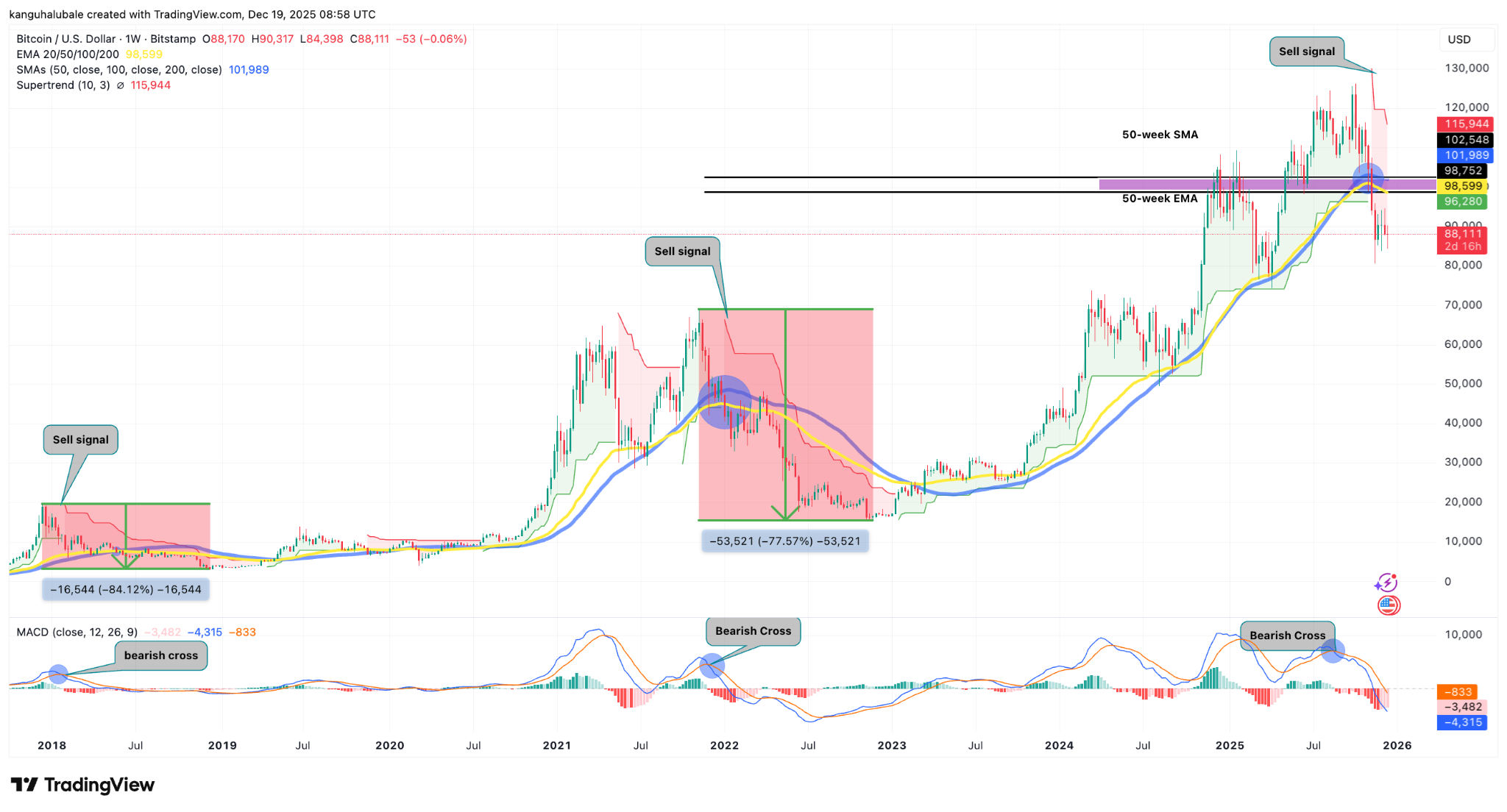
BTC/USD weekly chart. Source: Cointelegraph/TradingView
These were further reinforced by a bearish cross from the moving average convergence divergence indicator (MACD) a few days later.
Previous confirmations from these three indicators were followed by 84% and 77% drawdowns during the 2018 and 2022 bear markets, as shown in the chart above.
Intocryptoverse founder and CEO Benjamin Cowen said that the BTC/USD pair will likely bounce back to the 200-day SMA currently at $108,000, before resuming the downtrend, possibly bottoming around the 200-week MAs between $60,000 and $70,00 in 2026.
“All prior cycle bear markets were confirmed by a macro lower high at the 200D SMA.”
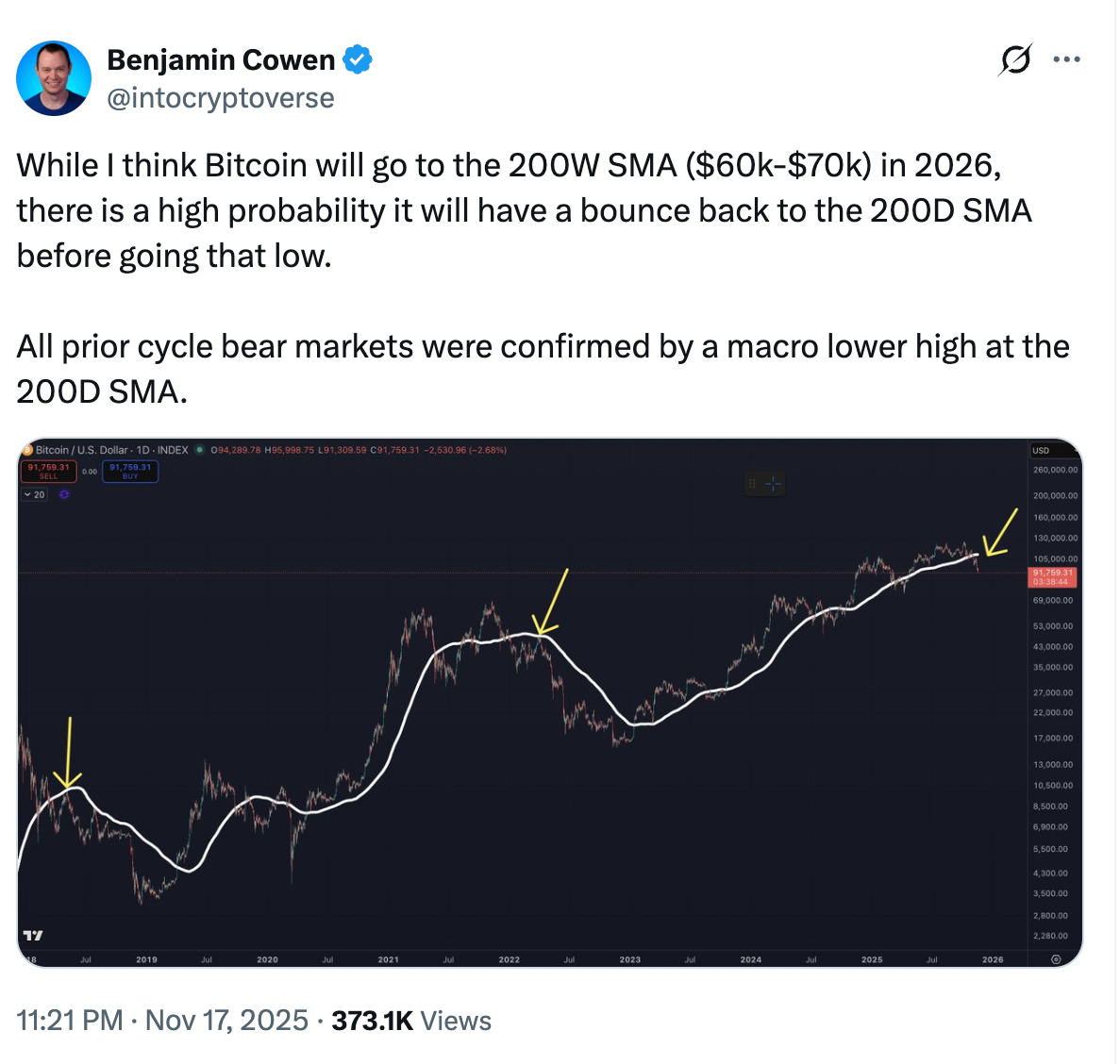
BTC/USD daily chart. Source: Benjamin Cowen
As Cointelegraph reported, Bitcoin’s 200-day moving average turned bearish in November when a “death cross” occurred as it dipped below the shorter-term 50-day moving average, predicting 2026 to be a year of declines.
This article does not contain investment advice or recommendations. Every investment and trading move involves risk, and readers should conduct their own research when making a decision. While we strive to provide accurate and timely information, Cointelegraph does not guarantee the accuracy, completeness, or reliability of any information in this article. This article may contain forward-looking statements that are subject to risks and uncertainties. Cointelegraph will not be liable for any loss or damage arising from your reliance on this information.


Subscribe to daily byte-sized crypto news from Cointelegraph
This article is produced in accordance with Cointelegraph's Editorial Policy and is intended for informational purposes only. It does not constitute investment advice or recommendations. All investments and trades carry risk; readers are encouraged to conduct independent research.
More on the subject