


 Written by Marcel Pechmanformer writerEdited by Ray Salmondformer editor
Bitcoin’s brief rally to $76K may have been a bull trap: Here’s the data
MarketsPublishedApr 14, 2026
Bitcoin rallied alongside stocks and investors’ hope for interest rate cuts, but is the rejection at $76,000 a sign of a bull trap?
Key takeaways:
- The US Federal Reserve's shift toward balance sheet expansion may provide the liquidity needed to boost Bitcoin and broader risk markets.
- The war in Iran and high oil prices might be driving investors toward scarce assets to hedge against rising inflation.
On Tuesday, Bitcoin (BTC) price surpassed $76,000 for the first time in over two months, triggering $285 million in leveraged short liquidations. The rally closely tracked the S&P 500, indicating a high probability of a macroeconomic-driven event. Is the war in Iran the only factor behind Bitcoin’s price gains, and what are the odds of a bull trap?
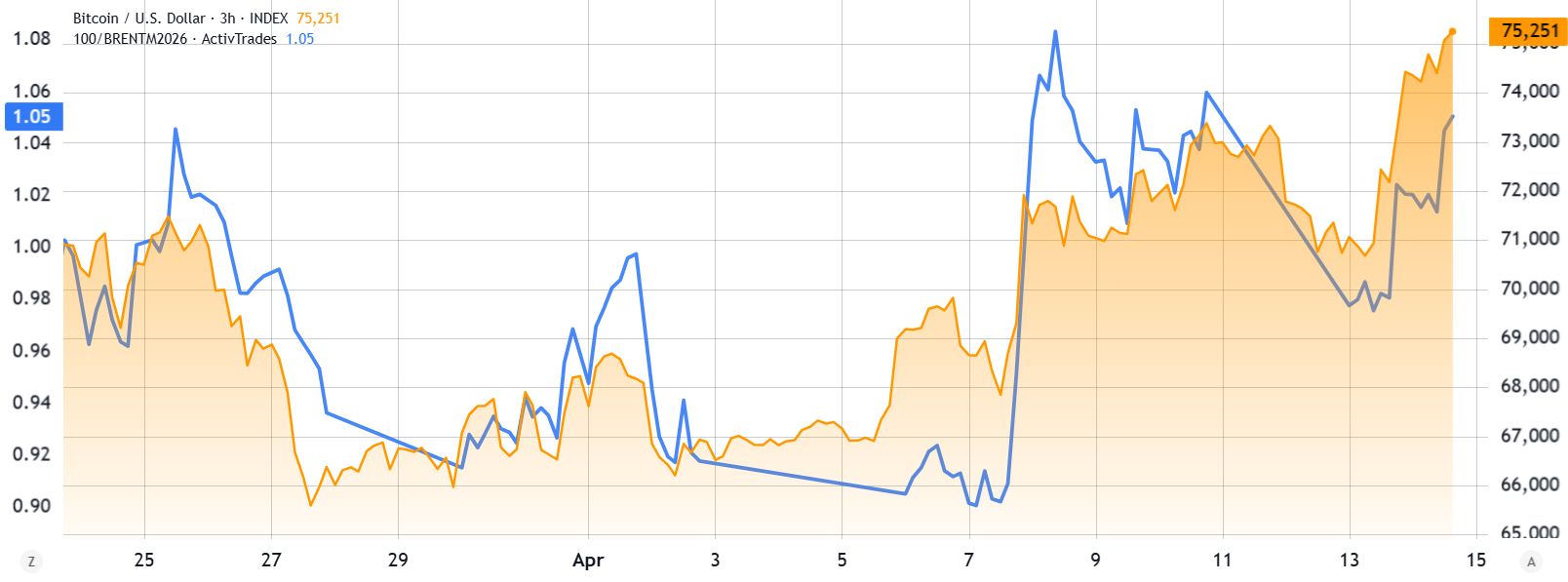
Crude Brent oil (inverted, left) vs. Bitcoin/USD (right). Source: TradingView
Crude oil prices stabilized near $95 after peaking at $104 over the weekend, a move many traders view as positive. The inverted chart of crude oil prices depicts a high-intraday-correlation environment.
The war in Iran has been a major source of concern due to its impact on US inflation and supply chain logistics, which limits the ability of global central banks to trim interest rates and exerts negative pressure on economic growth.
Simultaneously, gains in the S&P 500 and gold prices likely indicate a higher probability of stimulus measures, causing investors to seek shelter in scarce assets.
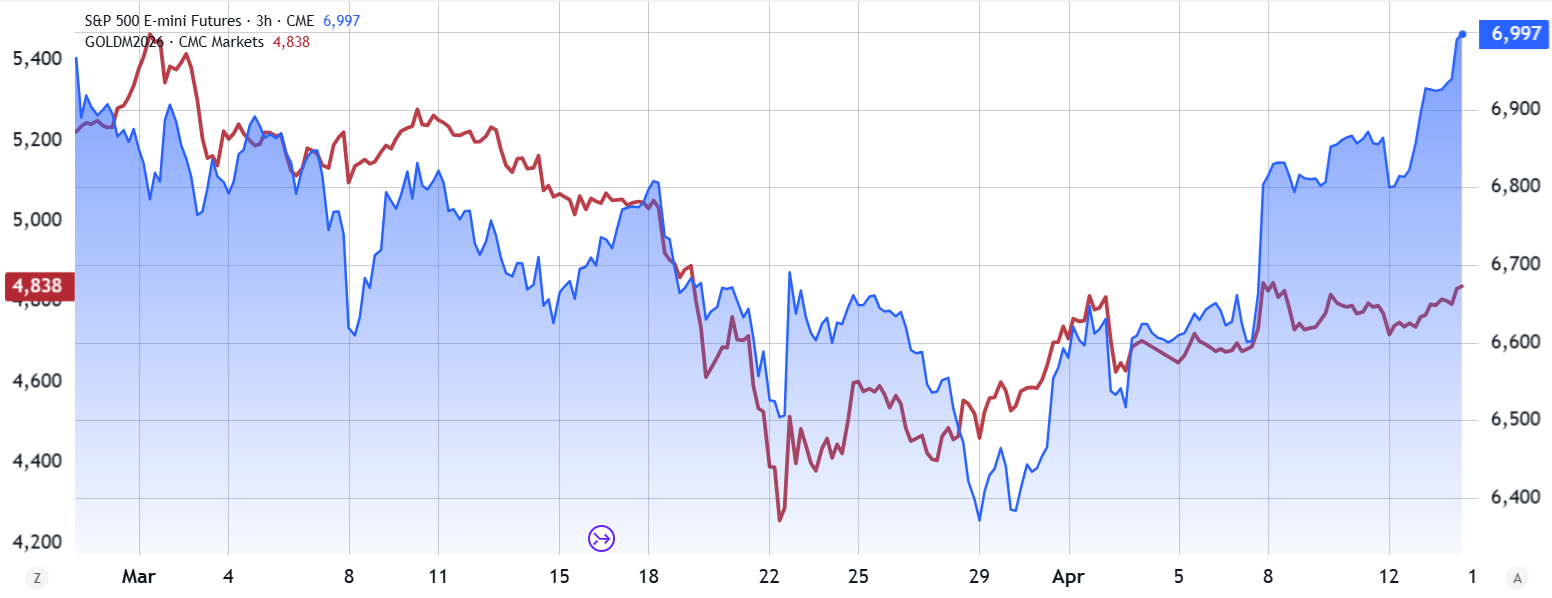
Gold futures (left) vs. S&P 500 futures (right). Source: TradingView
The recent gains in the S&P 500 following failed negotiations to reopen the Strait of Hormuz may seem odd, but the added risk of recession provides the strongest incentive for governments to implement expansionary measures. Regardless of whether the US Federal Reserve opts for a cautious approach, the US Congress and the Trump administration can authorize direct investment in infrastructure projects and social programs, or provide tax credits.
Inflationary worries line up with investors’ Fed policy expectations
Bitcoin does not need to compete with stocks or even gold to capture the capital currently held in money market funds and short-term bonds. The longer oil prices remain above $90, the higher the upward pressure on forward inflation.
Reduced expected returns on fixed-income assets may be the primary catalyst behind Bitcoin's surge above $75,000, and governments have few alternatives without expanding the monetary base.
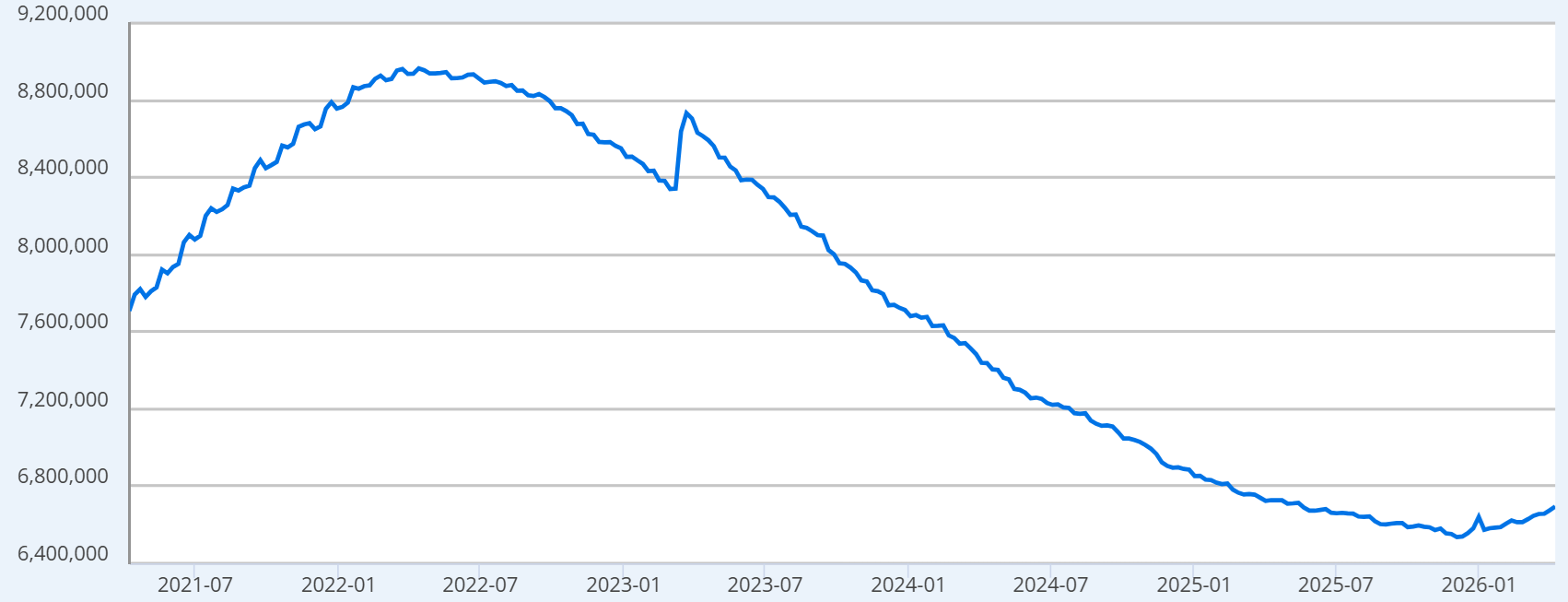
US Federal Reserve total assets, USD billion. Source: St Louis FED
The US Fed changed its strategy to expand the balance sheet in January, reversing the trend from the previous two years. This move is highly supportive of risk markets, as short-term concerns about the bond market are diminishing. Financial institutions and hedge funds have greater access to liquidity and face less competition to offload US Treasuries, providing temporary relief to the stock market.
Regardless of whether Bitcoin holds above $75,000, there are few incentives for traders to take profits after two months of trading near $68,000, given the meager 10% gains. Even if Bitcoin eventually rallies to $80,000, that would represent a modest 20% gain for those who purchased at $66,500. Unless traders perceive an imminent risk to oil prices, the odds do not favor continued sell pressure on Bitcoin.
Related: Bitcoin's struggle to build long-lasting uptrend continues–Here’s why
Ultimately, given the likelihood of expansionary monetary policy and inflationary pressures, Bitcoin bears will have a difficult time showing strength, making the odds of a successful bull trap extremely low.


Subscribe to daily byte-sized crypto news from Cointelegraph
This article is produced in accordance with Cointelegraph's Editorial Policy and is intended for informational purposes only. It does not constitute investment advice or recommendations. All investments and trades carry risk; readers are encouraged to conduct independent research.
More on the subject