

 Written by Ezra Reguerrastaff writerEdited by Bryan O'Sheastaff editor
South Korea weighs ending one-bank rule for crypto exchanges: Report
Latest NewsPublishedJan 20, 2026
South Korea is reportedly reviewing exclusive bank partnerships for crypto exchanges as regulators assess competition and prepare the Digital Asset Basic Act.
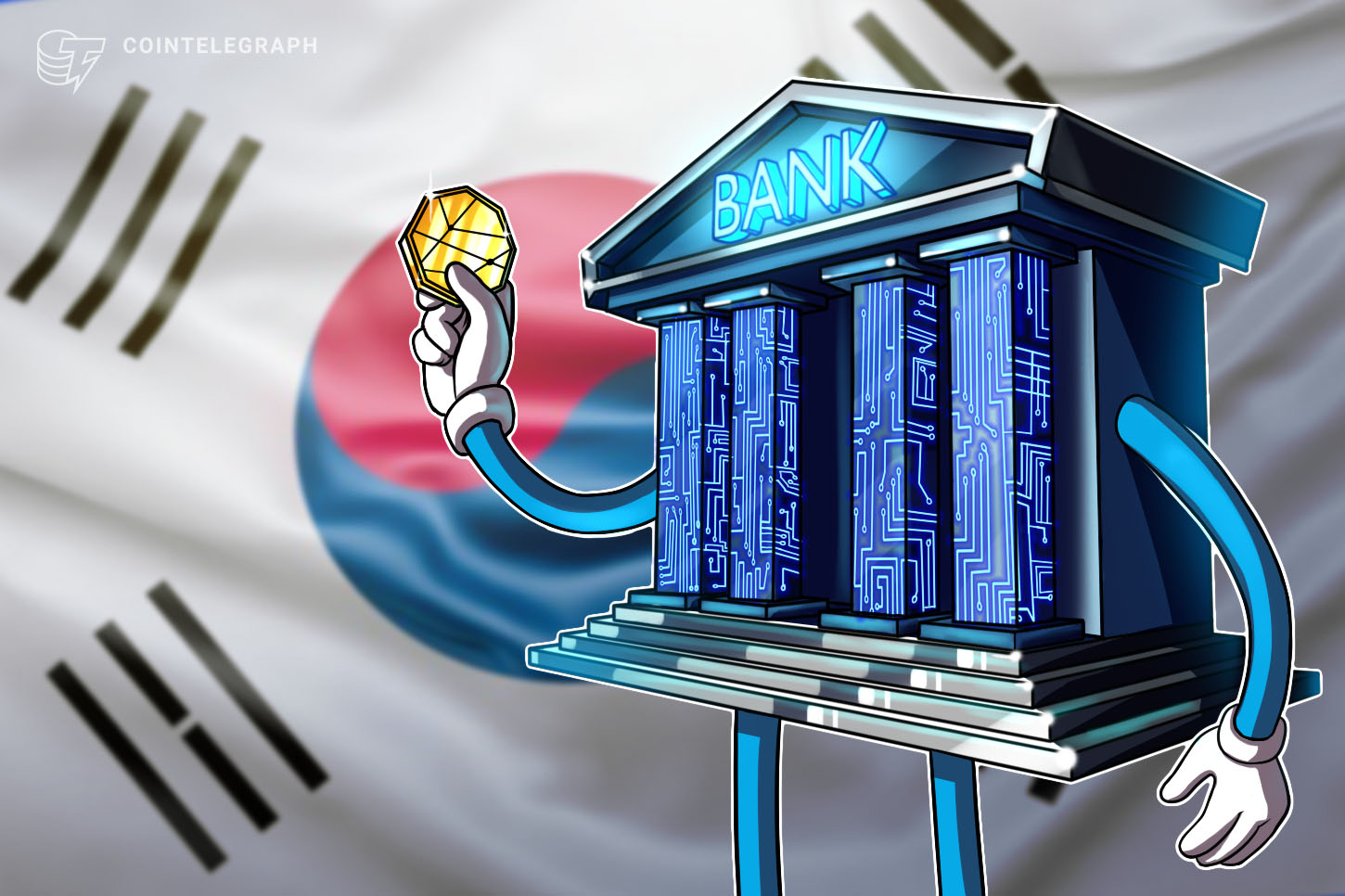
South Korea’s financial regulators are reviewing a long-standing practice that effectively ties each cryptocurrency exchange to a single banking partner, as part of a broader examination of competition in the country’s crypto market, according to local media.
Business media outlet the Herald Economy, citing government officials familiar with inter-agency discussions, said a review effort is being coordinated between the Financial Services Commission (FSC) and the Fair Trade Commission as policymakers evaluate whether existing practices contribute to market concentration.
Although the “one exchange–one bank” model is not explicitly codified in South Korean laws, it emerged in practice due to Anti-Money Laundering (AML) and customer due diligence requirements.
As a result, crypto exchanges have typically relied on exclusive partnerships with domestic banks to provide fiat on- and off-ramps for customers.
Competition study raises concerns over market structure
The policy discussions reportedly follow a government-commissioned research project that analyzes the virtual asset trading market and the competitive impact of key regulations in South Korea.
The study examined the structure of the crypto market and assessed how existing regulations may affect competition among domestic exchanges.
The report, obtained by the Herald Economy, concluded that the exchange-bank pairing model may reinforce market concentration by limiting banking access for newer or smaller exchanges.
While the model aims to manage compliance risk, the study found that applying uniform standards to exchanges with different risk profiles and volumes may be disproportionate.
The researchers highlighted that the Korean won-based crypto market remains highly concentrated around a small number of large platforms.
In such markets, the study reportedly found that liquidity and transaction efficiency tend to favor dominant players, potentially entrenching incumbents when barriers to entry persist.
Related: South Korea busts $100M underground remittance ring using WeChat, crypto: Report
South Korea prepares for Digital Asset Basic Act
The reported review comes as regulators prepare the second phase of South Korea’s crypto legislation, commonly referred to as the Digital Asset Basic Act.
On Dec. 31, lawmakers delayed the submission of the bill to 2026 amid unresolved disagreements over how domestic stablecoin issuers should be supervised.
The proposed legislation, backed by President Lee Jae-myung, would allow the issuance of won-pegged stablecoins while requiring issuers to entrust reserve assets to authorized custodians such as banks.
The debate centers on whether a dedicated oversight body should pre-approve issuers, with the FSC reviewing how to balance oversight with a framework that allows participation from non-financial technology companies.
Magazine: How crypto laws changed in 2025 — and how they’ll change in 2026


Subscribe to daily byte-sized crypto news from Cointelegraph
Cointelegraph is committed to independent, transparent journalism. This news article is produced in accordance with Cointelegraph’s Editorial Policy and aims to provide accurate and timely information. Readers are encouraged to verify information independently.
More on the subject