


 Written by Yashu Golastaff writerEdited by Allen Scottstaff editor
Can Bitcoin hit $250K this year? Traders say it may be time to ‘sell in May’
MarketsPublishedApr 28, 2026
Veteran trader Peter Brandt and other analysts question the $250,000 Bitcoin target, warning the current bear phase may not be over.

Bitcoin (BTC) is trading roughly 40% below its October 2025 record high near $126,000 despite its ongoing recovery.
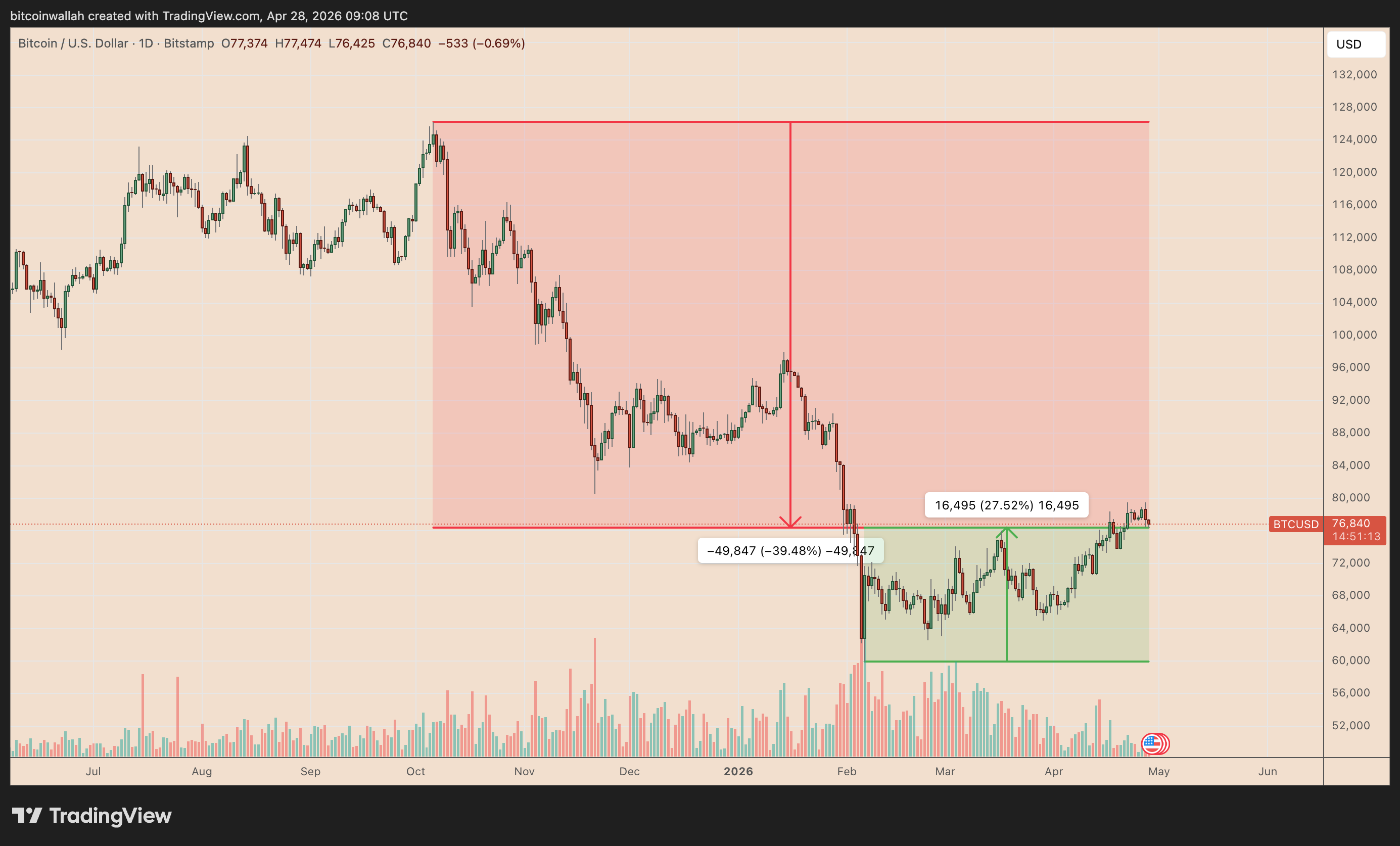
Still, some of the cryptocurrency's loudest bulls, including billionaire investor Tim Draper and Fundstrat’s co-founder Tom Lee, have not backed down from their $250,000 year-end prediction, a target that would require more than a threefold rally from current levels.
Is that realistic, or is Bitcoin’s latest drawdown a warning that the cycle has already peaked?
Key takeaways:
- Bitcoin's selloff may resume due to a bearish continuation setup.
- Halving and midterm election fractals appear bearish for the BTC price in 2026.
Veteran trader warns of more BTC price decline
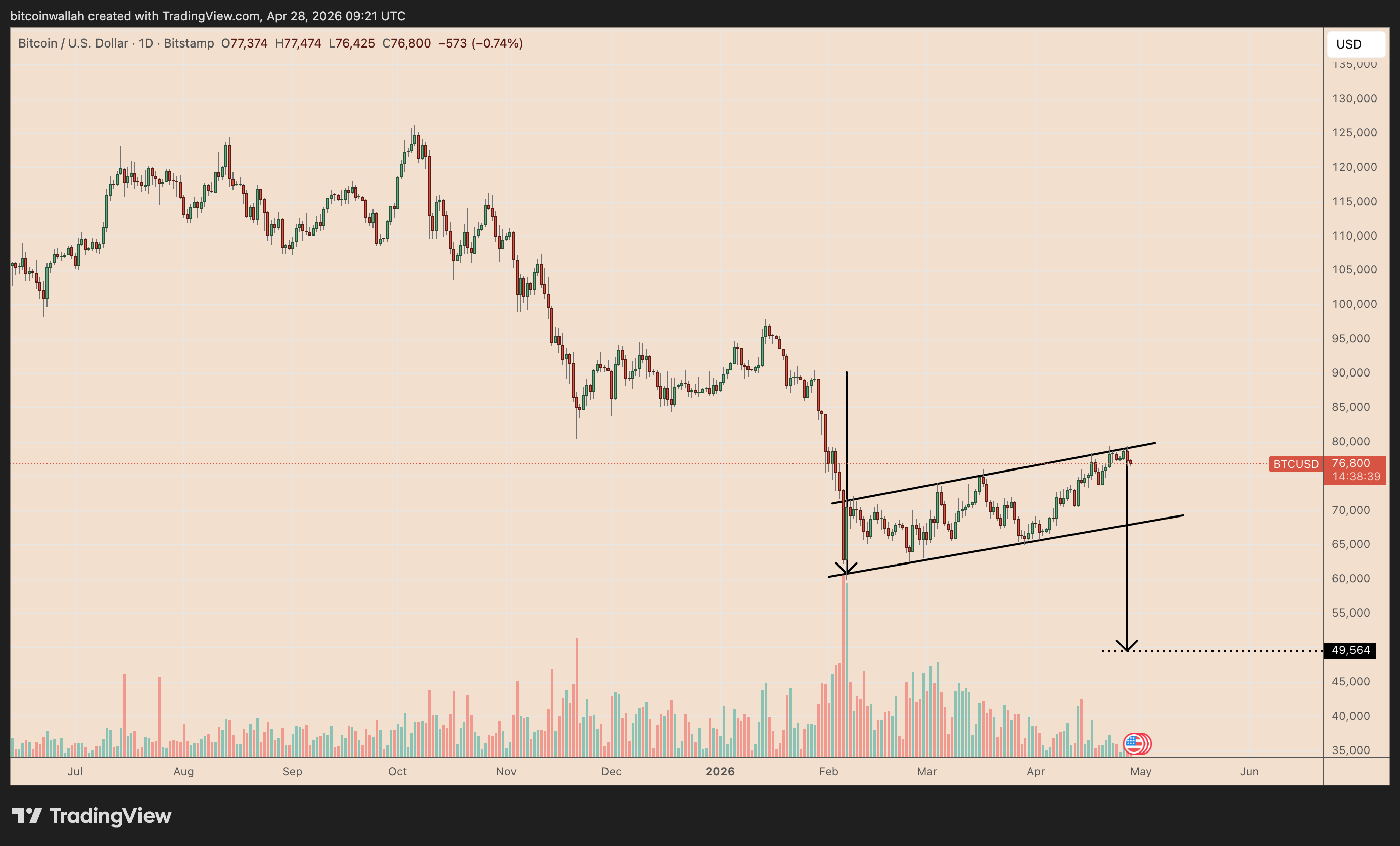
Peter Brandt, a veteran futures market trader, highlighted a channel pattern on the Bitcoin daily chart, which could keep BTC's odds of rising toward $250,000 this year low.
As of Tuesday, BTC was showing signs of a pullback after testing the upper boundary near $79,500 as resistance. The cryptocurrency risks declining toward the flag's lower boundary around the $69,000 level by May if the correction persists.
Those of you predicting $250,000 in 2026 need to stop with the mushrooms
This is called a channel
While it does not preclude further price gains, it is NOT a bullish bottoming pattern

Looking broadly, the channel appears like a bear flag pattern. A break below its lower trend line may push the BTC price under $50,000 if the technical setup plays out as intended.
Bitcoin halving fractals show the bear market is midway
BTC’s price cycles have historically followed a clear pattern tied to its halvings every four years.
Cycle peaks have consistently occurred 12 to 18 months after the event. In 2012, the peak arrived in 12 months. The 2016 halving saw its top in 17 months, while the 2020 halving peaked after 18 months.
The April 2024 halving fits this timeline. Bitcoin hit its all-time high of $126,000 in October 2025, roughly 17–18 months later.
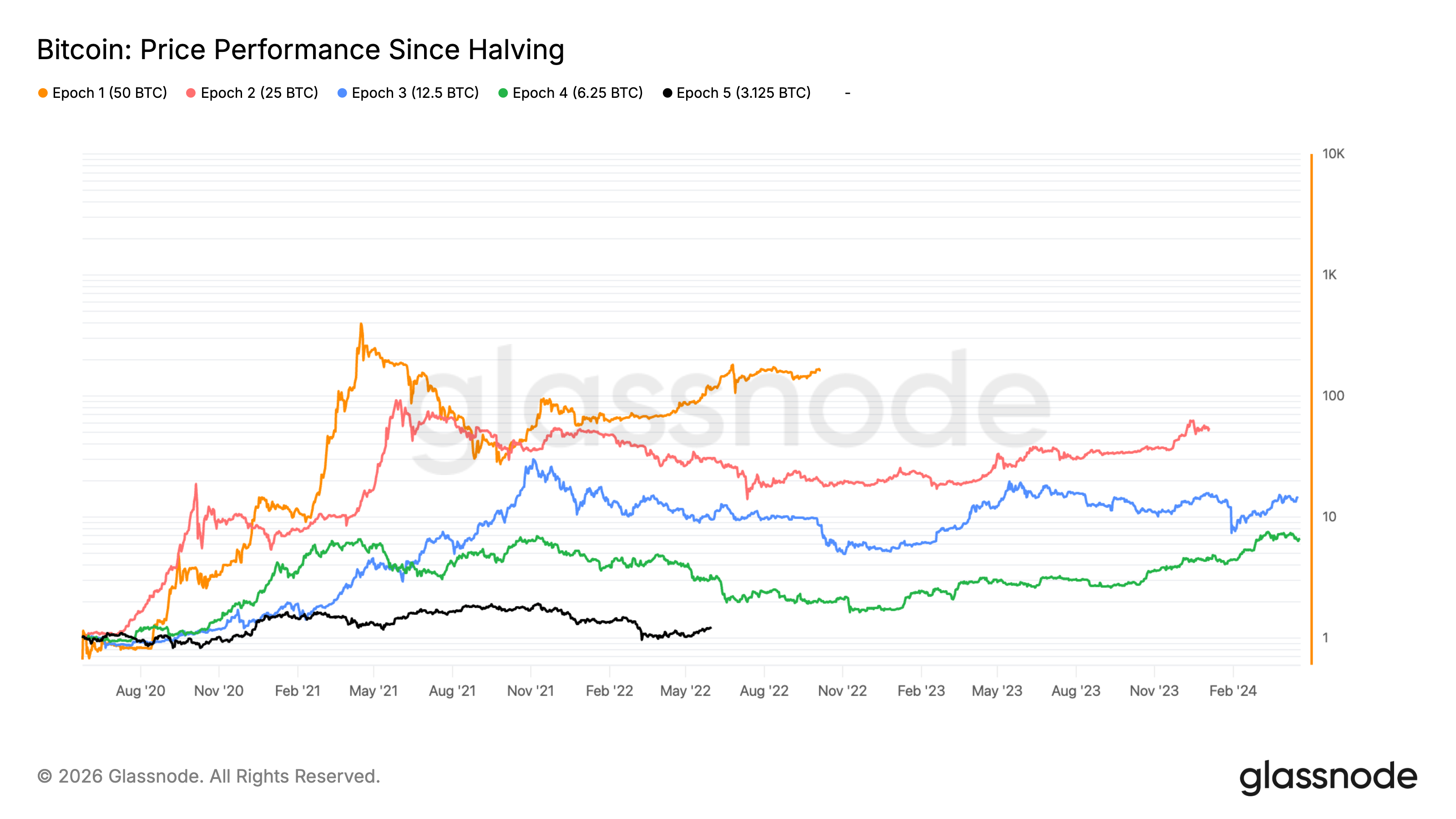
Now, in late April 2026 (over 24 months post-halving), BTC trades around $77,000, down 38%–40% from that peak. This alignment suggests the 2025 high may represent the cycle top, casting doubt on new highs for the remainder of 2026.
Bitcoin sell-off may resume in May
A chart by analyst Merlijn The Trader is adding to the cautious narrative, pointing to a recurring “Sell in May” pattern in US mid-term election years.
For instance, BTC dropped 61% in 2014, 65% in 2018, and 66% in 2022, each beginning around May of the election years.
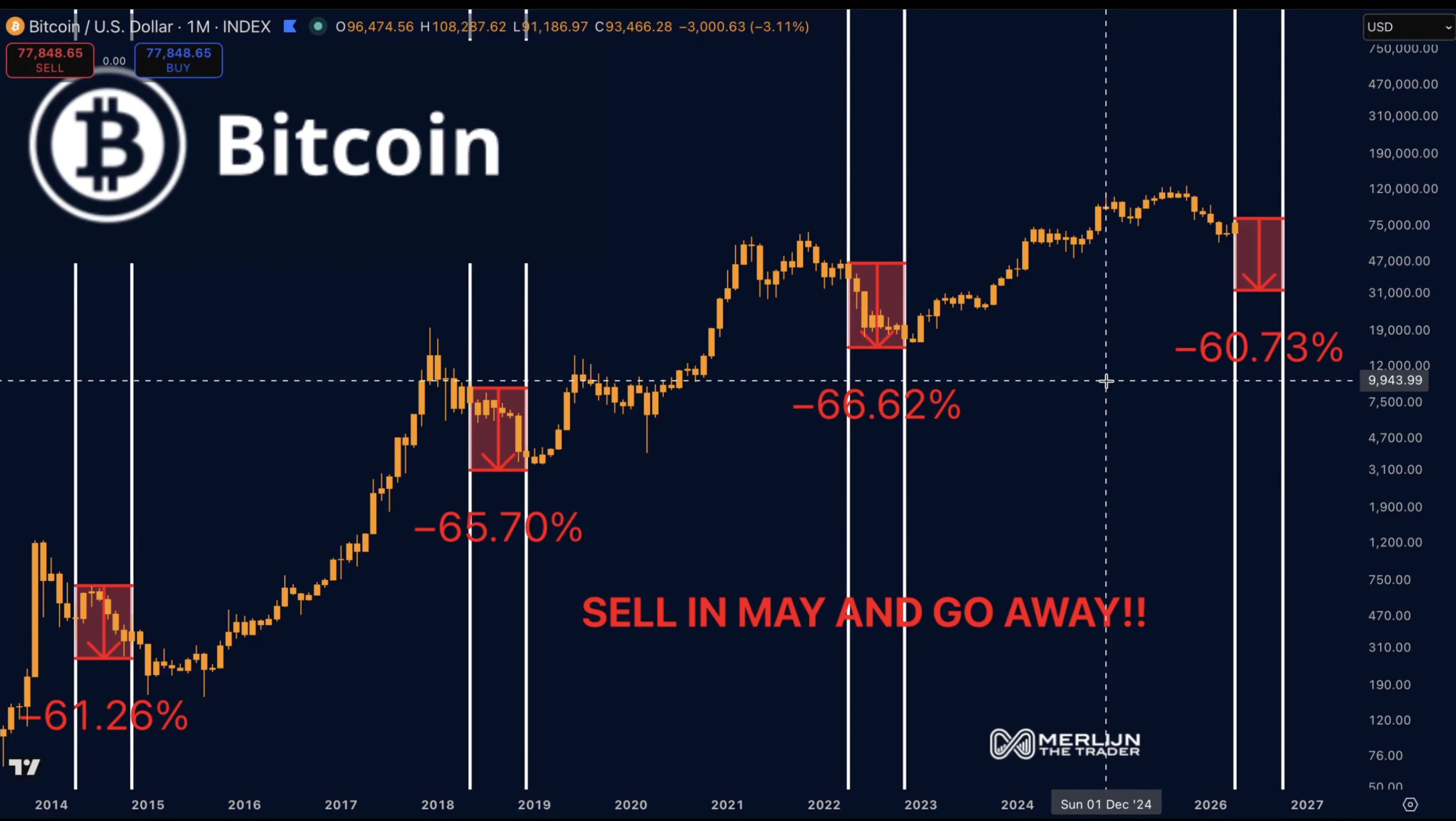
Applying a similar framework to 2026, Merlijn projected a potential decline of over 60%, which would place BTC near the $30,000 level.
In a February report, Capital Group analysts Matt Miller and Chris Buchbinder said midterm elections often raise uncertainty over congressional control and policy direction. As campaign rhetoric heats up in the spring, investors tend to cut risk, slow buying, and brace for volatility.
That backdrop weakens the case for Bitcoin reaching $250,000 by year-end, even though several analysts, including those from Bernstein, see room for a more modest rebound toward the $100,000–$150,000 range.


Subscribe to daily byte-sized crypto news from Cointelegraph
This article is produced in accordance with Cointelegraph's Editorial Policy and is intended for informational purposes only. It does not constitute investment advice or recommendations. All investments and trades carry risk; readers are encouraged to conduct independent research.
More on the subject