


 Written by Biraajmaan Tamulystaff writerEdited by Ray Salmondformer editor
Bitcoin bulls blitz $69K as retail traders pressure short positioning
MarketsPublishedFeb 13, 2026
Bitcoin rallies above $69,000 as retail traders apply pressure to short positions and aim to generate a lasting bullish trend change.

Bitcoin (BTC) rallied to $69,482 on Friday, and the rally coincided with data showing steady accumulation from smaller-sized holders in February.
Analysts say the breakout may evolve into a broader bullish trend, although other data suggests that a longer period of price consolidation will underlie the emerging bull trend.
Key takeaways:
- BTC broke above the $69,000 resistance and its descending channel, triggering $92 million in short liquidations within four hours.
- Small wallets added $613 million in February, while the whale wallets stalled with $4.5 billion in outflows.
- Short-term holder profit-ratio indicator hit its lowest level since November 2022, underscoring weak sentiment over the past few weeks.
Will the Bitcoin relief rally last?
Bitcoin has pushed above the upper boundary of its descending channel and retested $69,000. The move marks a potential bullish break of structure (BOS), if BTC holds above $68,000.
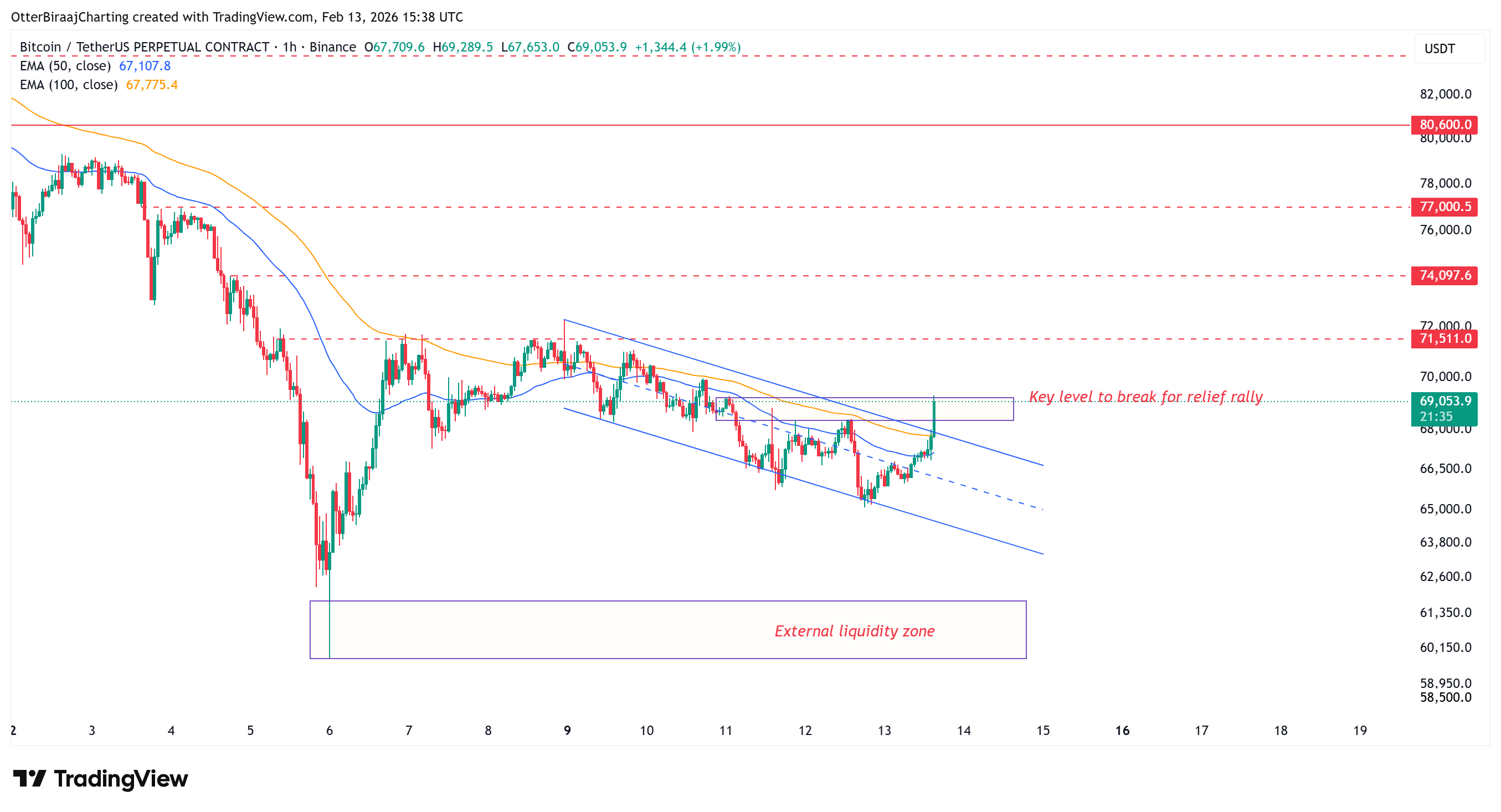
Bitcoin one-hour chart. Source: Cointelegraph/TradingView
If BTC holds above this reclaimed level, the next internal liquidity zones sit near $71,500 and $74,000. The 50- and 100-period exponential moving averages (EMAs) are now compressing beneath the price on the one-hour chart, reinforcing the possibility of the short-term momentum continuing.
The latest price surge triggered about $96 million in futures liquidations over the past four hours, with nearly $92 million coming from short positions, signaling a short squeeze on bearish traders.
BTC liquidations were primarily concentrated on Bybit (22.5%), Hyperliquid (22%) and Gate (15%), suggesting these platforms account for a significant share of active leveraged positioning in the market.
Related: Multi-day negative Bitcoin funding signals ‘overcrowded’ short trade: Reversal coming?
BTC retail investor demand backs the breakout
The breakout is supported by the steady buying from the smaller-sized investors. Order flow data from Hyblock shows that the small wallets ($0–$10,000) have accumulated about $613 million in cumulative volume delta (CVD) in February, consistently bidding during the price correction.
The mid-sized wallets ($10,000–$100,000) remain about -$216 million for the month, but the cohort added about $300 million since BTC fell below $60,000, suggesting selective accumulation during discounted periods.
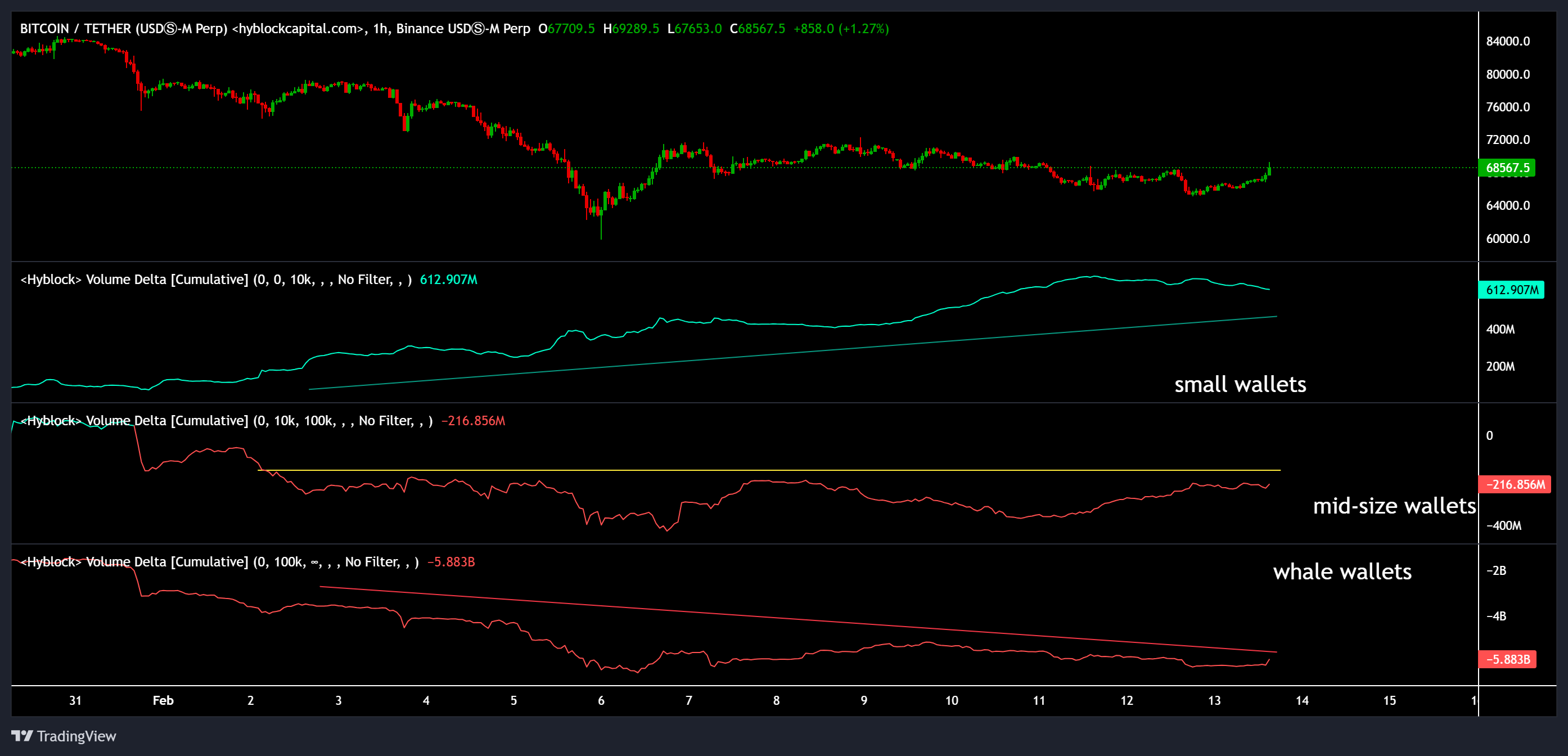
Bitcoin CVD data across different wallet sizes. Source: Hyblock Capital
Whale wallets ($100,000 and above) saw their CVD bottom near -$5.8 billion earlier in February and have since moved sideways. This stabilization implies that the aggressive distribution has paused, though a clear accumulation trend from the large holders has yet to emerge.
For the rally to continue, whale buying may need to return, and the short-term holder spent output profit ratio (SOPR) may need to move back above 1, signaling that the recent buyers are no longer selling at a loss.
Notably, the short-term holder SOPR recently fell to its lowest level since November 2022, indicating that many recent buyers have been realizing losses, a sign that conviction may remain fragile despite the rebound.
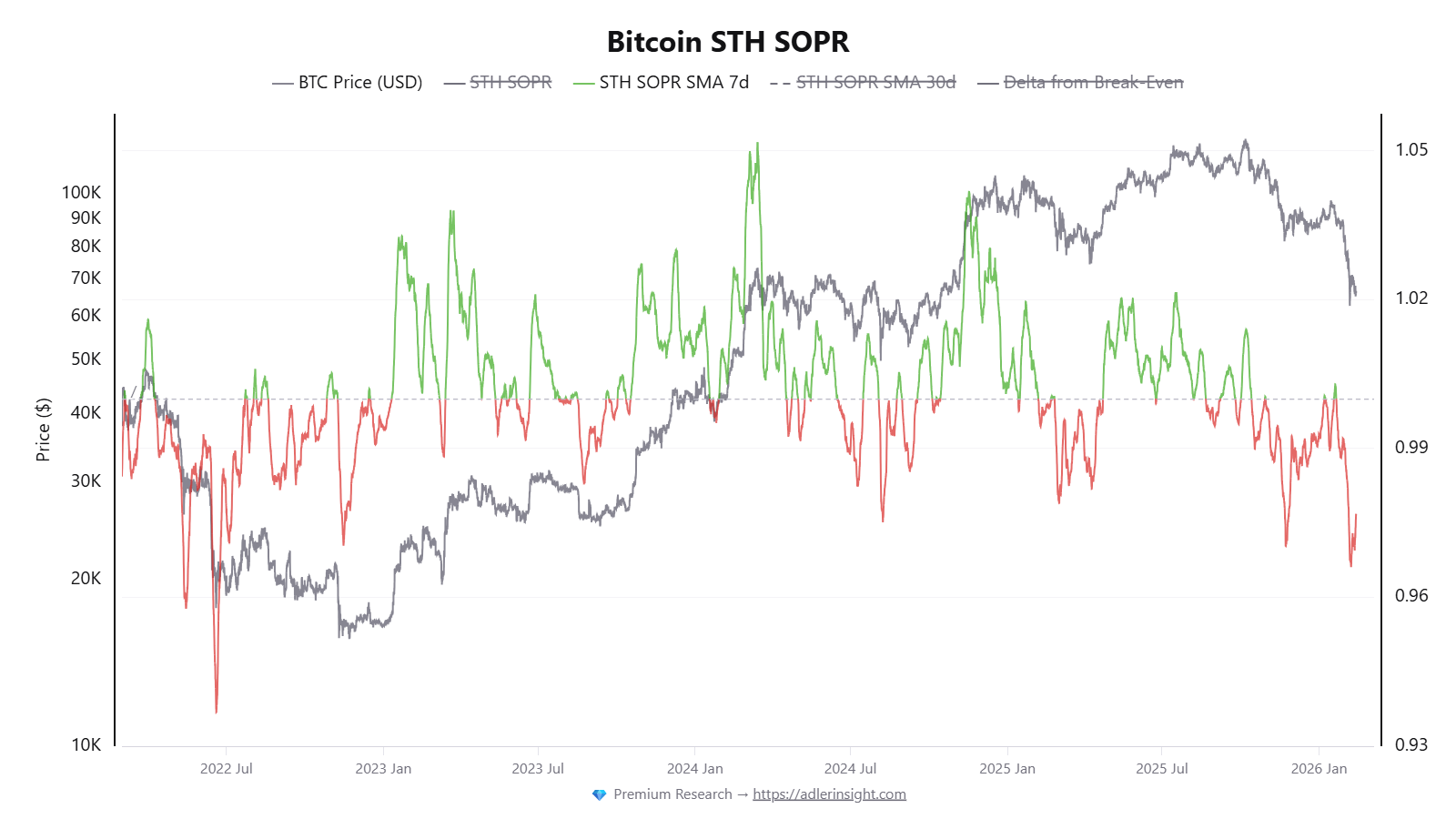
Bitcoin short-term holder SOPR. Source: CryptoQuant
Related: Bitcoin passes $69K on slower US CPI print, but Fed rate-cut odds stay low


Subscribe to daily byte-sized crypto news from Cointelegraph
This article is produced in accordance with Cointelegraph's Editorial Policy and is intended for informational purposes only. It does not constitute investment advice or recommendations. All investments and trades carry risk; readers are encouraged to conduct independent research.
More on the subject