

 Written by Marcel Pechmanformer writerEdited by Ray Salmondformer editor
Bitcoin nears $73K as recession risks and weaker dollar support demand
MarketsPublishedApr 9, 2026
Bitcoin continues to show strength even as US recession risks rise and the fragile ceasefire with Iran begins to show cracks.

Key takeaways:
- Bitcoin climbed to $72,000 as increasing recession odds and a weak US dollar boosted the appeal of scarce financial assets.
- Rising oil prices and a wobbly truce with Iran threaten to reverse Bitcoin’s recent gains.
Bitcoin (BTC) reclaimed the $72,000 level on Thursday despite data showing rising inflation and weak economic growth in the United States. Crude oil prices jumped back to $97 after senior Iranian leaders claimed that the US and Israel had violated the ceasefire. Traders now fear that risk markets could react negatively, potentially sending Bitcoin price back below $68,000.
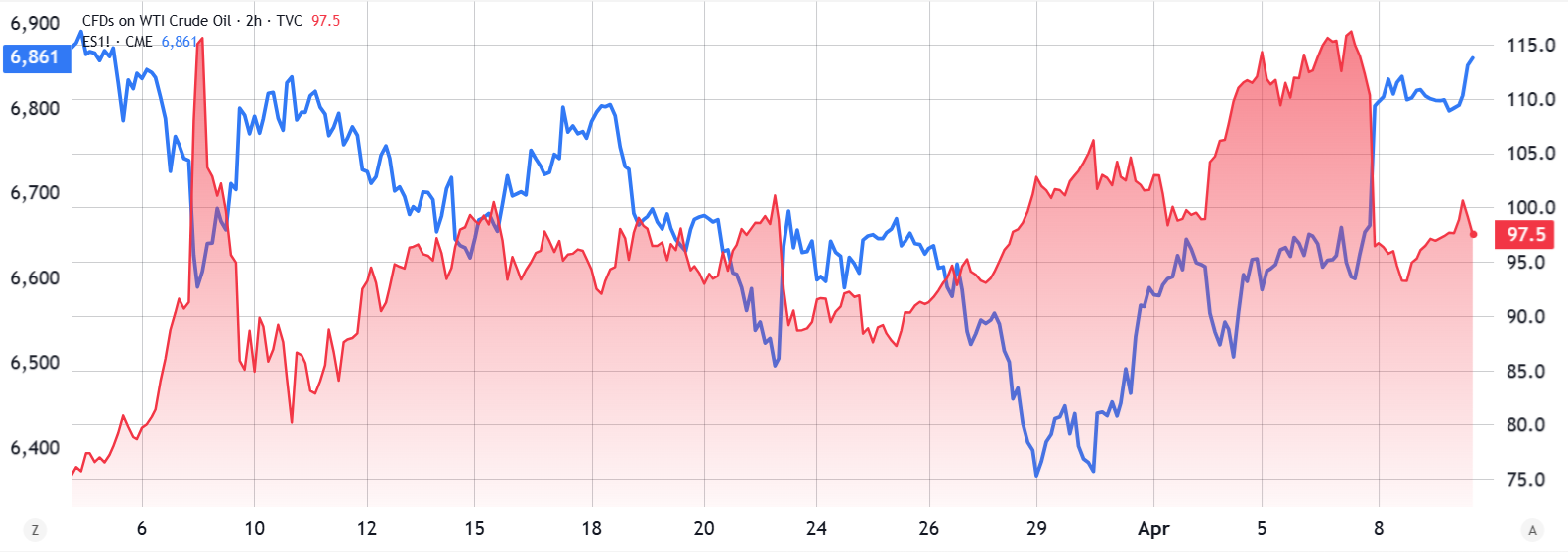
S&P 500 futures (left, blue) vs. WTI crude oil (right, red). Source: TradingView
The inverse relationship between oil prices and risk markets became increasingly evident. Shortly after US President Donald Trump announced a ceasefire on Wednesday, the S&P 500 index futures jumped to their highest levels in 30 days, while WTI crude oil prices dropped below $100. Hence, Bitcoin traders fear that the fragile truce between the US and Iran could lead to bearish outcomes.
Fragile ceasefire with Iran and weak US economic data limit Bitcoin upside
Iranian parliamentary speaker and former Islamic Revolutionary Guard Corps (IRGC) General Mohammad Bagher Ghalibaf, who has emerged as a leading voice within the regime, said that Israel's continued campaign in Lebanon against Hezbollah, the illegal entry of military drones in Iranian airspace and the denial of uranium enrichment violate the ceasefire negotiations, according to Yahoo Finance.
Inflation data reported by the US Bureau of Economic Analysis on Thursday likely helped to lift traders’ spirits. The core Personal Consumption Expenditures (PCE) index rose by 0.4% in February over the previous month. In parallel, the US fourth quarter gross domestic product was revised down to a 0.5% annualized rate. Overall, data points to increased recession risks.
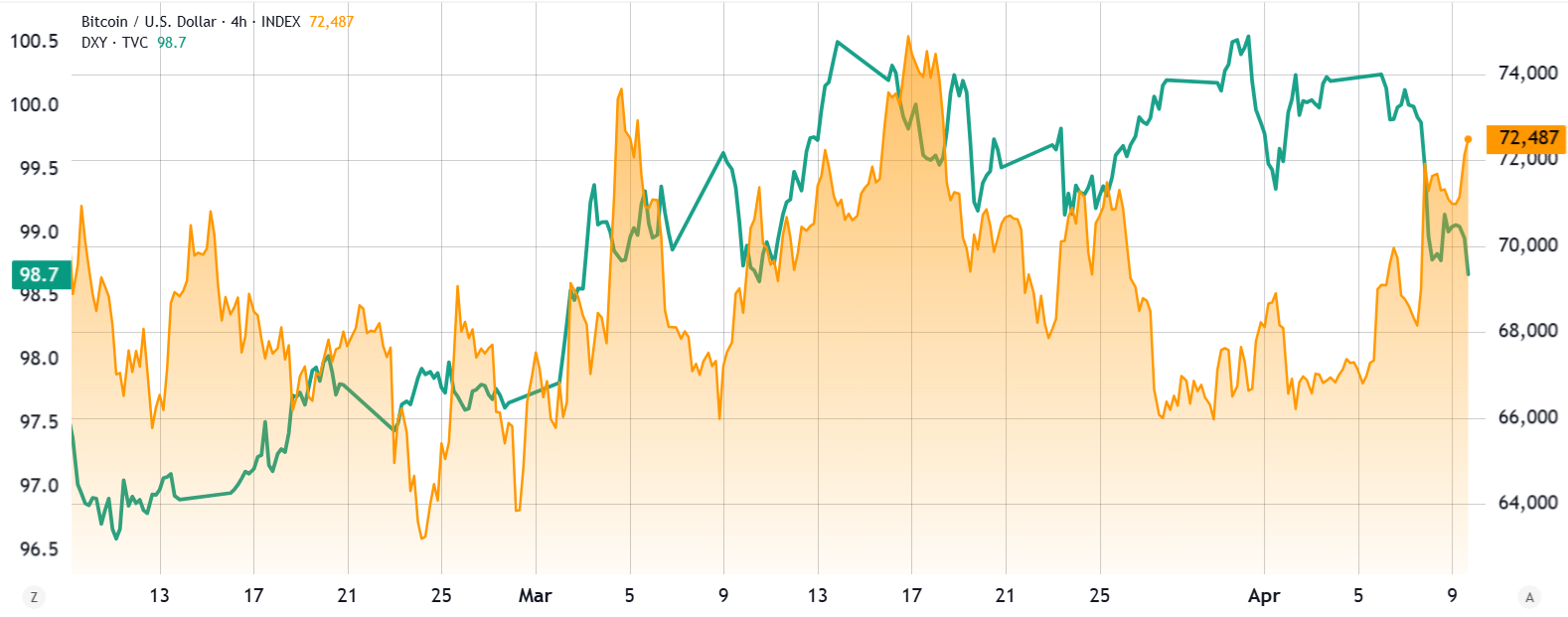
US dollar strength index (left, green) vs. Bitcoin/USD (right, orange). Source: TradingView
Although counterintuitive, the higher odds of economic stagnation amid sticky inflation have led traders to become less risk-averse, as the US government will likely be forced to inject liquidity to support markets. Reduced confidence in the US Federal Reserve's ability to avert a recession without causing inflation has led to a weaker US dollar, when measured against a basket of foreign currencies.
AI infrastructure and private credit risks are not an imminent concern
While the correlation between Bitcoin and the US stock market is far from perfect, traders tend to seek protection when real yields are diminished. Although Bitcoin is not widely seen as a reliable hedge against fiat debasement, a weaker US dollar tends to support demand for scarce assets.
Related: Fed minutes crack door to further rate cuts amid Iran war
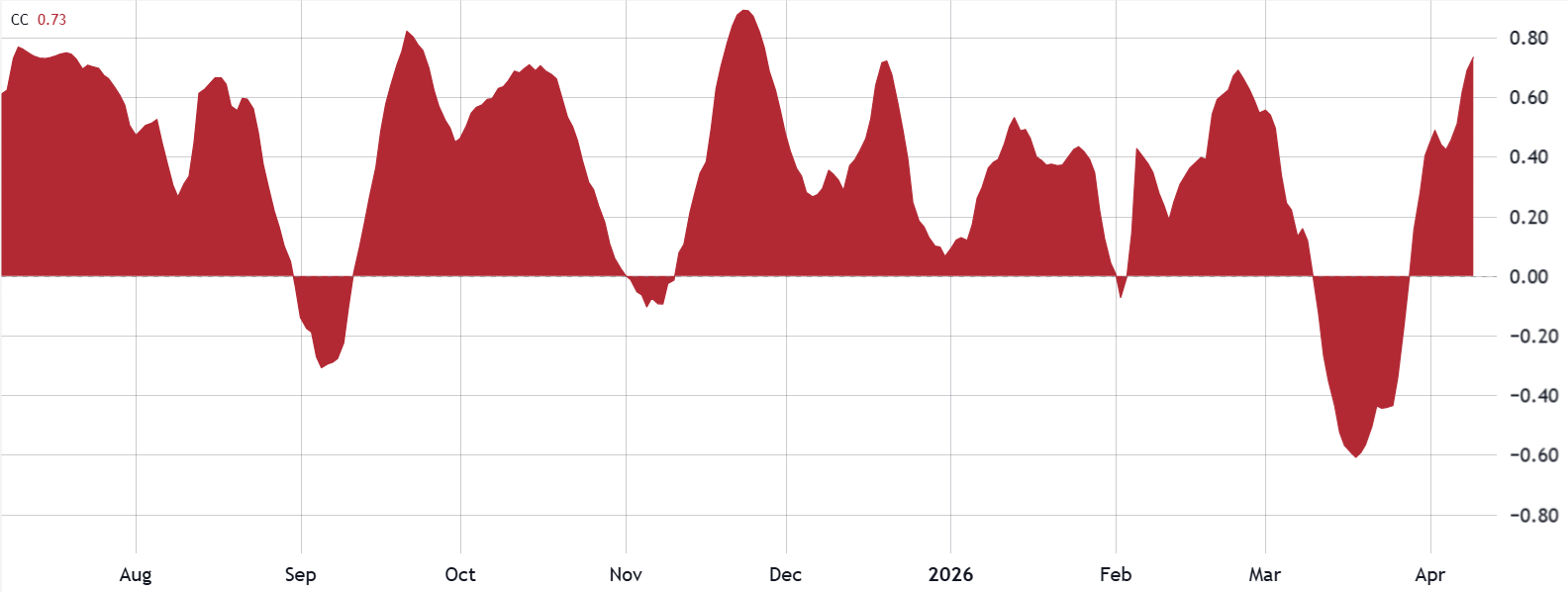
Bitcoin/USD 30-day correlation vs. S&P 500 index. Source: TradingView
The S&P 500 index traded a mere 2% away from its all-time high on Thursday, a clear indication that investors do not fear issues in private credit markets or the surging debt cost protection for AI infrastructure companies.
Ultimately, Bitcoin seems to have merely followed investor expectations regarding the war in Iran rather than reacting to weak US macroeconomic data.
For now, recession risks favor scarce assets; hence, there is little reason to believe that inflation or job market perspectives could act as a sell-off trigger.


Subscribe to daily byte-sized crypto news from Cointelegraph
This article is produced in accordance with Cointelegraph's Editorial Policy and is intended for informational purposes only. It does not constitute investment advice or recommendations. All investments and trades carry risk; readers are encouraged to conduct independent research.
More on the subject