

 Written by Nate Kostarstaff writerEdited by Robert Lakinstaff editor
Bybit Pay enters South Africa through MoneyBadger integration
Latest NewsPublishedApr 28, 2026
The integration enables crypto payments at more than 650,000 merchants, with transactions settled for businesses in South African rand.

Crypto exchange Bybit has expanded its Bybit Pay service to South Africa through an integration with local payments provider MoneyBadger, allowing users to pay with cryptocurrency at merchants nationwide using QR codes while businesses receive settlement in local currency.
According to Bybit's Tuesday announcement, the rollout connects Bybit Pay to existing payment networks, giving users access to more than 650,000 merchants via Scan to Pay, 31,000 through Zapper and over 1,500 Pick n Pay stores, with additional support for online payments through Peach and Ozow.
Users can pay with Bitcoin (BTC), stablecoins and more than 20 other digital assets, with transactions processed in seconds while MoneyBadger converts funds to South African rand at the point of sale to limit exposure to price volatility, allowing merchants to accept crypto without holding it.
The service supports in-store QR payments and online checkout, with transactions typically settling within 10 to 15 seconds and payment limits ranging up to $2,500 per transaction, the exchange said.
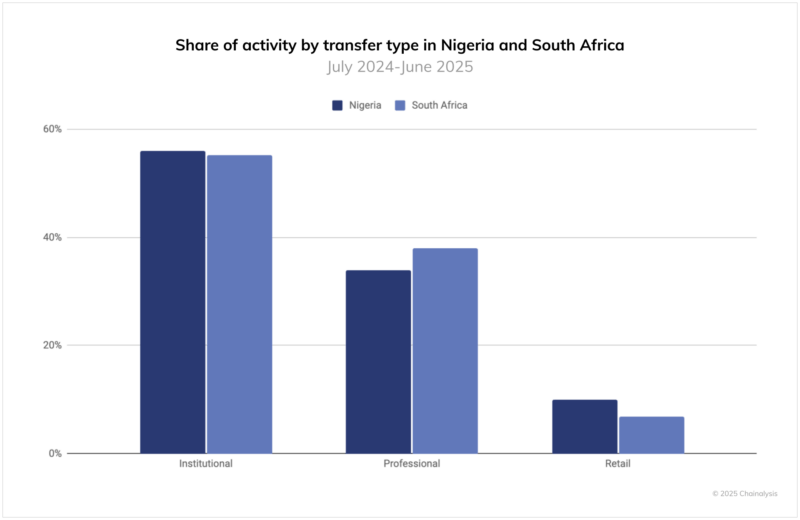
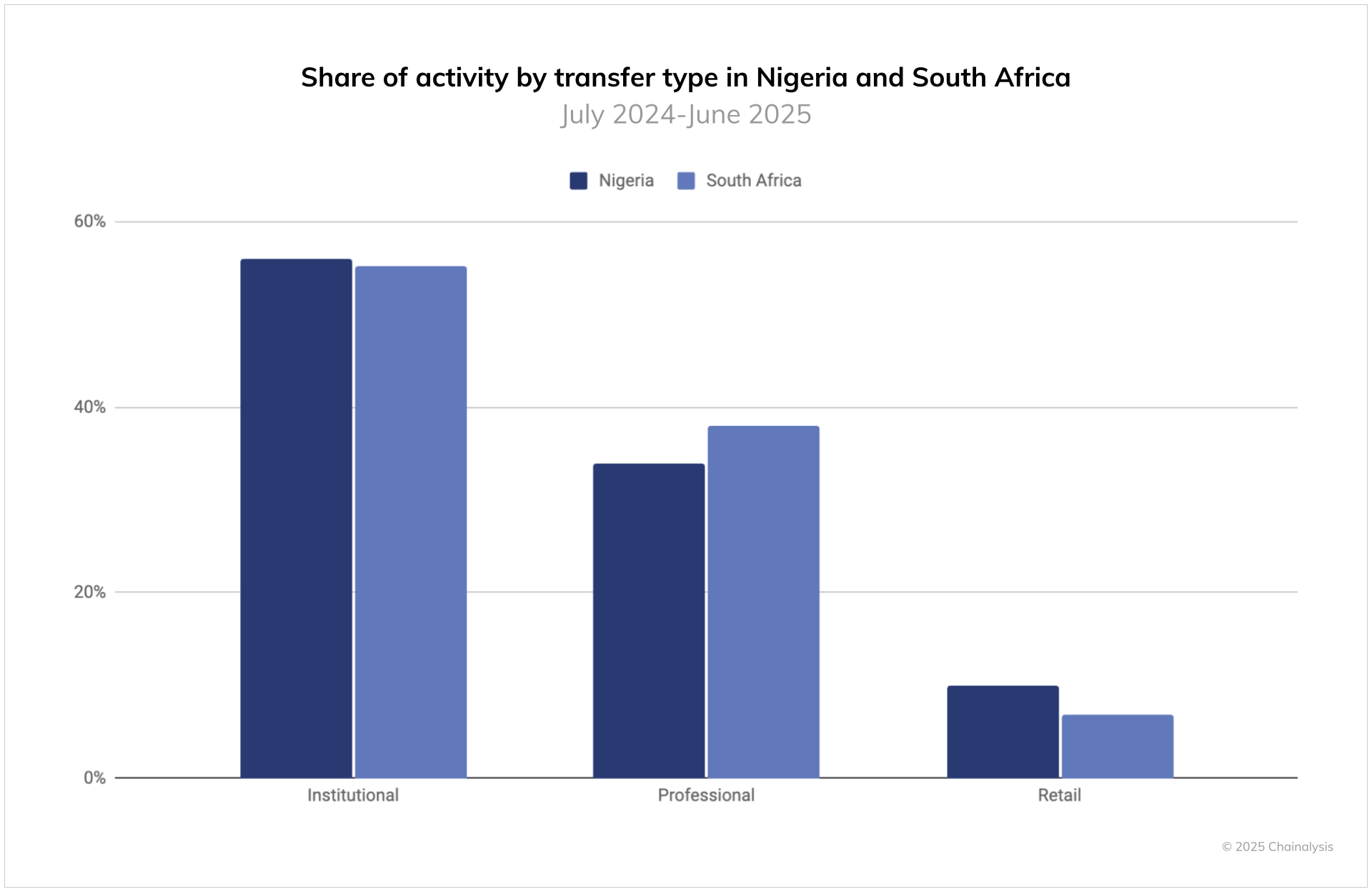
South Africa and Nigeria are Africa's biggest users of crypto. Source: Chainalysis.
South Africa has an estimated 5.8 million cryptocurrency users, with roughly half already using digital assets for payments, according to 2024 Triple-A estimates. The country stands out in Sub-Saharan Africa for its advanced regulatory framework, which has fostered a more institutionalized crypto market, Chainalysis said in a September 2025 report.
Related: Rwanda swats Bybit’s P2P platform offering franc-to-crypto trading
Cross-border remittances fuel crypto adoption in Africa
Crypto use across Africa is increasingly tied to payments and financial access, even as regulators warn of potential risks to the traditional system.
In January, former UN Under-Secretary-General Vera Songwe said remittances are becoming more significant than foreign aid in parts of the continent, with stablecoins gaining traction as a lower-cost alternative for cross-border transfers.
Speaking at the World Economic Forum, she noted that traditional transfers can cost about $6 per $100 sent, while stablecoins reduce fees and settlement times to minutes, particularly in markets facing high inflation and limited access to banking services.
Stablecoins are widely used for payments and remittances, though Bitcoin (BTC) is also being used directly in some local economies.
Stafford Masie, a South African technology executive and executive chairman of Africa Bitcoin Corporation, said in March that Bitcoin functions as everyday money in parts of the region, with some communities transacting directly in satoshis. He told Natalie Brunell on the Coin Stories podcast that adoption is being driven by high inflation and limited access to stable financial systems, particularly among younger users bypassing traditional banking infrastructure.

Stafford Masie (left) speaking on Natalie Brunell's Coin Stories podcast. Source: Coin Stories
The growing use of crypto and stablecoins has drawn pushback from some central banks. In November 2025, the South African Reserve Bank warned that rising crypto and stablecoin use could pose risks to financial stability, citing 7.8 million users across the country’s largest exchanges and about $1.5 billion in custody.


Subscribe to daily byte-sized crypto news from Cointelegraph
Cointelegraph is committed to independent, transparent journalism. This news article is produced in accordance with Cointelegraph’s Editorial Policy and aims to provide accurate and timely information. Readers are encouraged to verify information independently.
More on the subject