


 Written by Sam Bourgistaff writerEdited by Robert Lakinstaff editor
Circle stock sinks 10% amid analyst downgrade, Drift Protocol probe
Latest NewsPublishedApr 9, 2026
The stablecoin issuer faces pressure after a stock downgrade and Drift Protocol exploit fallout, raising concerns over USDC exposure, crypto regulation and market risk.

Shares of stablecoin issuer Circle Internet Group fell sharply Thursday following a Wall Street downgrade and reports tied to a legal probe connected to a recent crypto exploit.
Circle’s stock price closed near session lows in Nasdaq trading, falling 9.9% to $85.10.
The decline adds to a broader slide in the company’s shares, which are down nearly 24% over the past month and about 43% over the past six months, reflecting continued volatility after Circle’s high-profile public debut last year.
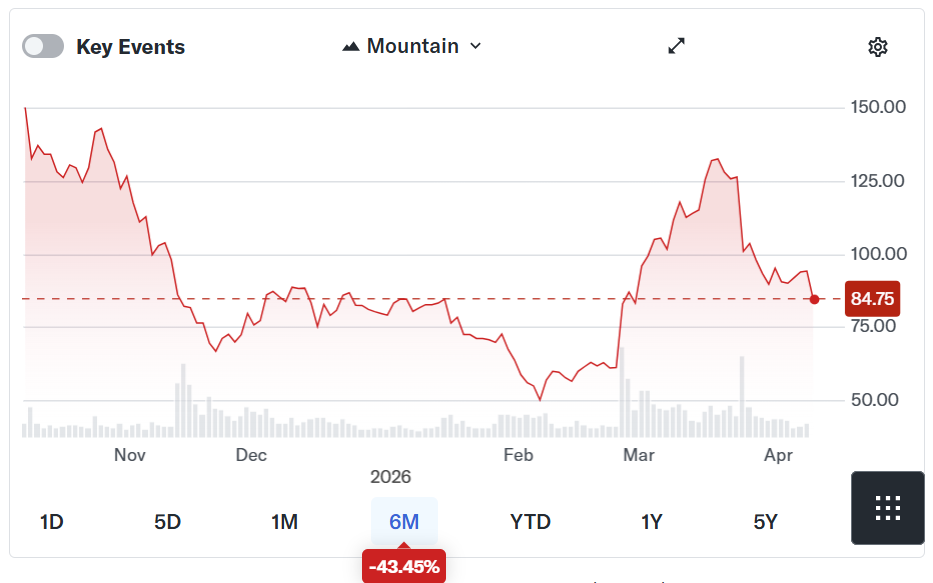
Circle Internet Group (CRCL) stock. Source: Yahoo Finance
However, the latest pullback may also reflect profit-taking after Circle shares surged between February and March, driven largely by growing stablecoin adoption.
Nevertheless, some analysts are urging caution. On Thursday, Compass Point downgraded Circle to “sell” from “neutral” and issued a $77 price target, implying roughly 9% downside from current levels.
Circle has also faced pressure from regulatory uncertainty in the United States. Progress on market structure legislation has stalled, while banking industry groups continue to lobby against yield-bearing stablecoins.
Analysts at Bernstein said the concerns are overstated, noting that Circle’s underlying business remains unaffected and pointing to growing USDC (USDC) adoption and strong reserve income.
Related: Crypto investor sentiment will rise once CLARITY Act is passed: Bessent
Fallout from Drift Protocol exploit continues to weigh on crypto markets
Separately, legal scrutiny tied to the recent exploit of decentralized exchange Drift Protocol has added another layer of uncertainty to the broader crypto market, indirectly weighing on sentiment toward Circle.
According to a notice circulated this week, investors affected by the $280 million Drift exploit are being urged to contact the Oakland, California, law firm Gibbs Mura for potential financial recovery. The outreach signals the early stages of a possible class-action investigation tied to losses from the incident.

Source: Cointelegraph
While Circle is not directly implicated in the exploit, the episode has renewed concerns about counterparty risk and the stability of decentralized finance platforms — an overhang that can spill over into publicly traded crypto-linked equities.
The perpetrator of the Drift exploit moved the stolen assets into USDC, prompting speculation over whether the funds could have been frozen by Circle, though no action was taken.
Related: Crypto hacks fall to $49M in February as attackers shift to phishing scams


Subscribe to daily byte-sized crypto news from Cointelegraph
Cointelegraph is committed to independent, transparent journalism. This news article is produced in accordance with Cointelegraph’s Editorial Policy and aims to provide accurate and timely information. Readers are encouraged to verify information independently.
More on the subject