


 Written by Cointelegraphstaff writerReviewed by Jesse Coghlanstaff editor
Here’s what happened in crypto today
Latest NewsPublishedJun 17, 2026
Need to know what happened in crypto today? Here is the latest news on daily trends and events impacting Bitcoin price, blockchain, DeFi, Web3 and crypto regulation.

Today in crypto, Congress has cut a deal to move forward with a housing bill, inclusive of a CBDC ban, while industry observers are focused on crypto PAC spending in Alabama. Robinhood has meanwhile cut 10% of its workforce after CEO Vlad Tenev said the business “has never been stronger.”
Congress reaches deal on housing bill with CBDC ban
US House and Senate leaders reached a deal to move forward with a bill aimed at addressing housing affordability, which will include a ban on the Federal Reserve creating a central bank digital currency (CBDC) until 2030.
A bipartisan group of House and Senate leaders released an updated version of the 21st Century Road to Housing Act on Tuesday after negotiations over disagreements on some aspects of the bill. The latest version kept in a CBDC ban that has been included since the Senate passed it in March. The House also passed its version of the bill with strong support in May.
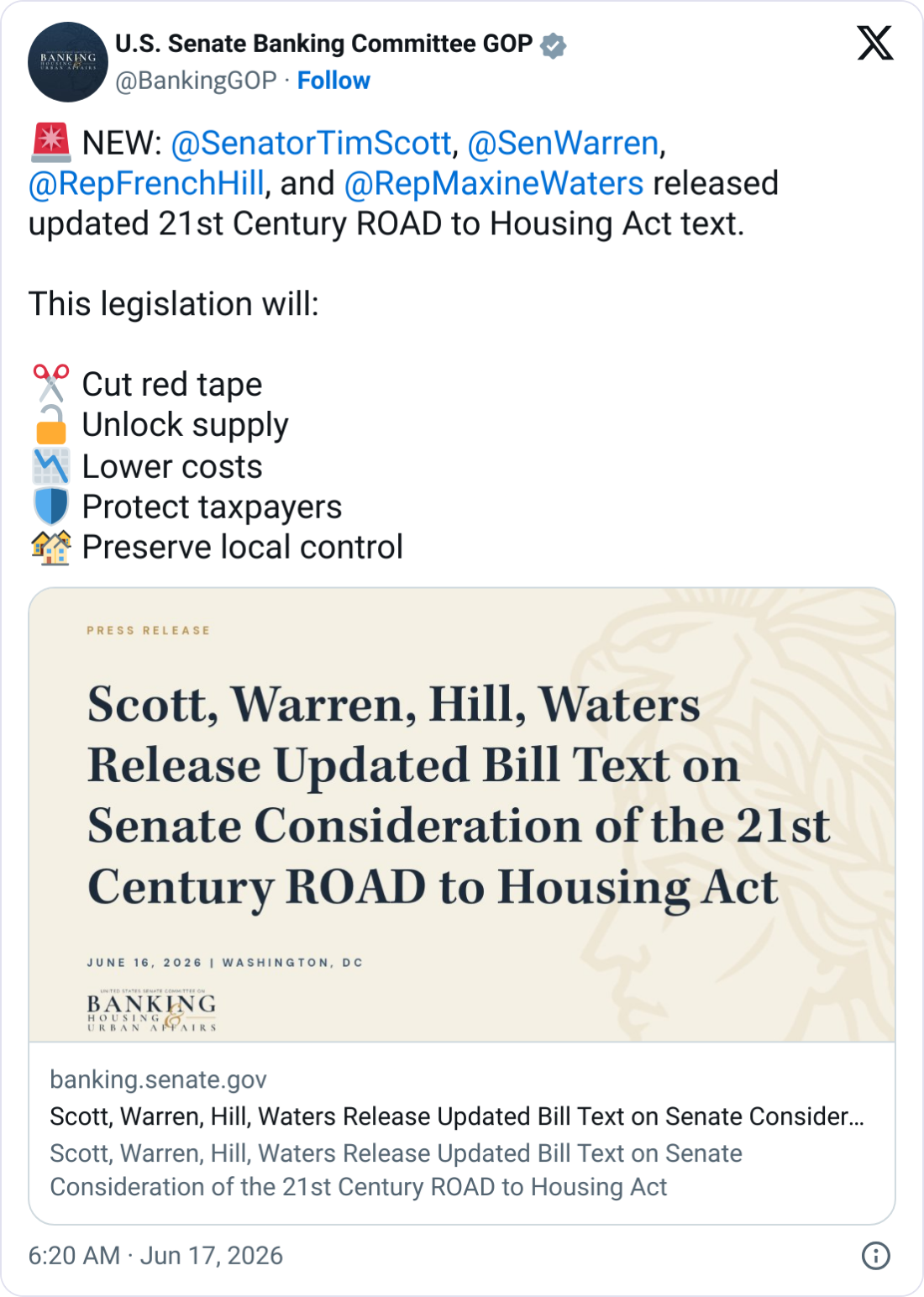
Source: US Senate Banking Committee GOP
House Republican leaders reportedly plan to put the bill up for a vote after the House returns from recess on June 23 and is likely to hand a win to Republicans who have tried to pass a CBDC ban for years, as earlier standalone bills had stalled in Congress.
The bill says the Federal Reserve may not, directly or indirectly, “issue or create a central bank digital currency or any digital asset that is substantially similar to a central bank digital currency,” a clause that will expire on Dec. 31, 2030.
US President Donald Trump signed an executive order in January 2025 banning federal agencies from all work related to CBDCs, saying they threatened “the stability of the financial system, individual privacy, and the sovereignty of the United States.”
Crypto PAC has $12M stake in Senate primary runoff as Alabama voters head to polls
Defend American Jobs, the cryptocurrency company-backed political action committee (PAC) affiliated with Fairshake, reported spending millions of dollars to support a Republican candidate’s run for a US Senate seat in the party’s Tuesday primary runoff in Alabama.
As of Tuesday, filings with the Federal Election Commission (FEC) showed that Defend American Jobs had spent more than $4.7 million on media and ads to back Republican Barry Moore’s candidacy in a runoff for one of Alabama’s US Senate seats, adding to the $7.4 million it reported spending ahead of his May 20 primary. Moore, who also has the endorsement of US President Donald Trump, is running against Jared Hudson, another Republican vying to replace Tommy Tuberville, who announced that he would not be seeking reelection, as he is focused on becoming the state’s next governor.
The Alabama runoff will be another test of the crypto industry’s influence in US elections, with Fairshake and its affiliates having already poured millions of dollars into media for candidates facing primaries in Texas and California. Following Tuesday’s vote in Alabama, the PACs will also have stakes in Maryland and New York later this month, backing Democrats Adrian Boafo and Ritchie Torres with about $5 million and $500,000 in media buys for House seats, respectively.
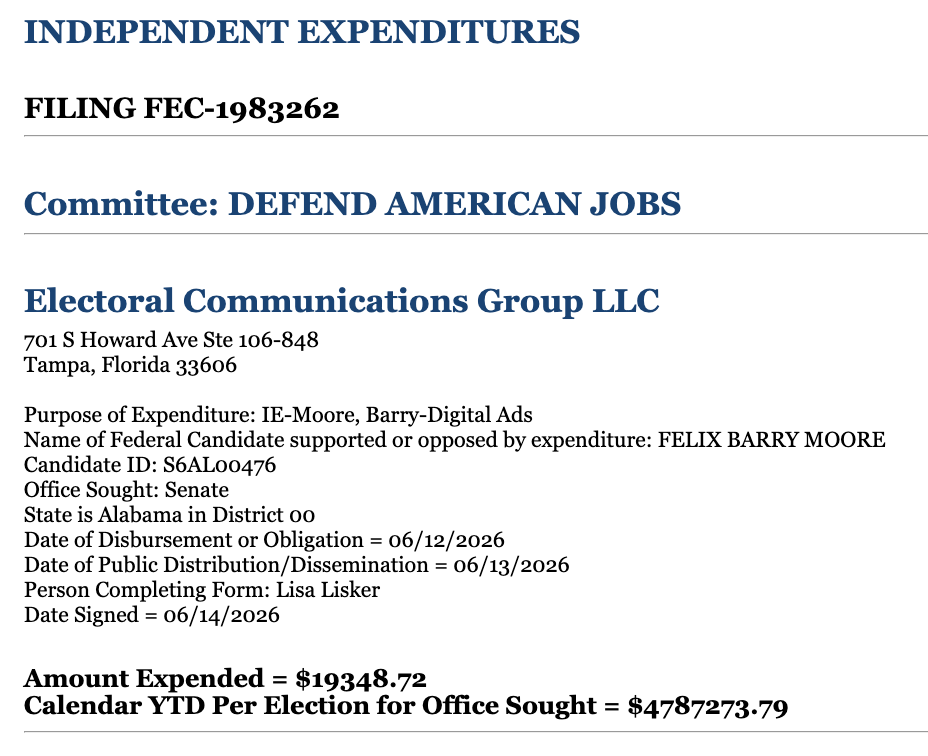
Source: Federal Election Commission
Robinhood cuts 10% of workforce as Tenev touts business strength
Stock and crypto trading platform Robinhood is cutting 10% of its workforce as it restructures its organization, a move the company said will improve efficiency.
Tenev told staff the company is reducing 10% of its full-time employees as part of “flattening” its org structure, according to a statement on X by Robinhood on Tuesday.
In an internal memo, Tenev said the company cannot “default to operating as a heavily-layered organization” if it wants to scale its mission, adding that Robinhood must “continuously raise” its performance bar.
The rationale mirrors explanations offered by major crypto companies such as US exchange Coinbase and Jack Dorsey’s Block, which have also linked layoffs this year to reducing management layers and improving efficiency.
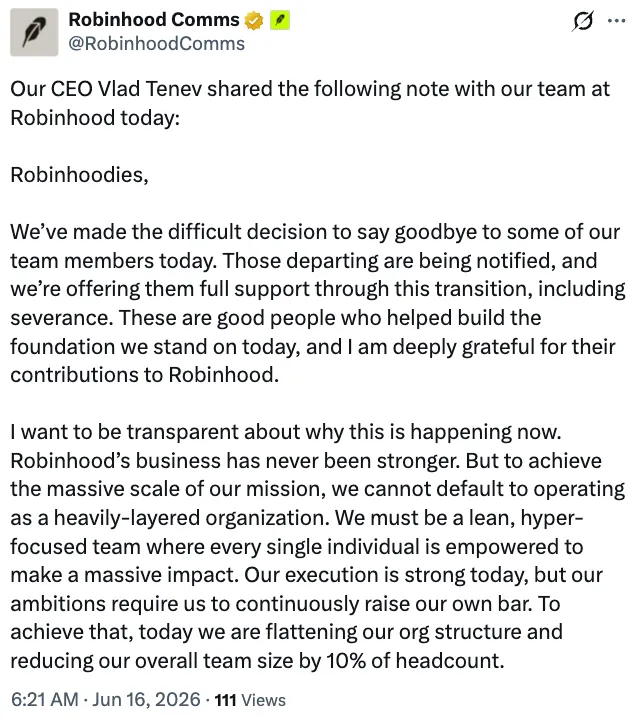
Source: Robinhood Comms
Cointelegraph is committed to independent, transparent journalism. This news article is produced in accordance with Cointelegraph’s Editorial Policy and aims to provide accurate and timely information. Readers are encouraged to verify information independently.
More on the subject