

 Written by Dilip Kumar Patairyastaff writerEdited by Rahul Nambiampurathstaff editor
Why do central banks still trust gold more than digital assets?
MagazinePublishedMay 22, 2026
Central banks are embracing digital finance, yet gold remains the dominant reserve asset. Several factors continue to limit institutional confidence in crypto.

Old metal, new money: The same question
Central banks are testing blockchain-based settlement platforms, developing central bank digital currencies (CBDCs) and examining tokenized assets. Digital currencies and tokens are gaining traction in global finance.
When it comes to safeguarding national reserves, however, the vast majority still turn to gold.
This difference highlights a core reality in monetary policy: Cutting-edge technology does not automatically qualify an asset for reserve status. Central banks are primarily focused on preserving liquidity, credibility and stability rather than pursuing growth opportunities. They seek holdings that can withstand wars, economic sanctions, banking collapses, runaway inflation and geopolitical shocks.
For most monetary authorities, gold continues to meet these demanding criteria more reliably than cryptocurrencies or other digital assets.
What central banks require from reserve assets
Official reserves help stabilize exchange rates and cover external payment needs. They also support essential imports during emergencies and reinforce confidence in the national currency.
These assets must therefore meet rigorous criteria, including high liquidity, broad international acceptance, relative price stability and strong legal protections. Above all, they need to retain value when financial systems come under severe pressure.
Reserve management is fundamentally different from typical investment strategies. While private investors and funds may accept sharp price swings in pursuit of higher returns, central banks generally seek assets that limit volatility and preserve liquidity during periods of stress.
The International Monetary Fund (IMF) includes monetary gold among official reserve assets within the international monetary framework. For central banks, gold is not merely a commodity. It is a long-established reserve asset valued for its liquidity, historical credibility and lack of dependence on any single issuer.
Despite the rapid growth of digital assets, they have yet to fully meet these reserve-management requirements.
Did you know? The US holds more than 8,000 metric tons of gold, making it the world’s largest official gold holder. About half of the US Treasury’s stored gold is held at Fort Knox, a facility that has become a powerful symbol of monetary security and national wealth.
Why gold retains institutional trust
Gold’s primary strength lies not in innovation or income potential but in the deep, centuries-old confidence it commands.
Central banks have extensive historical evidence of how gold behaves during periods of inflation, conflict, sanctions and financial turmoil. Gold holdings predate modern digital systems and have endured repeated changes in the global monetary order.
Unlike fiat currencies, gold is not tied to the creditworthiness of any single country. Unlike stocks or bonds, it does not depend on a corporate issuer. This independence is particularly valuable during periods of heightened geopolitical tension.
Data tracked by the World Gold Council, based on IMF statistics and other official sources, show that central banks in both advanced and developing economies continue to hold substantial gold reserves. The United States, Germany, Italy and France each hold thousands of tonnes, while China and India also remain among the world’s major official gold holders. This reflects gold’s long-established role in national reserve management.
Why central bank demand for gold remains strong
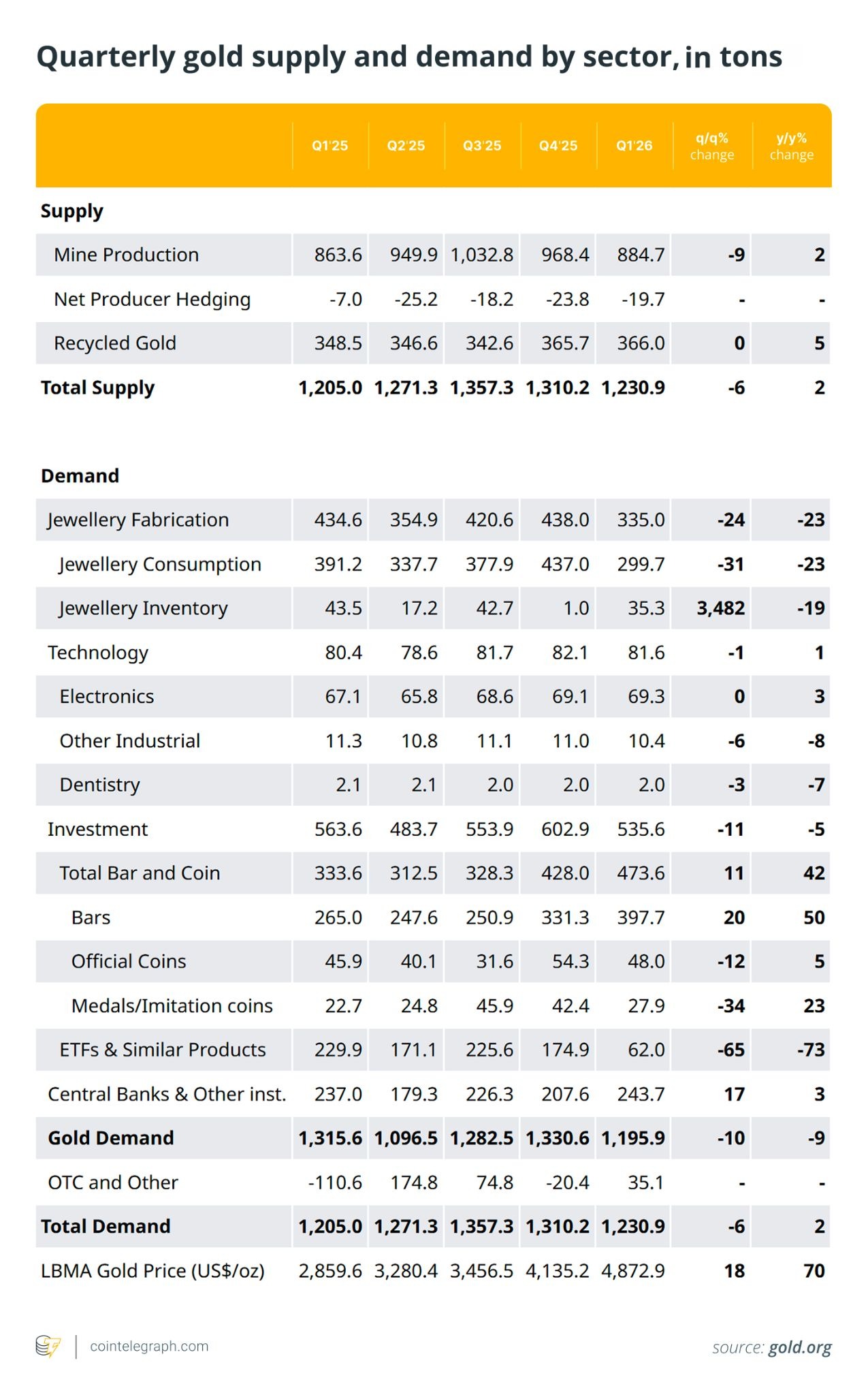
Central banks continue to accumulate gold even as digital currencies and financial technology reshape global finance. Official-sector gold demand has remained historically high in recent years.
According to the European Central Bank (ECB), central bank gold purchases accounted for more than one-fifth of global gold demand in 2024. The World Gold Council’s 2025 survey found that 43% of responding central banks expected to increase their own gold holdings over the following 12 months, while 95% expected global central bank gold reserves to rise.
Several factors help explain this demand, including concerns about inflation, geopolitical risk and reliance on foreign currencies or external financial infrastructure.
The immobilization of Russian central bank assets following Russia’s invasion of Ukraine demonstrated that foreign-held reserve assets can become inaccessible under sanctions. The ECB has linked the subsequent rise in official gold demand partly to geopolitical risk and sanctions concerns.
Gold stands out in this context because, when held directly within a country’s control, it does not depend on an issuer or foreign payment network. This does not make gold immune to every risk, but it can reduce exposure to the freezing of assets held through external financial institutions.
These characteristics have strengthened gold’s appeal to some reserve managers seeking diversification and resilience during periods of geopolitical tension.
Did you know? Physical gold held by central banks does not rely on electricity, internet access or software networks to exist as a reserve asset. During a digital disruption, it can remain under a central bank’s control and retain its status as an internationally recognized reserve asset.
Why gold is less exposed to political control
One of gold’s main strengths as a reserve asset is that it is not dependent on any single issuer or institution. Government bonds, by contrast, ultimately depend on the creditworthiness and policy choices of the issuing country.
Foreign currency holdings and overseas accounts can also be affected by sanctions, legal disputes or diplomatic tensions. Physical gold held domestically does not rely on a foreign issuer, external payment network or third-party custodian. This feature can be especially valuable to central banks during periods of heightened geopolitical risk.
Digital assets present a different set of challenges. Their use may involve dependence on software, network security, exchanges, custodians and evolving regulatory frameworks. Even decentralized cryptocurrencies depend on functioning code and distributed networks. For many central banks, these factors limit the suitability of digital assets as reserve holdings.
Why cryptocurrencies face barriers as reserve assets
Cryptocurrencies have attracted growing institutional attention, but most central banks do not treat them as core reserve assets.
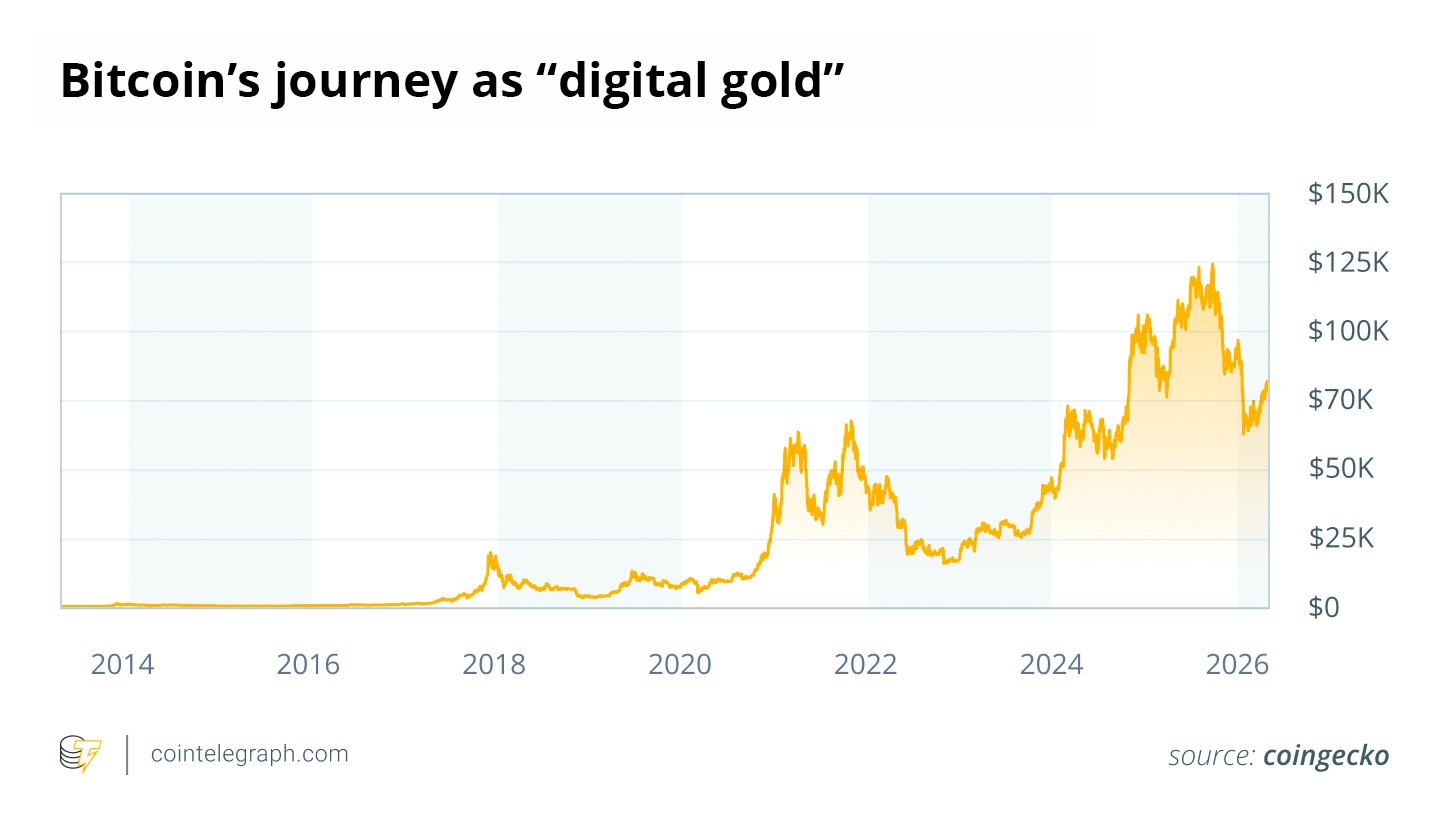
Volatility remains a major barrier. Bitcoin and other cryptocurrencies can experience sharp price movements over short periods. Reserve portfolios, by contrast, are generally designed to preserve liquidity, support external payment needs and maintain stability during periods of stress. Large price swings can make cryptocurrencies difficult to use for these purposes.
Legal and regulatory uncertainty presents another challenge. Rules governing custody, taxation, anti money-laundering (AML) obligations and asset classification differ across jurisdictions and continue to develop. Central banks generally prefer reserve assets with established legal treatment and well-developed market infrastructure.
Operational and security risks add further caution. Holding cryptocurrencies may involve cybersecurity risks, custody arrangements, private-key management and dependence on functioning networks. Gold also carries storage and security costs, but its reserve-management framework is far more established. Exchange failures and major security breaches in the crypto sector have further reinforced official concerns.
These concerns are reflected in public institutional positions. In April 2025, Swiss National Bank Chairman Martin Schlegel rejected adding Bitcoin to the bank’s reserves, citing volatility and insufficient market liquidity. The World Bank has similarly concluded that crypto assets such as Bitcoin and Ether are not currently suitable for central bank reserve portfolios because they do not meet key reserve-management requirements.
Why central banks remain skeptical of Bitcoin as “digital gold”
Bitcoin advocates often describe it as “digital gold,” pointing to similarities such as its capped supply, lack of a central issuer and ability to be transferred outside conventional banking channels. Supporters argue that these features may make it appealing during periods of concern about currency depreciation or rising public debt.
However, reserve managers assess assets according to different priorities than individual investors. They focus on liquidity during periods of stress, legal and accounting treatment, operational reliability, market depth and suitability for supporting national financial obligations.
Bitcoin’s relatively short history makes it difficult to evaluate its behavior across decades of monetary, financial and geopolitical crises. Its price volatility and less mature market structure also remain significant barriers for central banks assessing reserve assets.
Gold, by contrast, has a much longer-established role in official reserve management. The European Central Bank reported that gold became the world’s second-largest global reserve asset at market prices in 2024, behind the US dollar. Bitcoin may continue to attract interest as an alternative asset, but its suitability as a central bank reserve holding remains unproven.
Stablecoins come with their own credibility challenges
Stablecoins are designed to maintain a stable value, but they raise different questions from cryptocurrencies such as Bitcoin.
Most widely used stablecoins depend on private issuers, reserve assets and redemption arrangements. Their reliability therefore depends not only on technology but also on the quality and liquidity of reserves, governance standards, regulatory oversight and confidence in the issuer. The IMF identifies issuance, redemption mechanisms, reserve assets, custodians and governance as core components of stablecoin arrangements.
Stablecoin networks may offer faster and more efficient payment capabilities. However, those benefits do not automatically make the tokens suitable as central bank reserve holdings. Regulators have warned that large, widely used stablecoin arrangements could create financial stability risks, particularly if confidence in their backing or redemption mechanisms weakens during periods of stress.
For reserve managers, relying on privately issued stablecoins could replace one set of risks with another, including issuer risk, reserve-quality risk, liquidity risk and regulatory uncertainty.
Central banks may trust blockchain without trusting crypto as a reserve asset
Central banks are not turning away from digital innovation. Many are researching or testing tokenized central bank money, tokenized deposits and tokenized securities, as well as programmable platforms designed to improve settlement processes.
The BIS has examined how tokenization could reduce delays, streamline reconciliation and support more efficient settlement while preserving the role of central bank money at the core of the financial system. In its 2025 Annual Economic Report, the BIS described a model involving tokenized central bank reserves, commercial bank money and government bonds on a shared platform.
This distinction is important. A central bank can explore tokenized infrastructure for operational improvements without holding Bitcoin, stablecoins or other crypto assets as reserve assets.
Central banks may therefore support digital systems where they improve efficiency while remaining cautious about assets that introduce volatility, issuer risk, liquidity concerns or regulatory uncertainty. This approach allows them to assess new technologies without changing the principles that guide public reserve management.
Gold’s drawbacks are well known, while crypto risks are still developing
Gold is not an ideal reserve asset. It generates no income, requires secure storage and can experience significant price fluctuations. Transporting and protecting large physical holdings also involves logistical costs.
Central banks, however, have long-established frameworks for managing these limitations.
Crypto assets present newer and less predictable challenges, including cybersecurity threats, custody risks, protocol-related issues, regulatory uncertainty and failures involving exchanges or other service providers.
For central banks, reserve management is not about choosing the newest or most exciting asset. It is about holding assets that remain reliable and easy to access during a crisis.
Gold has drawbacks, but central banks understand how to manage them. Crypto assets still face questions around price swings, legal rules, security and liquidity during periods of stress. Until these concerns are addressed, gold is likely to remain a key reserve asset for central banks.
What this means for crypto investors
Central bank caution does not diminish the potential or usefulness of digital assets. It simply highlights the difference between an asset that may attract investors and one considered suitable for national reserves.
Digital assets may continue to gain ground in payments, tokenized markets, settlement systems and institutional financial products long before central banks consider holding cryptocurrencies as core reserve assets.
Bitcoin and other cryptocurrencies may become more important in the global financial system, but competing with gold on official balance sheets requires more than market interest. It requires a long record of resilience, clearer regulation, deep liquidity and sustained confidence among reserve managers.
Such a shift, should it occur, is likely to take time.
Trust remains the true reserve asset
Gold remains a major part of many central banks’ reserves because it offers a long historical record, deep liquidity and no dependence on a single issuer. Its role during periods of financial and geopolitical stress is also better understood than that of digital assets.
Cryptocurrencies offer new possibilities for payments, settlement and financial innovation. However, central banks generally continue to view them as more volatile and less established as reserve assets than gold.
The financial system of the future may incorporate both gold and digital assets in different roles. For now, central banks seeking reliable reserve assets during periods of uncertainty continue to place significant trust in gold.


Subscribe to daily byte-sized crypto news from Cointelegraph
Cointelegraph publishes long-form journalism, analysis and narrative reporting produced by Cointelegraph’s in-house editorial team with subject-matter expertise. All articles are edited and reviewed by Cointelegraph editors in line with our editorial standards. Some articles contain affiliate links, from which Cointelegraph may earn a commission. These relationships do not influence which products we review or our editorial conclusions. Content published in here does not constitute financial, legal or investment advice. Readers should conduct their own research and consult qualified professionals where appropriate. Cointelegraph maintains full editorial independence.
More on the subject