

 Written by Christina Combenstaff writerEdited by Bryan O'Sheastaff editor
China’s new online marketing rules tighten ban on crypto promotions
Latest NewsPublishedApr 24, 2026
China’s new online marketing rules tighten an already sweeping crypto ban and place fresh pressure on financial influencers, echoing parallel crackdowns in Europe, Australia and the UK.

China’s central bank and seven other regulators have finalized the “Administrative Measures for Online Marketing of Financial Products” (Announcement No. 9), dated April 21 and publicly released on Friday.
The rules take effect on Sept. 30, and confine online marketing of financial products to licensed financial institutions and lawfully entrusted third-party platforms, and prohibit any organization or individual from offering online marketing services or any other form of assistance that facilitates illegal financial activities.
The text explicitly folds digital currency issuance and trading, along with illegal foreign exchange margin business, into the definition of illegal financial activity, reinforcing a stance first made explicit when the People’s Bank of China declared all crypto transactions illegal in 2021.
Officials frame the measures as consumer protection rules aimed at curbing misleading or aggressive online promotion, including livestream selling and viral campaigns around leveraged or opaque products, and warn that platforms, intermediaries and content creators may bear responsibility for facilitating or failing to curb such marketing.
Related: Circle CEO sees ‘tremendous opportunity’ for yuan stablecoin despite China curbs
The regulators include the People's Bank of China, the Ministry of Industry and Information Technology, the State Administration for Market Regulation, the National Financial Regulatory Administration, the China Securities Regulatory Commission, the State Intellectual Property Office, the Cyberspace Administration of China and the State Administration of Foreign Exchange.
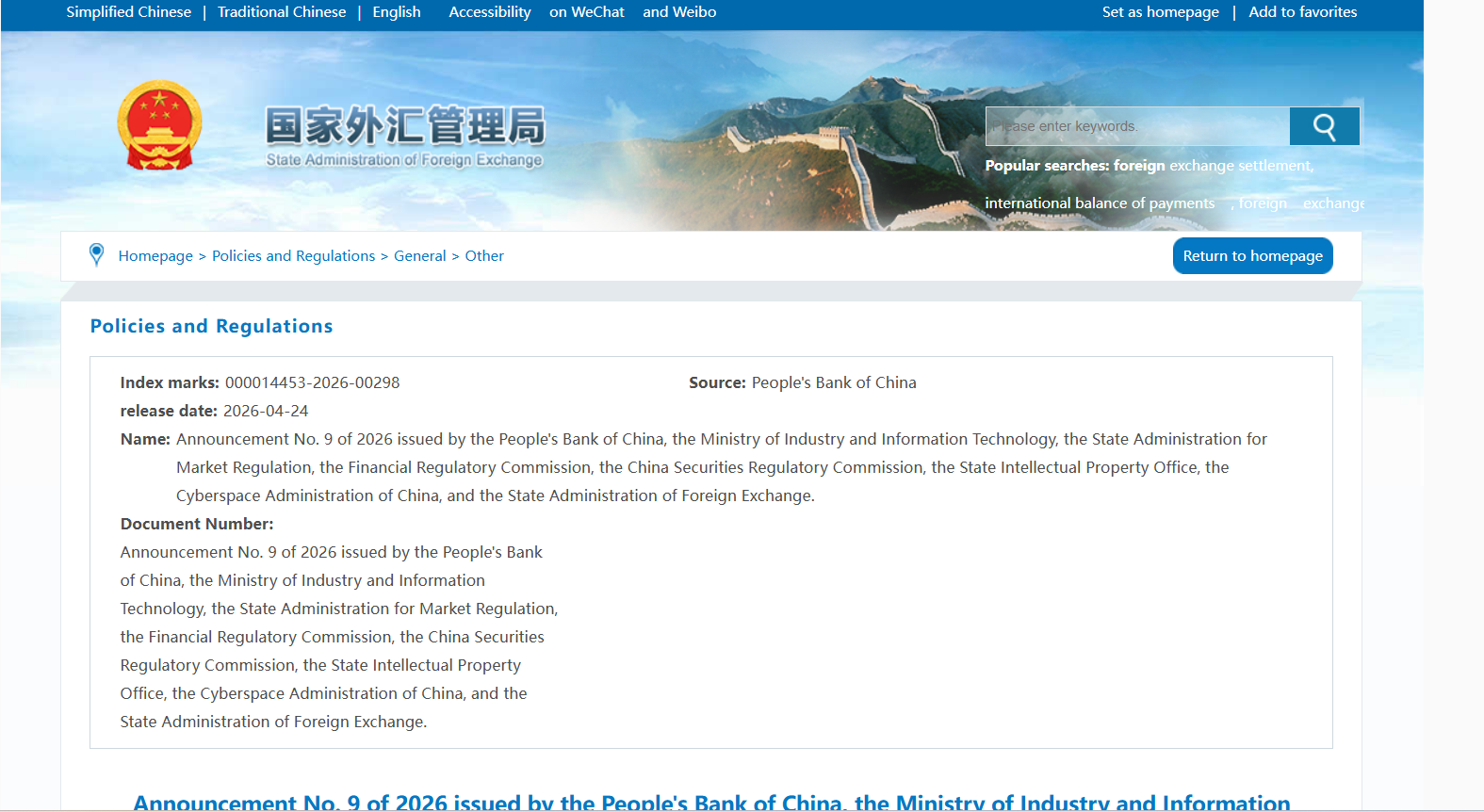
Administrative Measures for Online Marketing of Financial Products. Source: State Administration of Foreign Exchange.
China has already banned domestic crypto trading platforms and mining projects and barred financial institutions from providing crypto-related services, pushing most onshore activity out of the formal financial system.
The new regime tightens the perimeter by targeting the digital marketing layer, warning platforms, intermediaries and content creators that facilitating promotions for banned products can itself amount to participation in illegal finance.
Global regulators step up action against financial influencers
Other regulators are moving in parallel. Italy’s securities regulator CONSOB amplified a so-called “finfluencer” (financial influencer) factsheet from the European Securities and Markets Authority in January, warning that European Union investment recommendation and advertising rules fully apply to social media promotion of crypto and “get rich quick” products.
In Australia, the securities watchdog, the Australian Securities and Investments Commission (ASIC), warned in March that Gen-Z investors increasingly rely on social media personalities and artificial intelligence tools for investment calls, citing survey data showing that about 23% of young investors hold crypto and that many trade based on online content they trust as credible.
In the United Kingdom, the Financial Conduct Authority (FCA) said Friday it spearheaded a coordinated “week of action,” which started Monday, with 17 global regulators, including Hong Kong’s Securities and Futures Commission, Australia’s ASIC and the United Arab Emirates' Capital Market Authority, focused on illegal financial influencers.
The FCA said the campaign led to three criminal proceedings in the UK, around 50 warning alerts, and 120 takedown requests to social media platforms hosting illegal finfluencer content.
Magazine: AI-driven hacks could kill DeFi — unless projects act now


Subscribe to daily byte-sized crypto news from Cointelegraph
Cointelegraph is committed to independent, transparent journalism. This news article is produced in accordance with Cointelegraph’s Editorial Policy and aims to provide accurate and timely information. Readers are encouraged to verify information independently.
More on the subject