

 Written by Zoltan Vardaistaff writerEdited by Robert Lakinstaff editor
Ledger implant tests Bitcoin ETFs as safer custodial solutions than hardware wallets
Latest NewsPublishedOct 12, 2026
The discovery of an unauthorized Ledger hardware implant reignited debate on whether Bitcoin ETFs are safer than self-custodying Bitcoin via hardware wallet devices.
The newly discovered Ledger exploit has stirred broad industry debate over the safety of hardware wallets compared to effectively custodying Bitcoin holdings through exchange-traded funds (ETFs).
Bitcoin analyst Plan B said his then-controversial decision to move his Bitcoin (BTC) holdings to ETFs in 2025 was the right call in light of the recent Coldcard and Ledger exploits. “Zero regrets” about my ETF decision, wrote the analyst in a Monday X post.
Large holders have been converting self-custodied assets to ETFs for “enhanced security” for years, which is one of the main “selling points” for ETFs, 21Shares co-founder Ophelia Snyder told Cointelegraph in an email on Monday, adding that the recent exploits made this phenomenon part of the “public discourse.”
The remarks follow the discovery of a compromised Ledger wallet that contained an unauthorized hardware implant. Some blockchain investigators estimated that losses from these implants could top $86 million, raising questions about the security of self-custodial cold wallets.
Related: Standard Chartered plans institutional crypto custody in Singapore
Hardware wallets are still safe, but providers need better threat modelling: Adam Back
To be sure, hardware wallets can still be secure custodial options, but providers need a better understanding of the emerging threat landscape, according to Blockstream CEO and Hashcash inventor Adam Back.
“Surprisingly few manufacturers understood the generic attacks, or so it seemed from their marketing and design choices, for the last decade. Time to catch up with threat-modelling,” wrote Back in a Saturday X post.
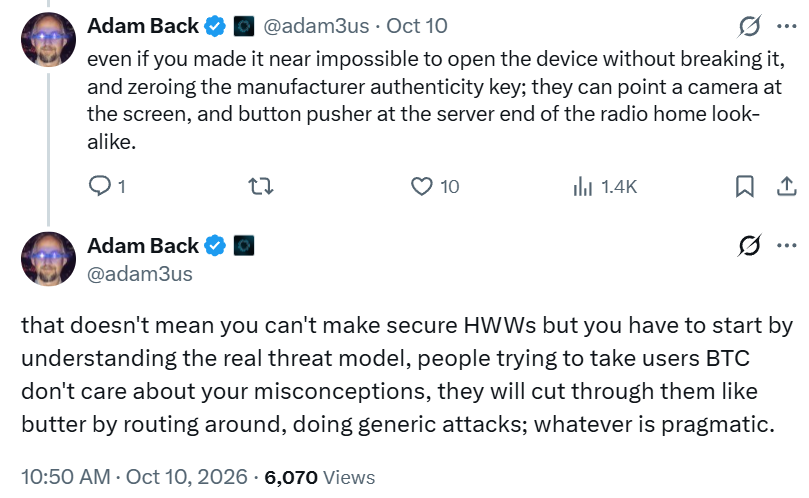
Source: Adam Back
However, Snyder said the main issue with self-custodial wallets is that their security depends on investors’ technical expertise and individual setup. She said:
“Without taking the time and rigor to set up properly, self-custody will always be less secure than handing over the assets to a specialist firm whose job it is to manage those protocols for you.”
Bitcoin security researcher and cypherpunk Jameson Lopp also said that self-custodial wallets can be a robust option, but urged investors to avoid mass migration to create new central points of failure during rushed transactions.
Magazine: Bitcoiners turn to dice throws as self-custody setups are re-evaluated


Subscribe to daily byte-sized crypto news from Cointelegraph
Cointelegraph is committed to independent, transparent journalism. This news article is produced in accordance with Cointelegraph’s Editorial Policy and aims to provide accurate and timely information. Readers are encouraged to verify information independently.
More on the subject