


 Written by Marcel Pechmanformer writerEdited by Ray Salmondformer editor
Bitcoin nearly loses $59K as DXY surges: Are traders bracing for more pain?
MarketsPublishedJun 24, 2026
Bitcoin drops toward new 2026 lows as spot BTC ETF outflows and slowing accumulation from Strategy weigh on market sentiment.

Key takeaways:
- Cooling oil prices and a multi-month high for the US dollar are keeping intense pressure on non yield-bearing assets.
- Spot Bitcoin ETF outflows paired with Strategy's slowest buying pace in 18 months signal short-term downside risks.
Bitcoin (BTC) traded down to $59,060 on Wednesday despite the sharp retreat in oil prices. Inflationary pressures eased following a memorandum of understanding between the US and Iran, which temporarily reopened the Strait of Hormuz. Bitcoin traders fear that the bounce back to $60,000 might not last long as the US dollar strengthened.
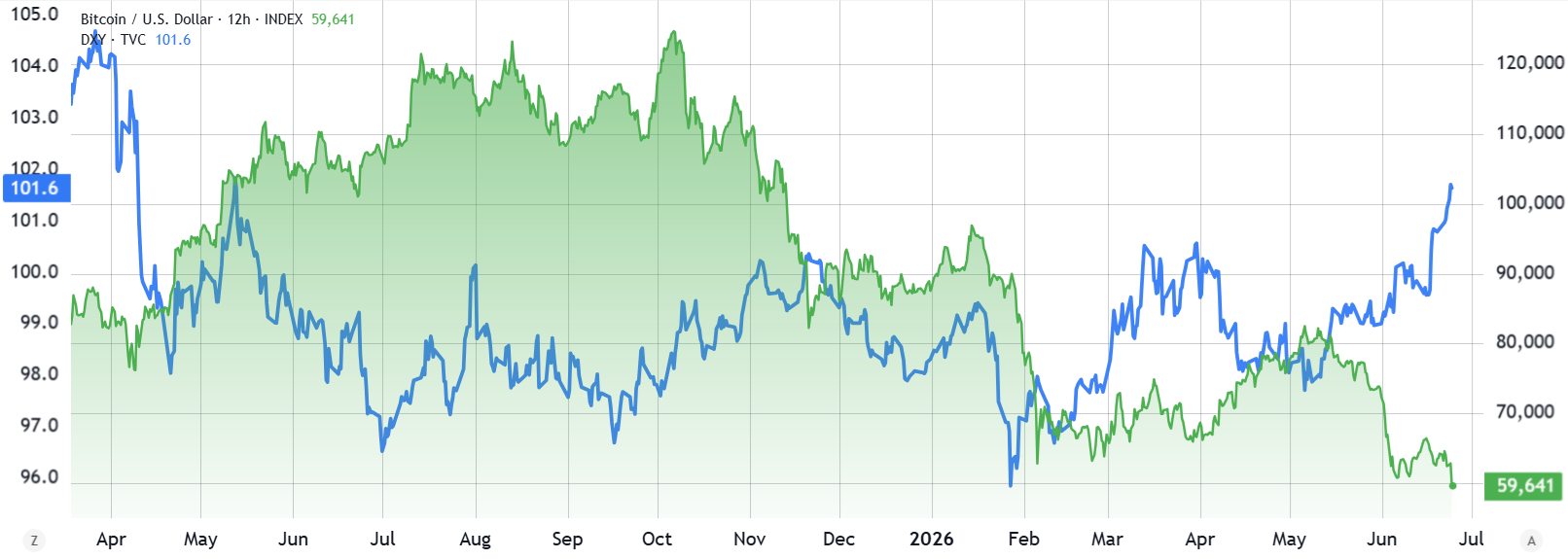
US dollar strength index (left) vs. Bitcoin/USD (right). Source: TradingView
The US dollar jumped to its highest level against a basket of foreign currencies in 13 months, indicating growing confidence in the US economy. Typically, this metric shows a negative correlation with Bitcoin’s price, as some investors view the cryptocurrency as a hedge against inflationary pressures traditionally driven by high oil prices.
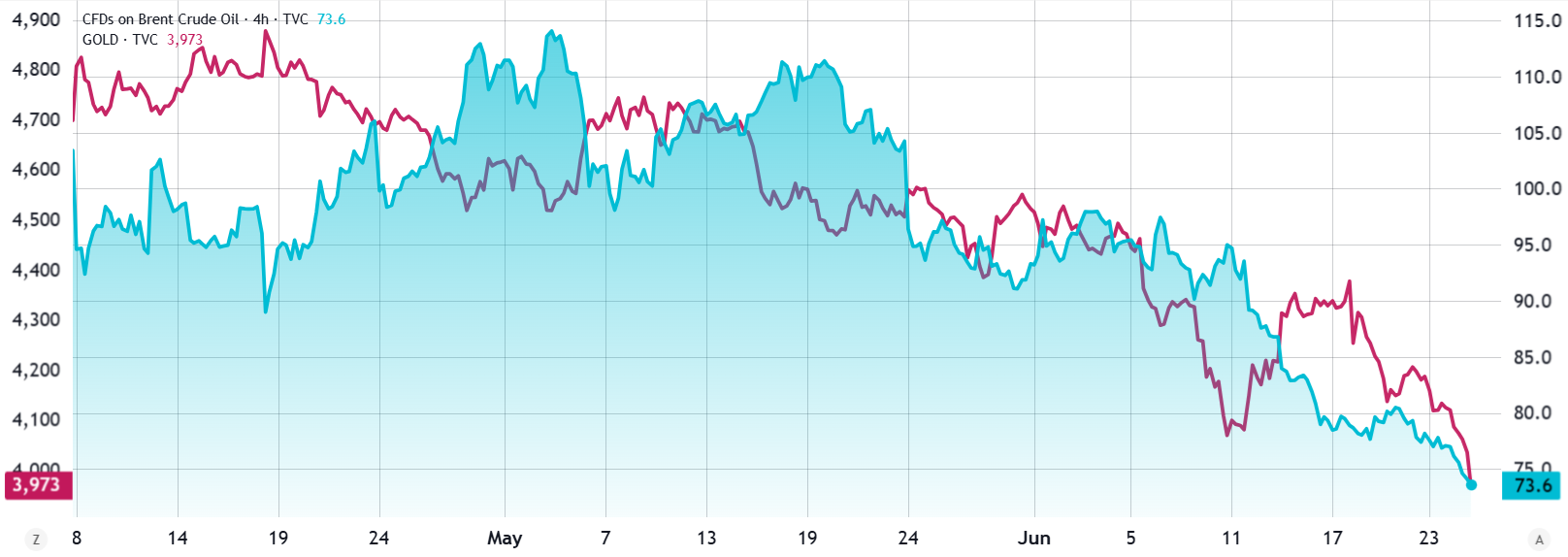
Gold (left) vs. Brent Crude oil, USD. Source: TradingView
Gold prices fell below $4,000 for the first time in even months as Brent crude oil plummeted below $74, nearing levels seen prior to the conflict in Iran. Investors signaled lower demand for scarce assets despite moderate anxiety about tech-sector cash flows amid increased capital expenditure by AI hyperscalers.
Bitcoin investment thesis weakened by reduced inflation perspectives and AI sector growth
Inflation will take time to cool down to the US Federal Reserve (Fed) target of 2%, leading traders to anticipate interest rates remaining higher for longer, which ultimately favors fixed-income investments. The latest US Labor Department unemployment benefit claims data fell by 4,000 from the prior week, further confirming that the economy is not slowing.
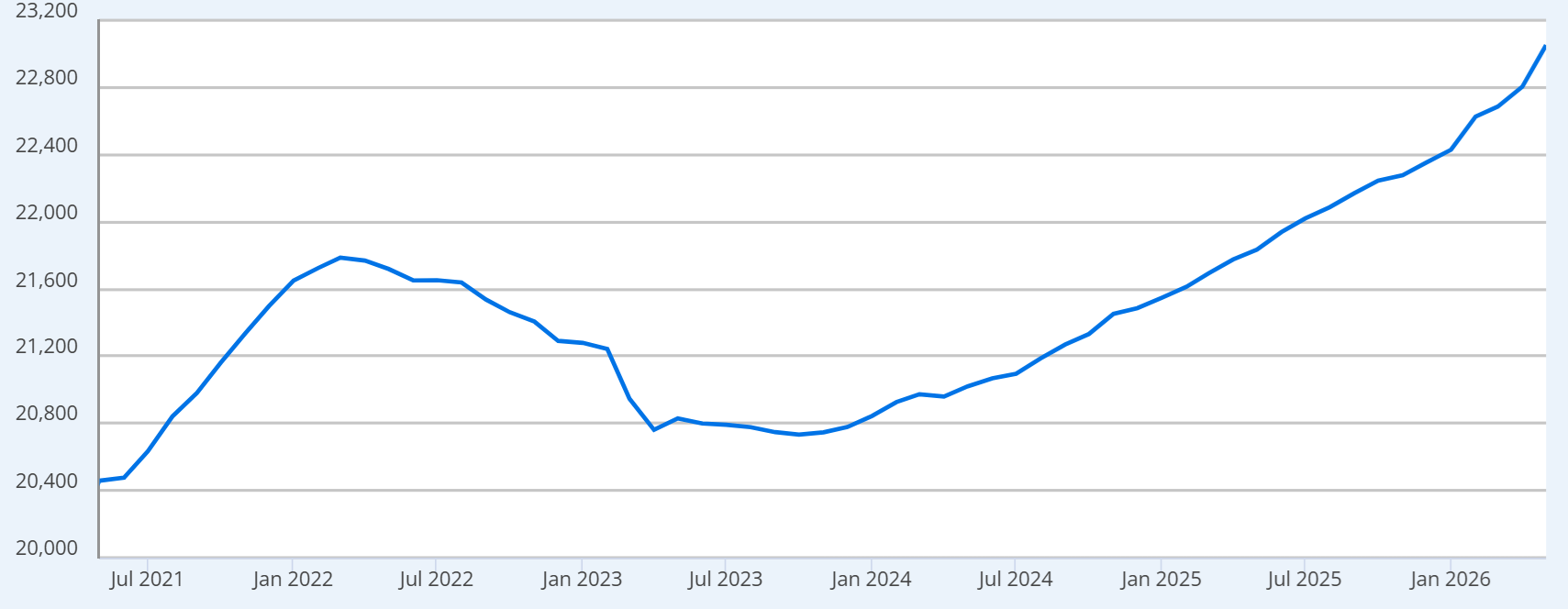
US expanded Monetary Base (M2), USD. Source: Fed St Louis
Regardless of investors’ risk assessments of the profitability of AI infrastructure investments, US government debt has been driving up liquidity over the past three years. Data released on Tuesday revealed that the US expanded Monetary Base (M2) increased to $23.05 trillion in May, up from $22.8 trillion the prior month.
Related: Lyn Alden tips Bitcoin outperforming gold over next ‘two to three years’
While there is no short-term correlation between the amount of money in circulation and Bitcoin’s price, investors will eventually seek gains elsewhere if higher demand for fixed income causes diminished yields. For now, the tech sector remains investors’ largest bet, weakening the case for alternative scarce assets such as Bitcoin.
Micron (MU US), the computer memory and data storage manufacturer, reported strong quarterly earnings on Wednesday. Micron’s market capitalization has grown to $1.16 trillion, following a 265% gain over six months. More impressively, chipmakers SK Hynix and Samsung now account for 40% of the entire South Korean stock market, according to CNBC.
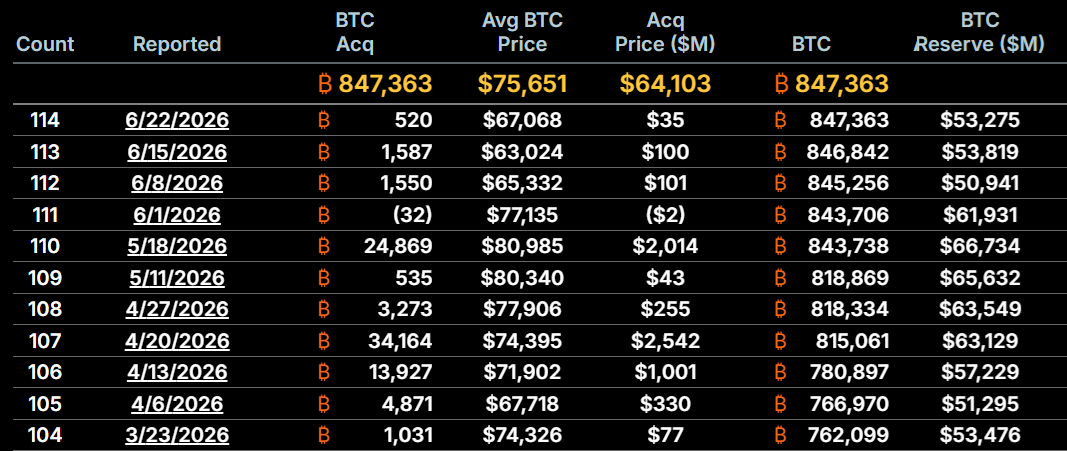
Strategy (MSTR US) Bitcoin reserve changes, BTC. Source: Strategy
The slowdown in Strategy’s Bitcoin acquisition pace has likely contributed to the weaker market sentiment. The company, led by Michael Saylor, reported adding 520 BTC during the week ending June 21, marking its lowest weekly intake in 18 months. Moreover, $300 million of the net proceeds from MSTR's stock issuance during the period were used to replenish its cash position.
Bitcoin’s negative performance on Wednesday partly reflects macroeconomic conditions, with gold prices also affected. However, heavy net outflows from spot Bitcoin exchange-traded funds (ETFs) and disappointment that Strategy’s stock trades below its Bitcoin reserve acquisition cost have added significant pressure. Thus, further downside from the $59,000 level should not be ruled out.


Subscribe to daily byte-sized crypto news from Cointelegraph
This article is produced in accordance with Cointelegraph's Editorial Policy and is intended for informational purposes only. It does not constitute investment advice or recommendations. All investments and trades carry risk; readers are encouraged to conduct independent research.
More on the subject