


 Written by Nate Kostarstaff writerEdited by Robert Lakinstaff editor
SocGen's FORGE expands euro stablecoin to XRP Ledger in multi-chain push
Latest NewsPublishedFeb 18, 2026
The French banking group’s digital asset unit deploys EUR CoinVertible on a third public blockchain, alongside Ethereum and Solana.
French banking group Societe Generale’s digital asset arm, SG-FORGE, has deployed its euro-denominated stablecoin, EUR CoinVertible, on the XRP Ledger, marking the token’s third blockchain launch after Ethereum and Solana.
According to Wednesday’s announcement, the rollout is supported by Ripple’s custody infrastructure and could enable integration into Ripple products, including use as trading collateral. SG-FORGE said the move expands institutional access to the euro-backed token across another public network.
The launch comes about a month after global banking network SWIFT tested SocGen’s euro-pegged stablecoin in a pilot of exchange and settlement of tokenized bonds in both fiat and digital currencies. SG-FORGE said EUR CoinVertible was the first MiCA-compliant digital asset designed to integrate directly with SWIFT’s interoperability framework.
EUR CoinVertible is backed by bank cash deposits or high-quality securities on a 1:1 basis. At the time of writing, there were about 70.51 million of the tokens in circulation.
The SWIFT pilot and multi-chain expansion unfold against a broader policy debate in Europe over the future of digital money.
On Monday, Joachim Nagel, Germany‘s central bank president, said Europe should advance both a retail euro central bank digital currency (CBDC) and euro-denominated stablecoins, arguing that domestic digital payment tools could strengthen the region’s independence in payment systems.
Earlier this month, Nagel cautioned participants at a Euro50 Group meeting that a dominant role for US dollar–denominated stablecoins in Europe could undermine domestic monetary policy and weaken European sovereignty if euro-backed alternatives fail to gain sufficient market share.
Related: How Europe’s blockchain sandbox finds innovation in regulation
Europe’s evolving stablecoin landscape under MiCA
The European Union’s Markets in Crypto-Assets (MiCa) regime’s stablecoin provisions went into effect on June 30, 2024, requiring issuers operating in the European Economic Area to obtain an e-money license in at least one EU member state. The rules prompted several exchanges and issuers to delist or restrict tokens that had not secured authorization under the new framework.
Coinbase, OKX, Bitstamp, Uphold and Binance were among several platforms that moved to remove or limit support for non-compliant stablecoins in response to the new the provisions.
In November 2024, Tether also announced it would wind down its euro-pegged stablecoin EURT, halting minting across all blockchains and giving holders one year to redeem their tokens.
Yet while many exchanges and issuers chose to leave the EU, others moved to align with the new rules. In July 2024, Circle became the first global stablecoin issuer to secure authorization under MiCA, a milestone that coincided with a surge in trading activity for its USDC token that month.
Meanwhile, in the United States, the passage of the GENIUS Act in July 2025 has accelerated activity in the stablecoin market, with total market capitalization rising from roughly $260 billion on July 19 to about $307.6 billion, according to DefiLlama data.
The asset sector remains heavily concentrated in US dollar-pegged tokens issued by Tether (USDT) and Circle (USDC), which account for more than 80% of the total market cap.
The disparity in the market has drawn attention from European central bankers, who argue that strengthening the region’s own stablecoin ecosystem is key to countering growing dollar dominance in digital assets.
In December, BNP Paribas said it had joined nine other EU-based banks to launch a euro-backed stablecoin in the second half of 2026 through a newly formed Amsterdam-based entity, Qivalis.
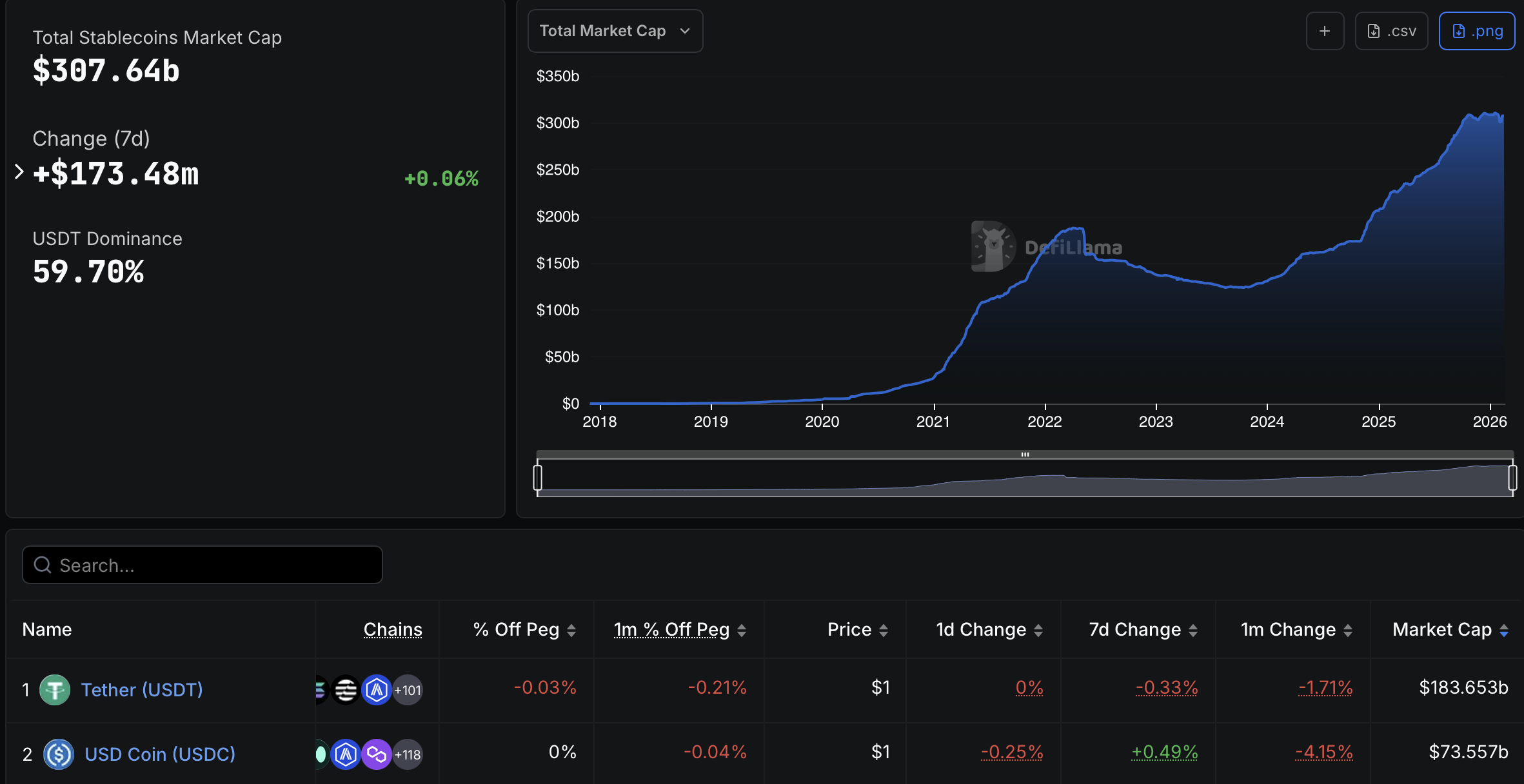
Stablecoin market cap. Source: Defillama
Magazine: Bitcoin may take 7 years to upgrade to post-quantum: BIP-360 co-author


Subscribe to daily byte-sized crypto news from Cointelegraph
Cointelegraph is committed to independent, transparent journalism. This news article is produced in accordance with Cointelegraph’s Editorial Policy and aims to provide accurate and timely information. Readers are encouraged to verify information independently.
More on the subject