


 Written by Vince Quillformer writerEdited by Robert Lakinstaff editor
Tether freezes $344M USDt stablecoins at US law enforcement request
Latest NewsPublishedApr 23, 2026
The stablecoin issuer cited "activity tied to unlawful conduct” but no further explanation for the freezing of the dollar-pegged tokens held in two wallet addresses.
Tether, the company that issues the USDt dollar-pegged stablecoin, said Thursday that it froze more than $344 million in USDt at the request of US law enforcement officials.
The company froze two wallet addresses at the request of US authorities for “activity tied to unlawful conduct,” according to Tether’s announcement.
Tether did not provide a specific reason for the asset freezes, but said that it freezes wallet addresses tied to “sanctions evasion, criminal networks, or other illicit activity.”
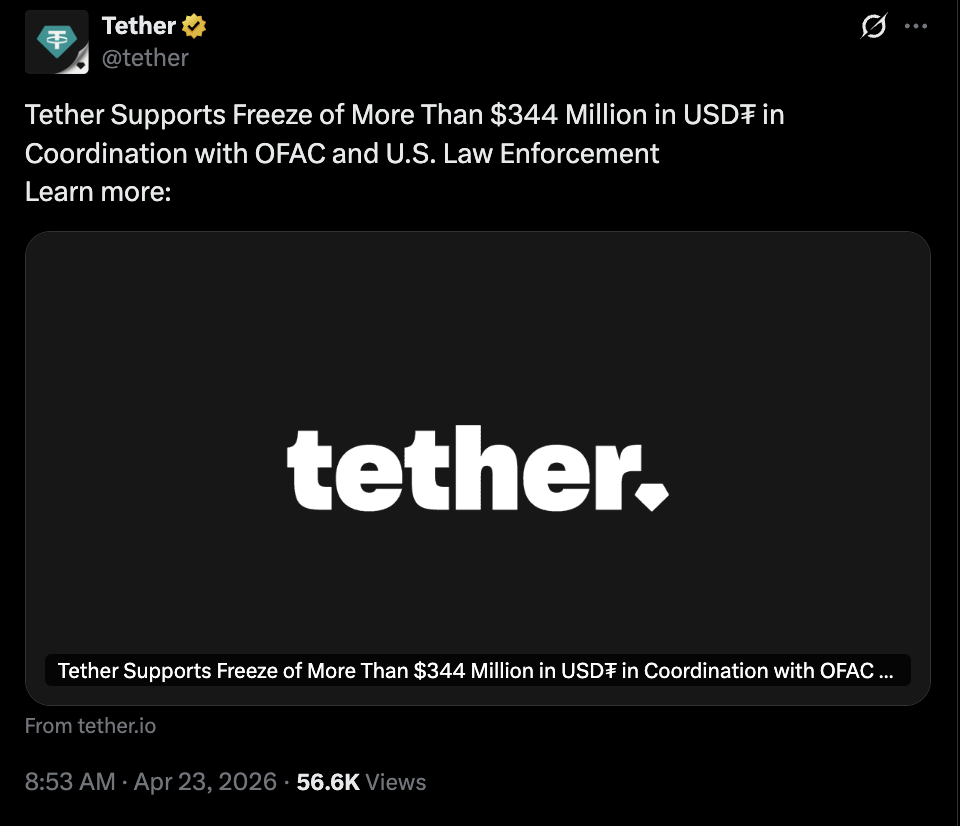
Source: Tether
“When credible links to sanctioned entities or criminal networks are identified, we act immediately and decisively,” Tether CEO Paolo Ardoino said. The stablecoin issuer did not immediately respond to Cointelegraph's request for further comment.
Centralized stablecoin providers have a long history of freezing wallets tied to illicit activity, raising questions in the crypto community about the roles and responsibilities of crypto service providers to claw back illicit funds or assist law enforcement.
Related: Tether takes 8.2% stake in Bitcoin mining finance platform Antalpha
Crypto community debates ethics of wallet freezes
Following the Drift Protocol hack earlier this month, which saw the platform drained of $280 million, onchain sleuth ZachXBT criticized Circle for not freezing funds from the hack that were converted to the stablecoin issuer's USDC dollar-pegged token.
“Despite the attacker laundering funds over six consecutive hours across Circle's own native bridge, no USDC was frozen,” ZachXBT said following the hack, adding that centralized stablecoin issuers must do more to protect user funds following hacks and code exploits.
Others, like crypto media channel Truth for The Commoner (TFTC) were critical of Tether freezing the $344 million in stablecoins. “Your stablecoins are not your stablecoins. They never were,” TFTC said.
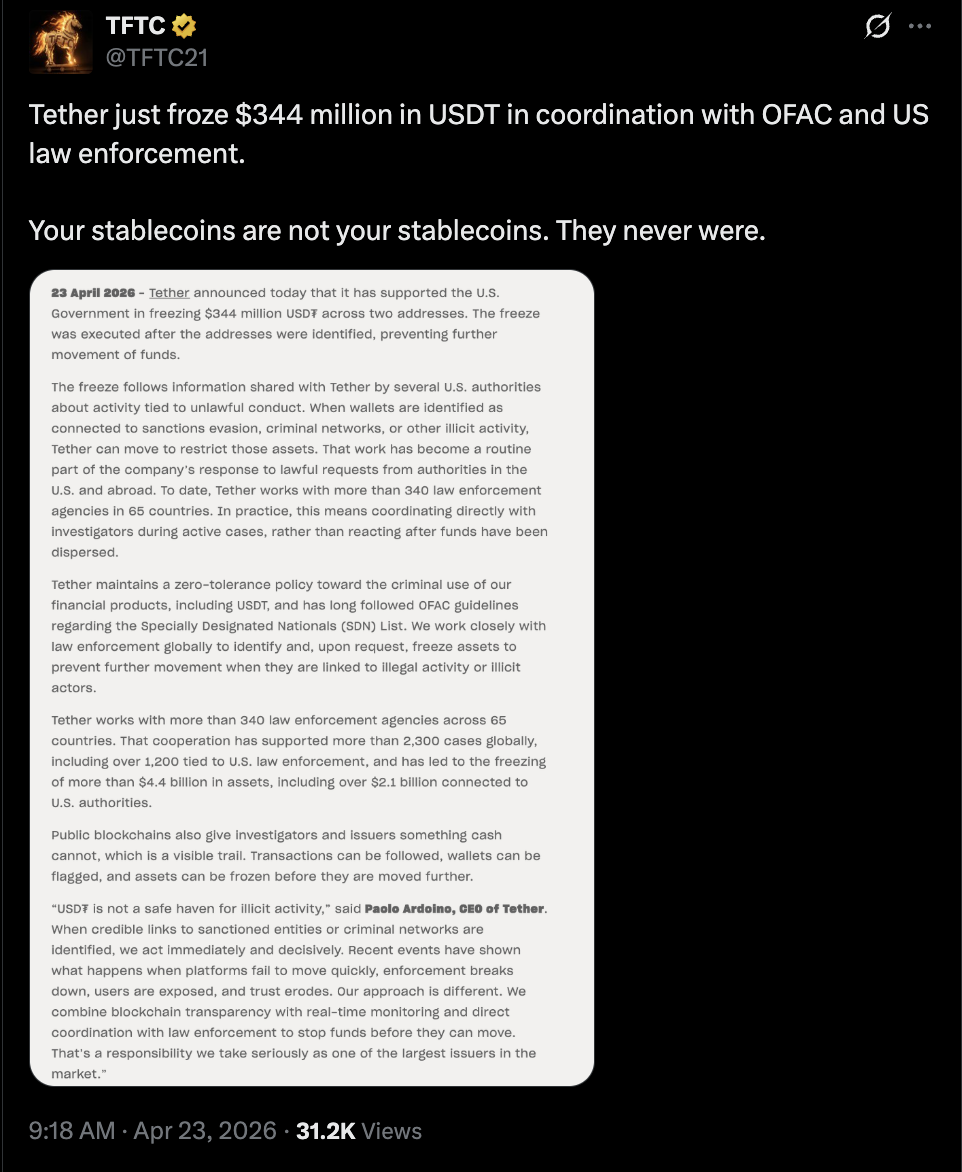
Source: TFTC
The debate follows at least a dozen hacks of decentralized finance platforms (DeFi) in April since the Drift Protocol hack, including the exploit of the Kelp restaking protocol.
Kelp was drained of $293 million after malicious actors exploited the bridging contract used to manage the platform’s rsETH restaking token and transfer it across different blockchain protocols.
Magazine: Stablecoins will see explosive growth in 2025 as world embraces asset class


Subscribe to daily byte-sized crypto news from Cointelegraph
Cointelegraph is committed to independent, transparent journalism. This news article is produced in accordance with Cointelegraph’s Editorial Policy and aims to provide accurate and timely information. Readers are encouraged to verify information independently.
More on the subject