


 Written by Nate Kostarstaff writerEdited by Robert Lakinstaff editor
CME and Nasdaq to launch crypto index futures featuring BTC, ETH, SOL and XRP
Latest NewsPublishedMay 14, 2026
The contracts will offer regulated exposure to multiple cryptocurrencies through standard and micro-sized futures products, according to the company.

CME Group, the company behind the world's largest financial derivatives exchange, plans to launch the Nasdaq CME Crypto Index futures, a cryptocurrency futures index featuring exposure to seven digital assets in a single contract, on June 8.
The new Nasdaq CME Crypto Index futures will track a market-cap weighted basket of cryptocurrencies, including Bitcoin (BTC), Ether (ETH), Solana (SOL), XRP (XRP), Cardano (ADA), Chainlink (LINK) and Stellar (XLM), according to Thursday's announcement.
The contracts will be offered in both standard and micro-sized versions and will settle in cash using the index’s reference price at expiration. Nasdaq and CME said the index is designed to measure the performance of the largest and most actively traded cryptocurrencies by market capitalization.
The upcoming launch marks CME’s first market-cap weighted crypto futures product and comes as exchanges expand regulated derivatives offerings tied to a broader range of digital assets.
CME said average daily trading volume across its cryptocurrency derivatives products has risen 43% year-to-date amid growing institutional participation in regulated crypto markets.
Earlier this month, CME introduced Bitcoin volatility futures, a regulated financial instrument tracking expected Bitcoin market volatility over a 30-day period.
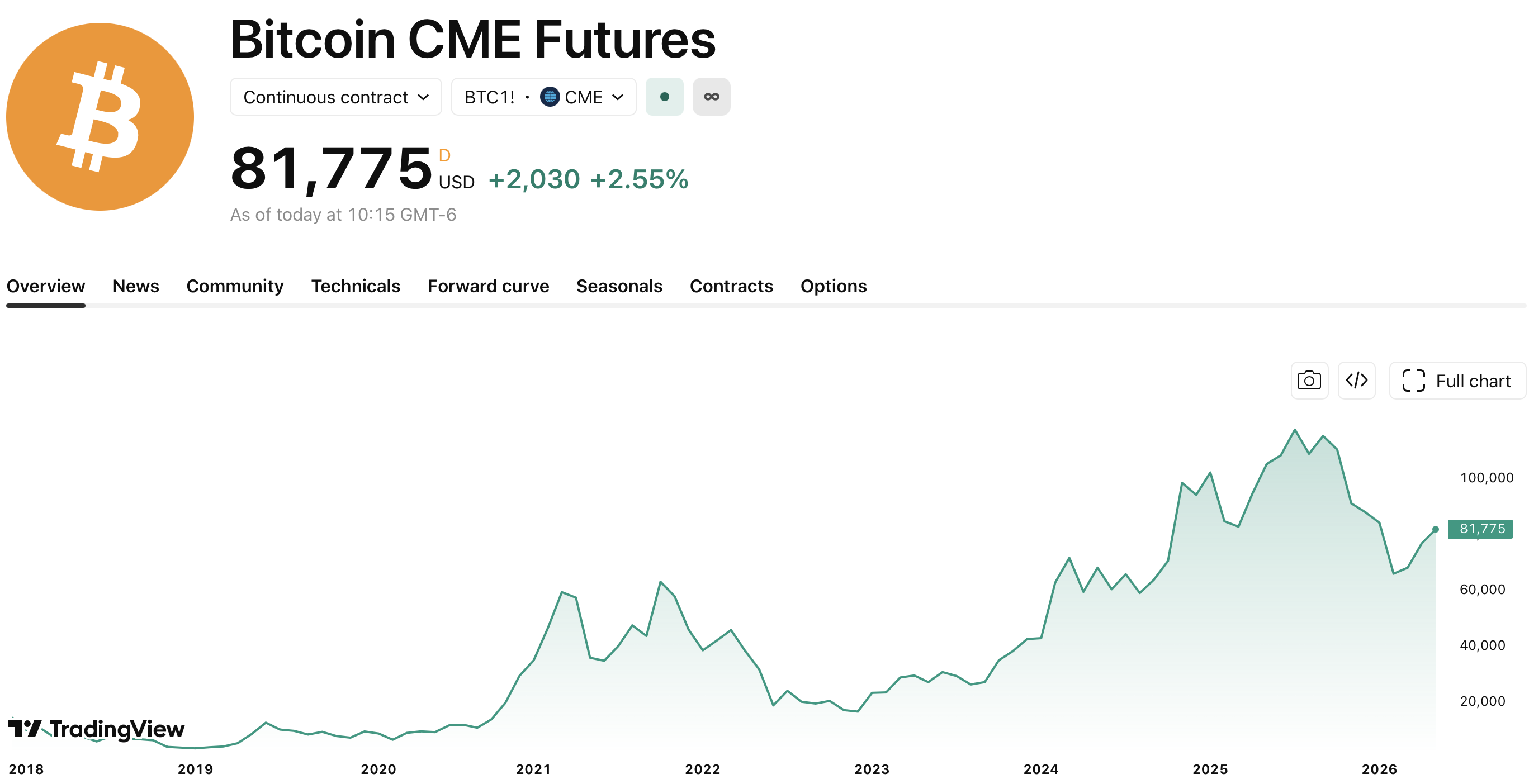
Bitcoin CME futures price chart. Source: TradingView
Related: CME Group expands crypto futures with Avalanche and Sui contracts
Crypto derivatives expand beyond Bitcoin and Ether
Crypto exchanges and trading platforms are expanding derivatives offerings tied to a broader range of digital and traditional financial assets.
In February, Kraken began offering perpetual contracts for tokenized stocks and commodities, giving international users 24/7 access to leveraged exposure across traditional markets.
The following month, Coinbase launched perpetual futures for US stocks and indexes for users outside the United States. The contracts offer leveraged, cash-settled exposure to assets including Nvidia (NVDA) and Apple (AAPL).
In April, Blockchain.com added perpetual futures trading to its self-custody wallet through Hyperliquid (HYPE), allowing users to trade leveraged crypto positions directly, using self-custodial Bitcoin as collateral, removing the need to transfer the BTC to a centralized exchange.
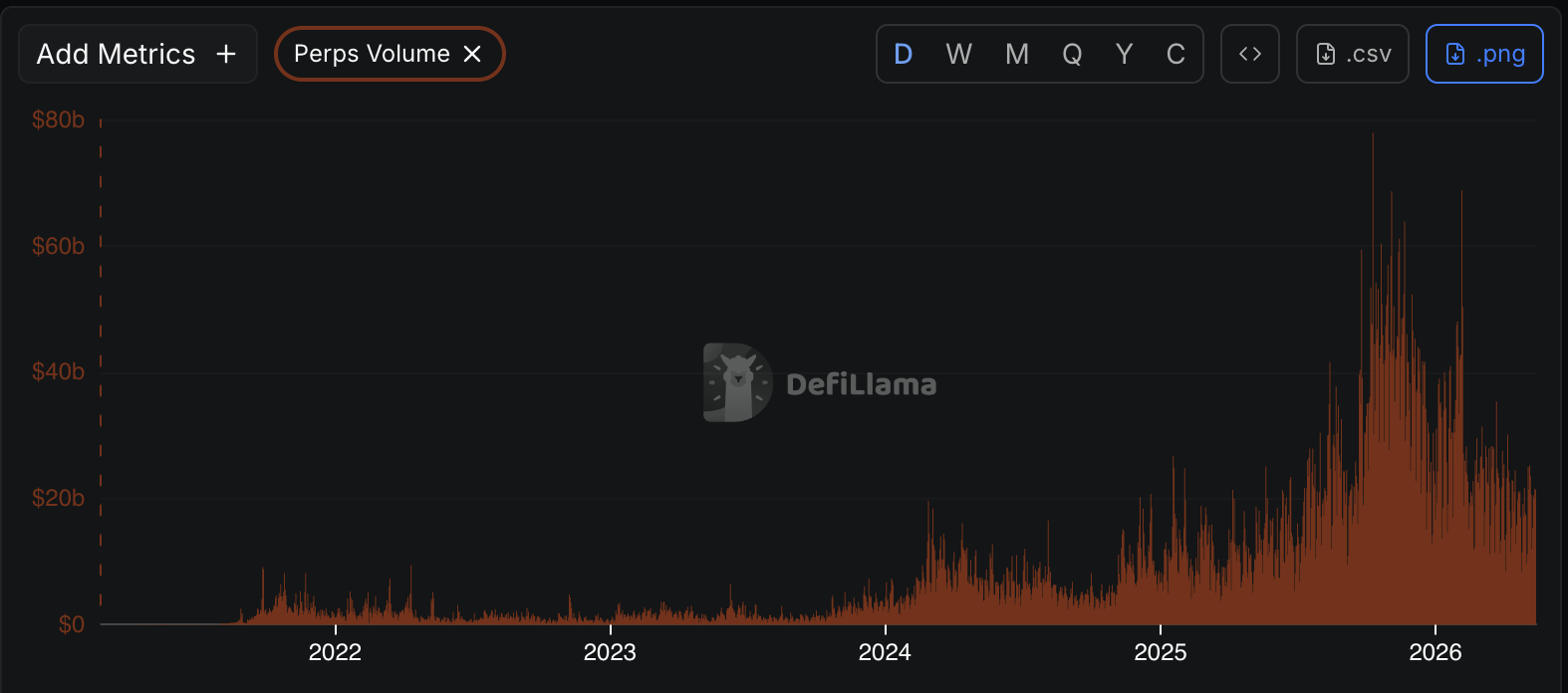
Crypto perpetual futures volume from 2022 to 2026. Source: DeFiLlama
Prediction market platforms are also moving into crypto derivatives. Earlier this month, Kalshi was reported to be preparing a push into crypto perpetual futures trading, potentially expanding beyond event-based contracts into leveraged digital asset markets.
Still, most cryptocurrency perpetual futures products remain unavailable to retail users in the US, where much of the market has historically been pushed offshore due to uncertainty around regulation.
However, according to derivatives publication FOW, CFTC Chair Michael Selig said in March that the agency was working toward allowing “true perpetual futures” in the country within “the next month or so.”
Magazine: eToro founder timed Bitcoin top perfectly due to belief in 4 year cycles


Subscribe to daily byte-sized crypto news from Cointelegraph
Cointelegraph is committed to independent, transparent journalism. This news article is produced in accordance with Cointelegraph’s Editorial Policy and aims to provide accurate and timely information. Readers are encouraged to verify information independently.