


 Written by Zoltan Vardaistaff writerReviewed by Bryan O'Sheastaff editor
Fidelity macro lead calls $65K Bitcoin bottom in 2026, end of bull cycle
Latest NewsPublishedDec 19, 2025
Fidelity’s director of macro is predicting a Bitcoin bottom near $65,000 in 2026, but remains a “secular bull” despite predicting an end to the current four-year cycle.

Bitcoin may have ended its historical four-year cycle, signaling an incoming year of downside, despite widespread analyst expectations for an extended cycle driven by regulatory tailwinds.
Bitcoin’s (BTC) $125,000 all-time high on Oct. 6 may have signaled the top of the current four-year Bitcoin halving cycle, both in terms of “price and time,” according to Jurrien Timmer, the director of global macroeconomic research at asset management firm Fidelity.
“While I remain a secular bull on Bitcoin, my concern is that Bitcoin may well have ended another 4-year cycle halving phase,” wrote Timmer in a Thursday X post. “Bitcoin winters have lasted about a year, so my sense is that 2026 could be a “year off” (or “off year”) for Bitcoin. Support is at $65-75k.”
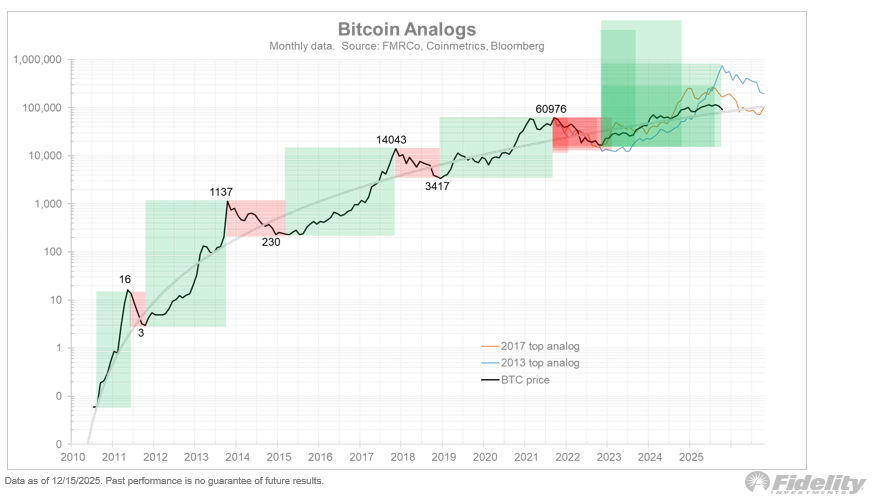
Source: Jurrien Timmer
Related: Bitcoin treasuries stall in Q4, but largest holders keep stacking sats
Crypto market may see more upside on fundamental, regulatory tailwinds
Timmer’s analysis contradicts other crypto analysts, who expect the growing number of regulated crypto investment products to lead to an extended bull market cycle in 2026.
Notably, Tom Shaughnessy, the co-founder of crypto research firm Delphi Digital, expects new all-time highs for Bitcoin in 2026, after investor sentiment recovers from the record $19 billion crypto market crash that occurred at the beginning of October.
“We are working through a one-time disastrous 10/10 liquidation event that broke the market,” wrote Shaughnessy in a Friday X post, adding:
“Once that’s worked through, we hit $BTC ATHs in 2026 as prices rubber band to reflect the progress outside 10/10.”
Shaughnessy said crypto market valuations will be driven by the industry’s “fundamental progress,” including growing Wall Street implementations and regulatory developments.
Related: Bitcoiners push for quantum-resistant BIP-360 upgrade as debate heats up
Policy experts are also predicting a significant year of progress on US cryptocurrency legislation, a development that may bring more institutional investment to the crypto space.
“I do expect 2026 to be another meaningful year for crypto regulation, but it will look different from the last one,” Cathy Yoon, general counsel at crypto research firm Temporal and Solana block-building system Harmonic, told Cointelegraph.
“With stablecoin legislation now passed, the real impact will come from implementation - examinations, disclosures, and how these assets integrate into payments and financial infrastructure,” she said.
Source: Santiment
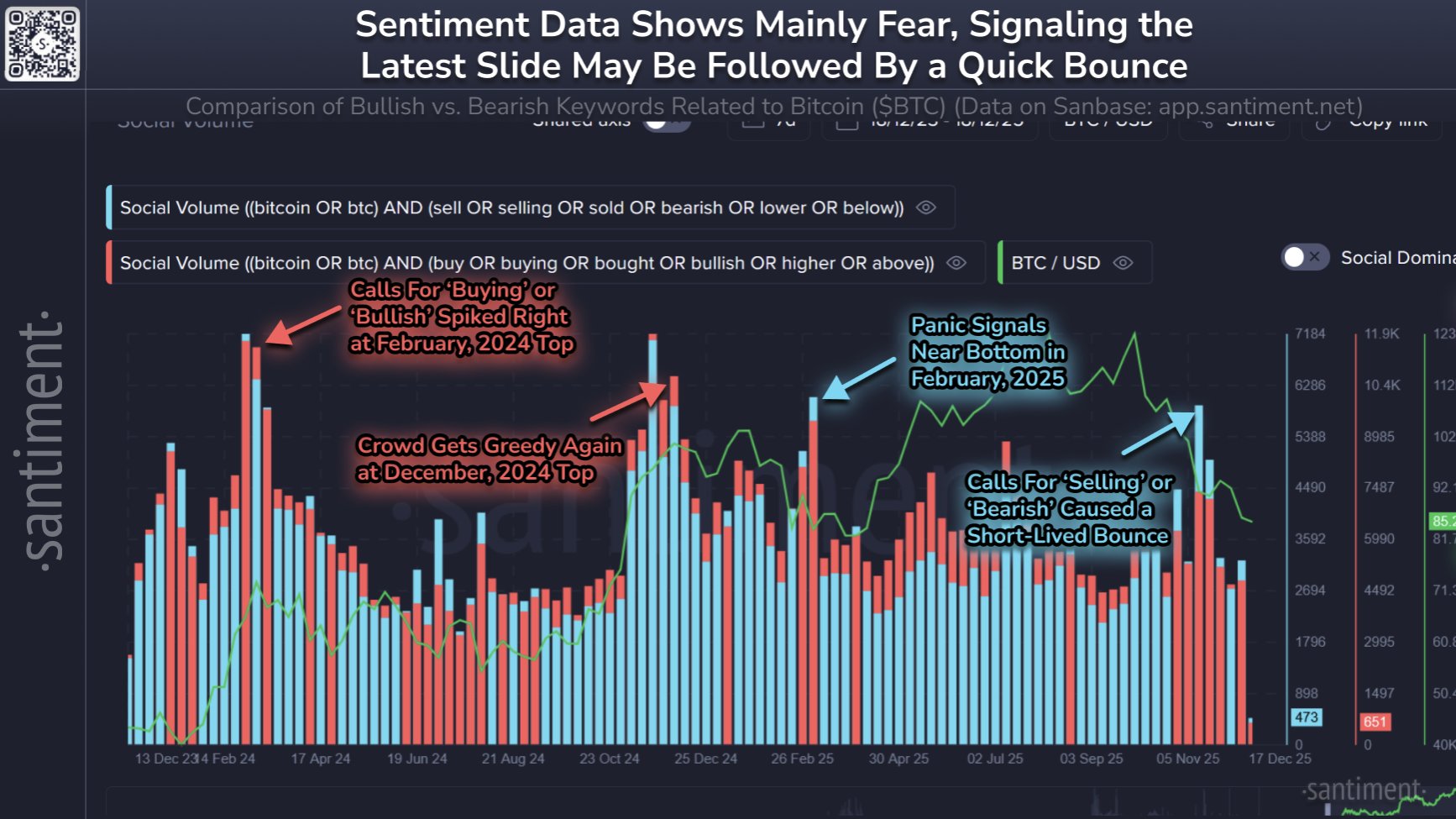
However, investors’ social sentiment took a significant hit earlier this week as Bitcoin dipped below $85,000. Bearish commentary has since dominated social media platforms, including X, Reddit and Telegram, according to market intelligence platform Santiment.
Meanwhile, the crypto industry’s best-performing traders by returns, who are tracked as “smart money” traders on Nansen’s blockchain intelligence platform, are also betting on a short-term decline for most leading cryptocurrencies.
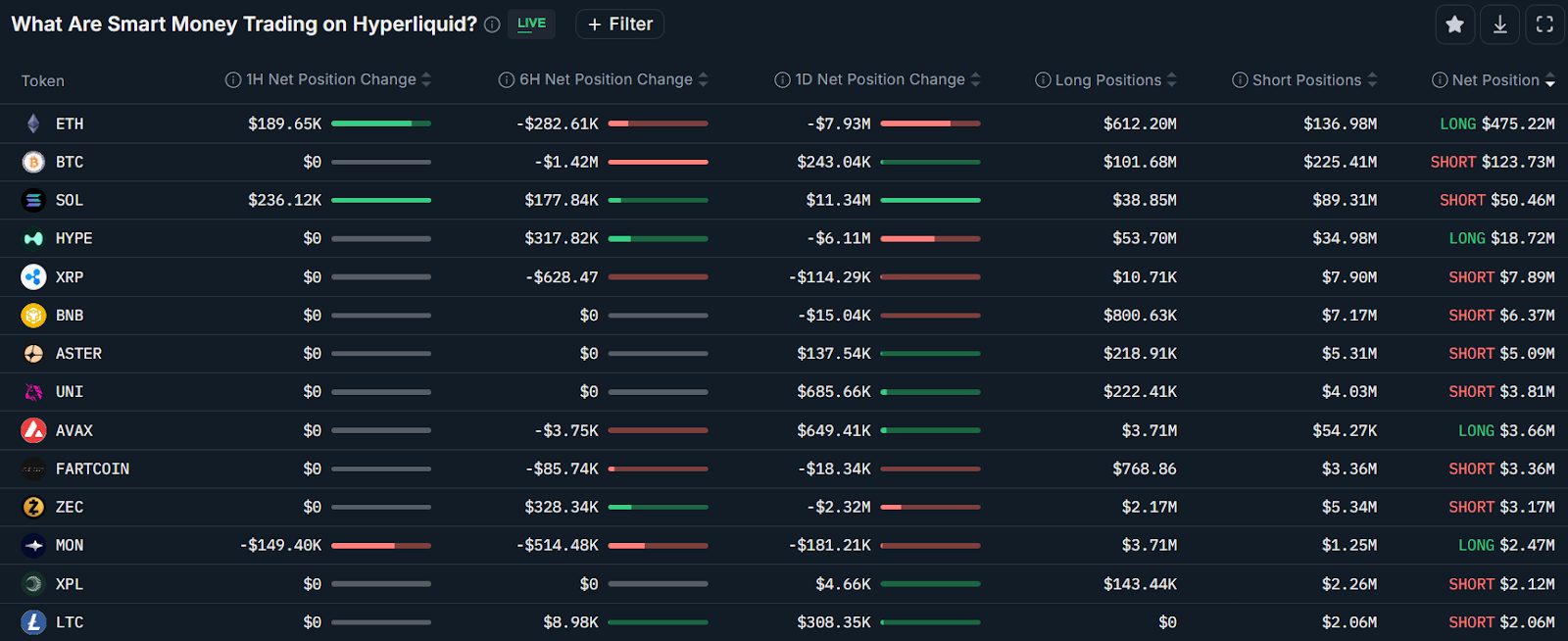
Smart money traders top perpetual futures positions on Hyperliquid. Source: Nansen
While smart money traders were net short on Bitcoin for $123 million, the same cohort was betting on Ether’s (ETH) price increase, with $475 million worth of cumulative net long positions, Nansen data shows.
Magazine: Sharplink exec shocked by level of BTC and ETH ETF hodling — Joseph Chalom


Subscribe to daily byte-sized crypto news from Cointelegraph
Cointelegraph is committed to independent, transparent journalism. This news article is produced in accordance with Cointelegraph’s Editorial Policy and aims to provide accurate and timely information. Readers are encouraged to verify information independently.
More on the subject