


 Written by Marcel Pechmanformer writerEdited by Ray Salmondformer editor
Bitcoin futures and options markets flash caution as BTC chases $70K
MarketsPublishedFeb 26, 2026
Bitcoin bulls are chasing $70,000, but caution in futures and options markets may explain why the rally has struggled to gain traction.

Key takeaways:
- Bitcoin derivatives show persistent fear despite the current rally toward $70,000, as seen by futures premiums being pinned well below neutral levels.
- The markets’ cautious stance stems from broad risk-aversion and lingering concerns over institutional BTC liquidations and Bitcoin network security.
Bitcoin (BTC) retested the $70,000 level on Wednesday, recovering from Tuesday’s low of $62,500. While inflows into Bitcoin exchange-traded funds (ETFs) helped stabilize market sentiment, the momentum failed to restore confidence within the BTC derivatives markets. Traders remain concerned that underlying factors are preventing a sustained rally toward $75,000.
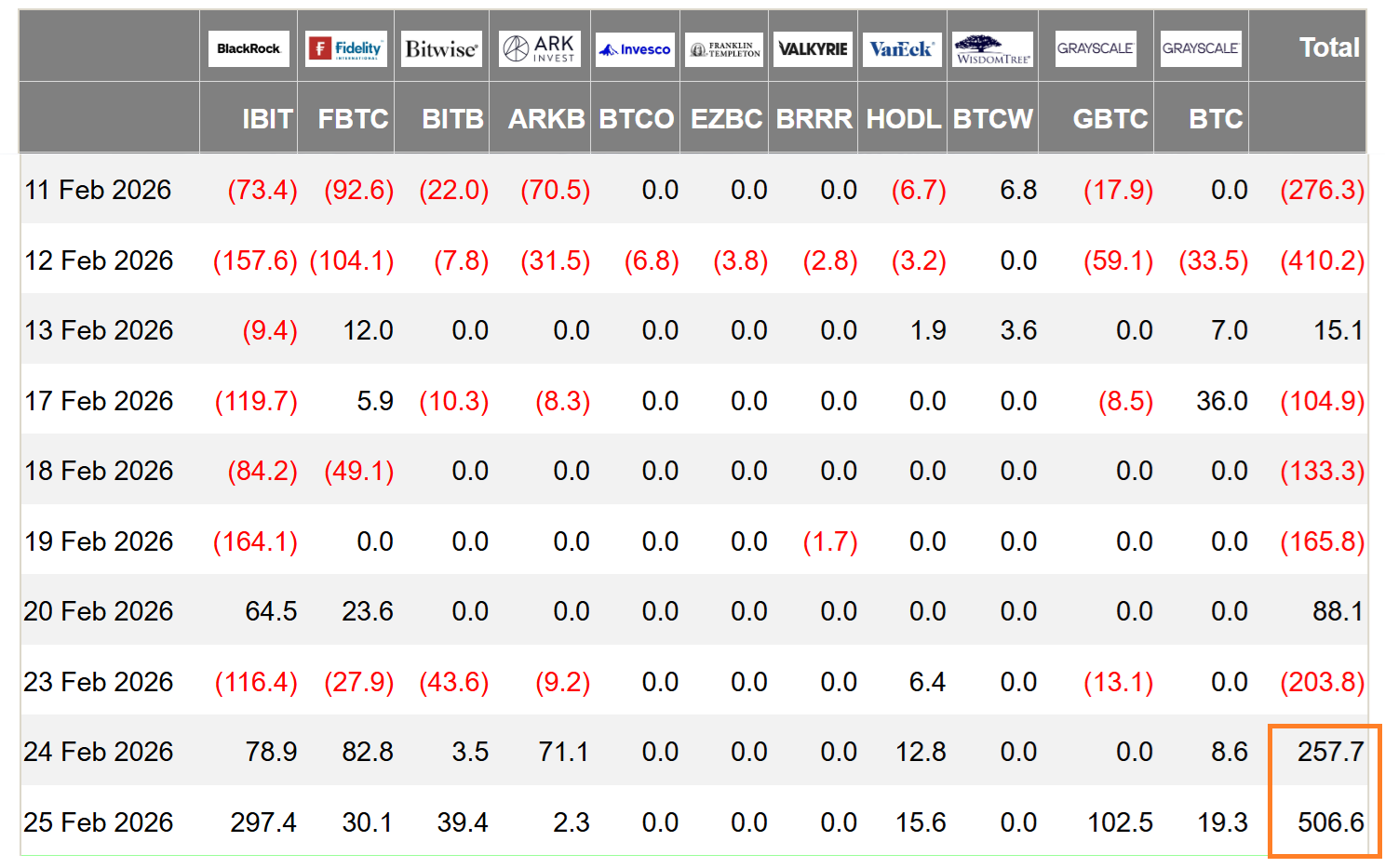
Bitcoin US-listed ETFs daily net flows, USD million. Source: Farside Investors
US-listed Bitcoin ETFs recorded $764 million in net inflows over two days, partially offsetting the $1.2 billion in outflows seen during the previous eight trading days. These large movements are typically attributed to institutional activity, suggesting strong demand when prices dip below $65,000.
Despite this demand, the appetite for leveraged bullish positions in BTC futures has dropped sharply.
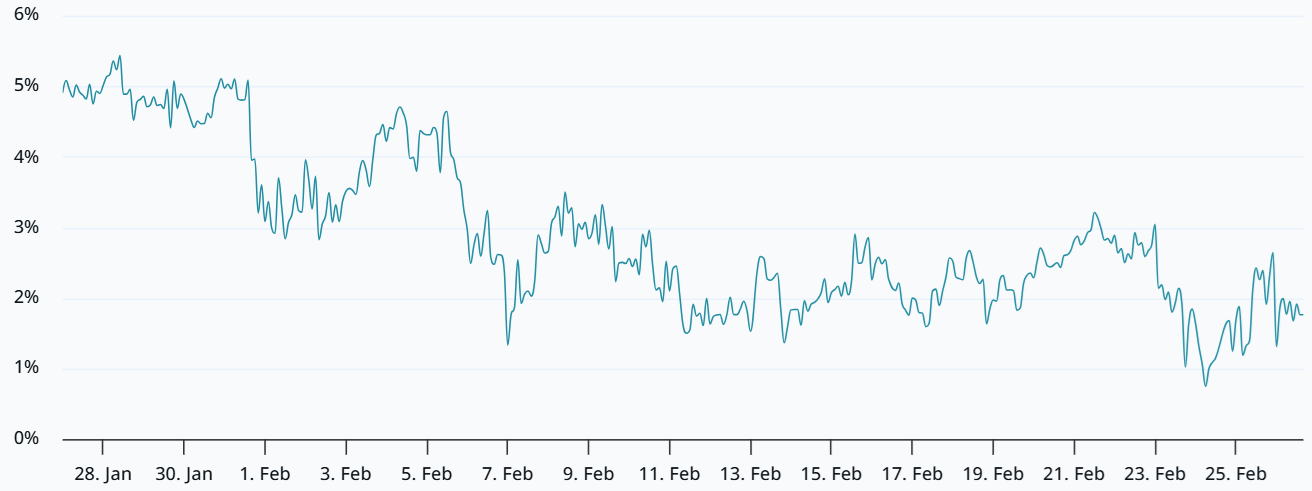
BTC two-month futures annualized premium. Source: Laevitas.ch
The annualized premium for Bitcoin futures relative to spot markets sat at 2% on Thursday, remaining well below the 5% neutral threshold. Bullish momentum has been largely absent since Jan. 31, the date Bitcoin surrendered the $85,000 support level after holding it for over nine months. Data from the options market further indicates that professional traders are prioritizing the avoidance of downside exposure.
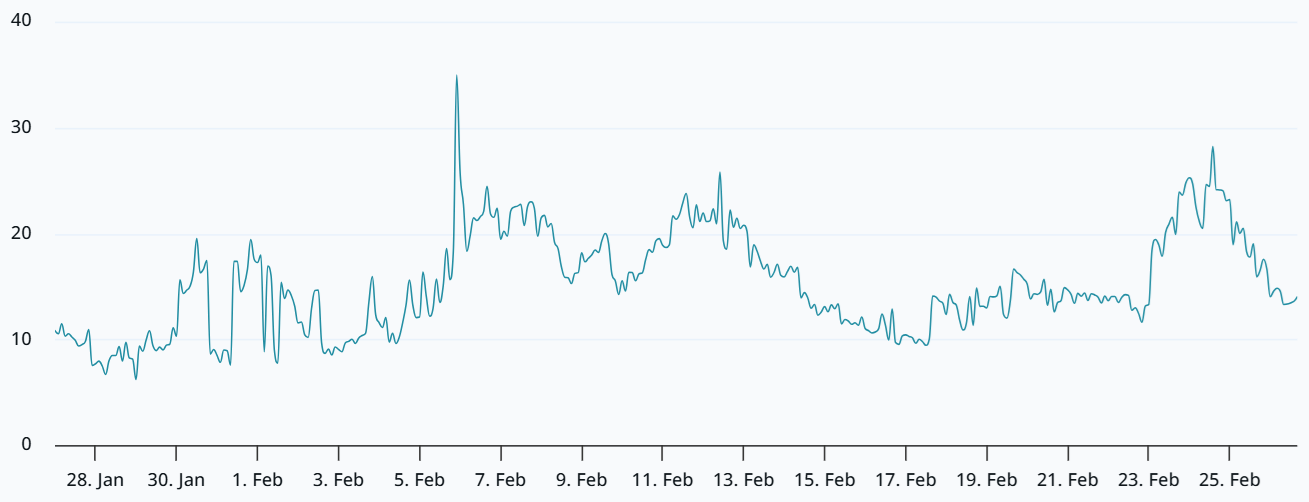
BTC 30-day options delta skew (put-call) at Deribit. Source: Laevitas.ch
Bitcoin put (sell) options traded at a 14% premium compared to equivalent call (buy) instruments on Thursday. In a neutral market environment, this indicator typically fluctuates from -6% to +6%, signaling that fear remains a dominant force. Although this skew metric has improved from the 28% “panic” levels recorded on Tuesday, the recovery to $70,000 has done little to shift the cautious outlook of derivatives traders.
Is a single entity behind Bitcoin’s price weakness?
Recently, a number of unproven theories have been proposed to explain Bitcoin’s 32% decline over seven weeks. This downward trend began following the Oct. 10, 2025, market crash, which eliminated $19 billion in leveraged positions across the cryptocurrency sector. This volatility coincided with US President Donald Trump announcing a 100% increase in import tariffs on Chinese goods.
Following that event, Binance reportedly provided $283 million in compensation to users affected by liquidations attributed to internal oracle pricing errors, system latency and asset transfer degradation. Binance co-founder and former CEO Changpeng “CZ” Zhao has since rejected allegations that the exchange intentionally triggered the October 2025 crash.
Other market participants have linked the recent bearishness to concerns over quantum computing. These fears intensified after Jefferies strategist Christopher Wood removed Bitcoin from his “Greed & Fear” model portfolio in January, citing potential risks to long-term security. In response, developers drafted a proposal, BIP-360, which focuses on advancing post-quantum cryptography onchain.
Related: Coin Bureau CEO on Bitcoin in 2026–Cycles, Liquidity and a Divided Market
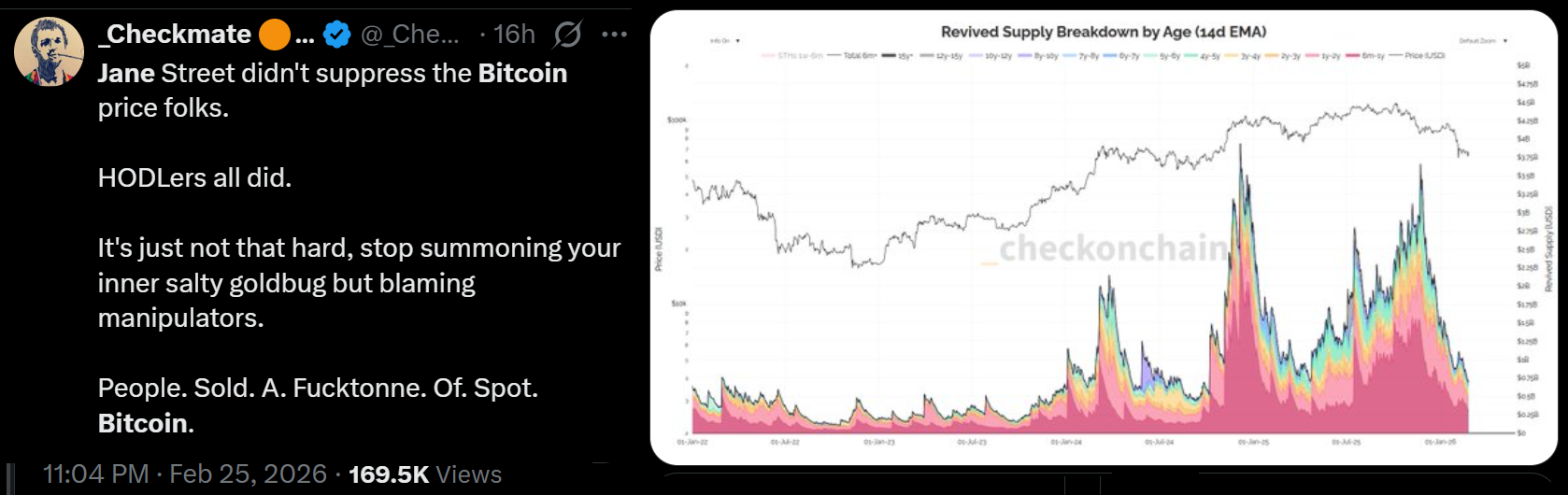
Source: X/_Checkmatey_
The most recent explanation for Bitcoin’s lackluster performance involves the quantitative trading company Jane Street. These claims gained momentum after Terraform Labs’ court-appointed administrator sued the company, alleging insider trading related to transactions that accelerated the collapse of the Terra Luna ecosystem in May 2022.
Jane Street’s recent 13-F filing disclosed significant holdings in BlackRock’s iShares Bitcoin Trust ETF and various Bitcoin mining companies. However, Julio Moreno, head of research at CryptoQuant, noted that such activity is typical for delta-neutral strategies.
Ultimately, the 5% decline in Nvidia (NVDA US) shares on Thursday following strong earnings suggests a growing risk-averse sentiment among investors, which may partially explain why Bitcoin struggles to reclaim the $75,000 level.


Subscribe to daily byte-sized crypto news from Cointelegraph
This article is produced in accordance with Cointelegraph's Editorial Policy and is intended for informational purposes only. It does not constitute investment advice or recommendations. All investments and trades carry risk; readers are encouraged to conduct independent research.
More on the subject