


 Written by Marcel Pechmanformer writerEdited by Ray Salmondformer editor
Fed rate cut may pump stocks but Bitcoin options call sub-$100K in January
MarketsPublishedDec 10, 2025
Federal Reserve monetary policy may benefit stocks, but BTC options show the short-term odds of Bitcoin rallying to $100,000 remain slim.

Key takeaways:
- BTC derivatives pricing indicates weak conviction in a move above $100,000, reflecting macroeconomic uncertainty and Bitcoin’s underperformance compared to gold.
- Despite improved liquidity from Federal Reserve actions, whales remain cautious, signaling skepticism toward a durable Bitcoin breakout.
Bitcoin (BTC) derivatives markets are becoming increasingly skeptical that the cryptocurrency can sustain bullish momentum, despite the shift toward an expansionist monetary policy by the US Federal Reserve. Traders remain wary of risk aversion amid uncertain economic conditions and Bitcoin’s continued underperformance relative to gold.
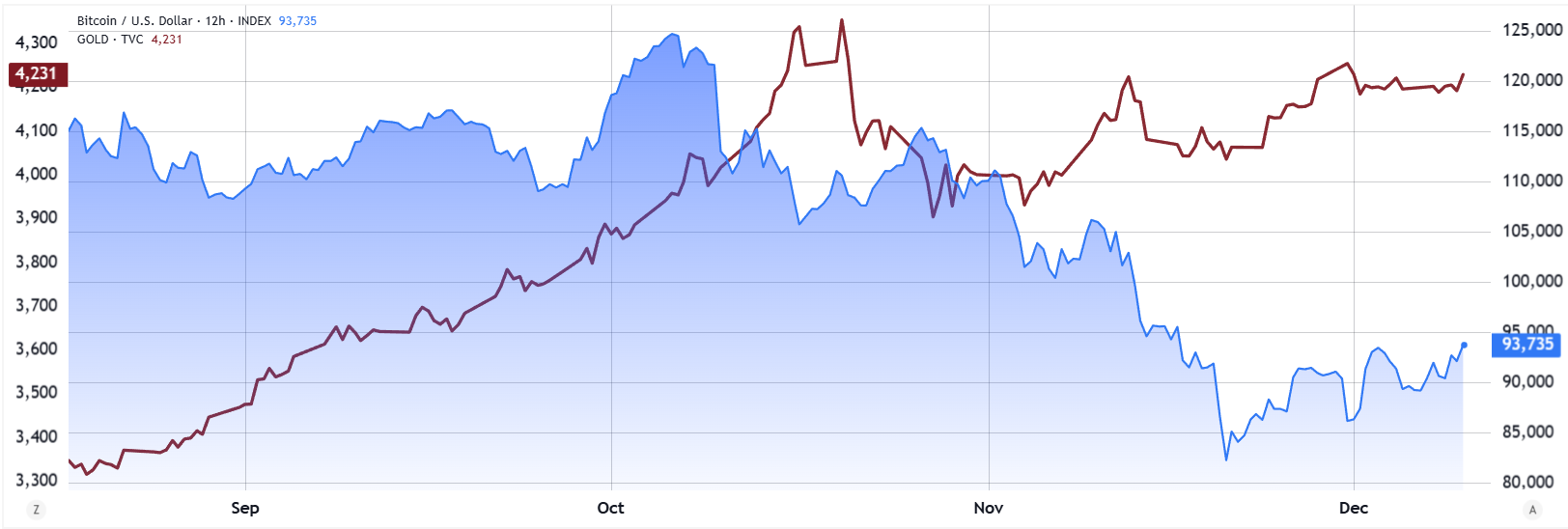
Gold/USD (left) vs. Bitcoin/USD (right). Source: TradingView
The Fed’s split decision on Wednesday to cap interest rates at 3.75% was widely expected, and Fed Chair Jerome Powell struck a restrained tone during the press conference following the committee meeting. Powell highlighted the ongoing risks tied to labor market weakness and stubborn inflation. Two Fed members, however, voted to keep rates at 4%, an unusually sharp divergence for a committee that typically shows strong internal alignment.
More notable was the Fed’s announcement that it will begin purchasing short-dated government bonds to “help manage liquidity levels.” The initial $40 billion program authorized on Wednesday marks a significant reversal from the past couple of years, which were characterized by a steady drawdown of the Fed’s balance sheet, culminating in the current $6.6 trillion after a peak of $9 trillion in 2022.
This added liquidity increases the cash banks can lend, supporting credit growth, boosting business investment and encouraging consumer borrowing during periods when economic momentum is slowing across the economy.
Bitcoin options imply 70% odds BTC staying under $100,000
The $100,000 BTC call (buy) option implies a 70% probability that Bitcoin will remain at or below $100,000 by Jan. 30, according to the Black & Scholes model.
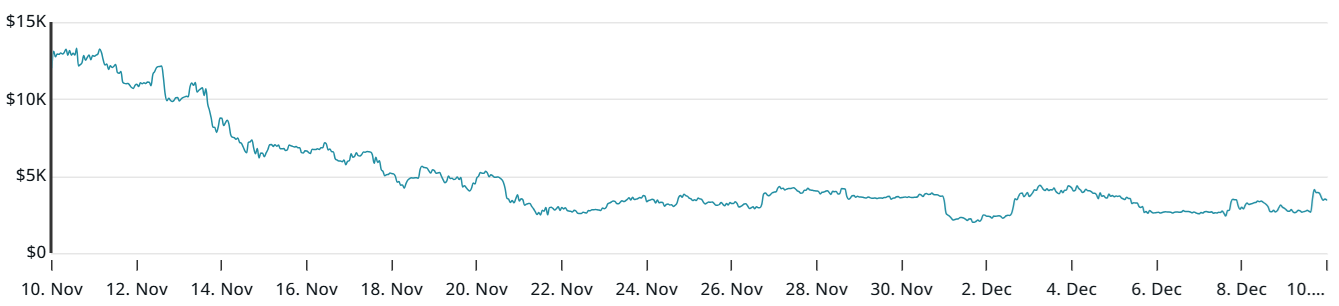
$100k BTC call option at Deribit, USD. Source: laevitas.ch
To secure the right to acquire Bitcoin at a fixed $100,000 on Jan. 30, buyers must pay a $3,440 premium upfront. For comparison, the same call option traded at $12,700 just one month earlier. The instrument effectively serves as insurance and expires worthless if Bitcoin finishes below the strike price. Still, upside for the holder remains unlimited as long as the market moves decisively above $100,000.
Interestingly, Bitcoin’s monthly options expiry in January falls two days after the next FOMC meeting on Jan. 28. Based on the CME Group FedWatch Tool, traders assign a 24% probability to another interest rate cut in January. Uncertainty increased after the government funding shutdown in November limited visibility into US employment and inflation data.
The stock market benefits directly from the Federal Reserve’s expansionist stance, as companies anticipate a lower cost of capital and easier consumer financing. Bitcoin, however, tends to react less predictably since investors rotating out of safe short-term government bonds are unlikely to view the cryptocurrency as a reliable store of value.
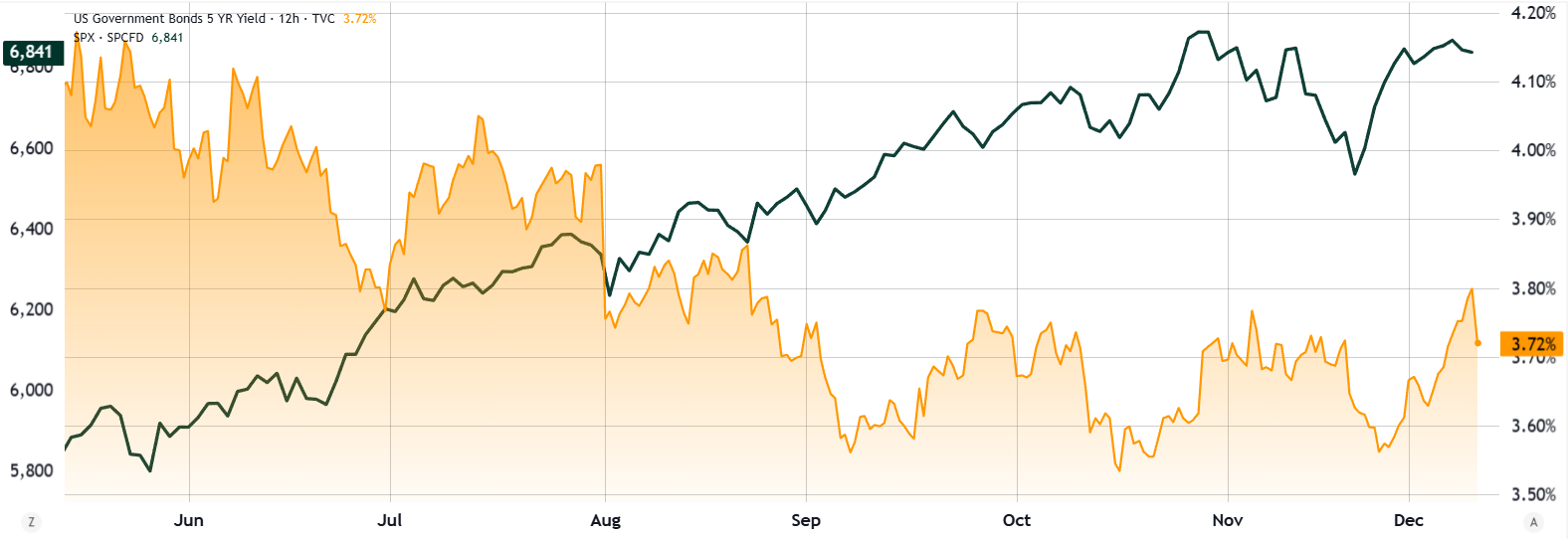
S&P 500 index (left) vs. US five-year Treasury yield (right). Source: TradingView
Yields on the US five-year Treasury stood at 3.72% on Wednesday, down from 4.1% six months earlier, while the S&P 500 gained 13% in the same period. Traders worry that the growth of US government debt could weaken the dollar and fuel inflationary pressure, making the relative scarcity of equities more appealing despite concerns about stretched valuations.
What could ignite a Bitcoin rally remains uncertain, but the rising cost of default protection in the artificial intelligence sector might push traders to reduce exposure to stocks.
For now, Bitcoin whales and market makers remain highly skeptical of a sustained move above $100,000, even as the Fed’s policy shift creates more favorable conditions.
Related: Conflicted Fed cuts rates but Bitcoin’s ‘fragile range’ pins BTC under $100K
This article is for general information purposes and is not intended to be and should not be taken as, legal, tax, investment, financial, or other advice. The views, thoughts, and opinions expressed here are the author’s alone and do not necessarily reflect or represent the views and opinions of Cointelegraph. While we strive to provide accurate and timely information, Cointelegraph does not guarantee the accuracy, completeness, or reliability of any information in this article. This article may contain forward-looking statements that are subject to risks and uncertainties. Cointelegraph will not be liable for any loss or damage arising from your reliance on this information.


Subscribe to daily byte-sized crypto news from Cointelegraph
This article is produced in accordance with Cointelegraph's Editorial Policy and is intended for informational purposes only. It does not constitute investment advice or recommendations. All investments and trades carry risk; readers are encouraged to conduct independent research.
More on the subject