

Here’s what happened in crypto today
13 minutes ago

 Written by Nate Kostarstaff writerEdited by Sam Bourgistaff editor
Polymarket will migrate from bridged USDC on Polygon to Circle-issued native USDC, reducing reliance on cross-chain bridges as prediction markets expand.

Circle Internet Group has partnered with Polymarket to transition the prediction market’s settlement infrastructure to native USDC, replacing bridged stablecoin collateral used for trading on its platform.
According to Thursday’s announcement, Polymarket currently uses bridged USDC (USDC.e) on Polygon as trading collateral and plans to migrate to Circle-issued native USDC (USDC) over the next few months. Native USDC is issued by Circle’s regulated entities and can be redeemed one-for-one for US dollars, offering a “capital-efficient” and scalable alternative without relying on cross-chain bridges.
Cross-chain bridges are protocols that transfer tokens between blockchains by locking assets on one network and issuing corresponding representations on another. However, secure cross-chain communication introduces trade-offs in security, trust or flexibility that are not present on a single blockchain.
The shift will move Polymarket’s collateral to a stablecoin issued and redeemed directly by Circle, rather than a bridged representation.
Shayne Coplan, founder and CEO of Polymarket, said using USDC will support “a consistent, dollar-denominated settlement standard that enhances market integrity and reliability as participation on the platform continues to grow.”
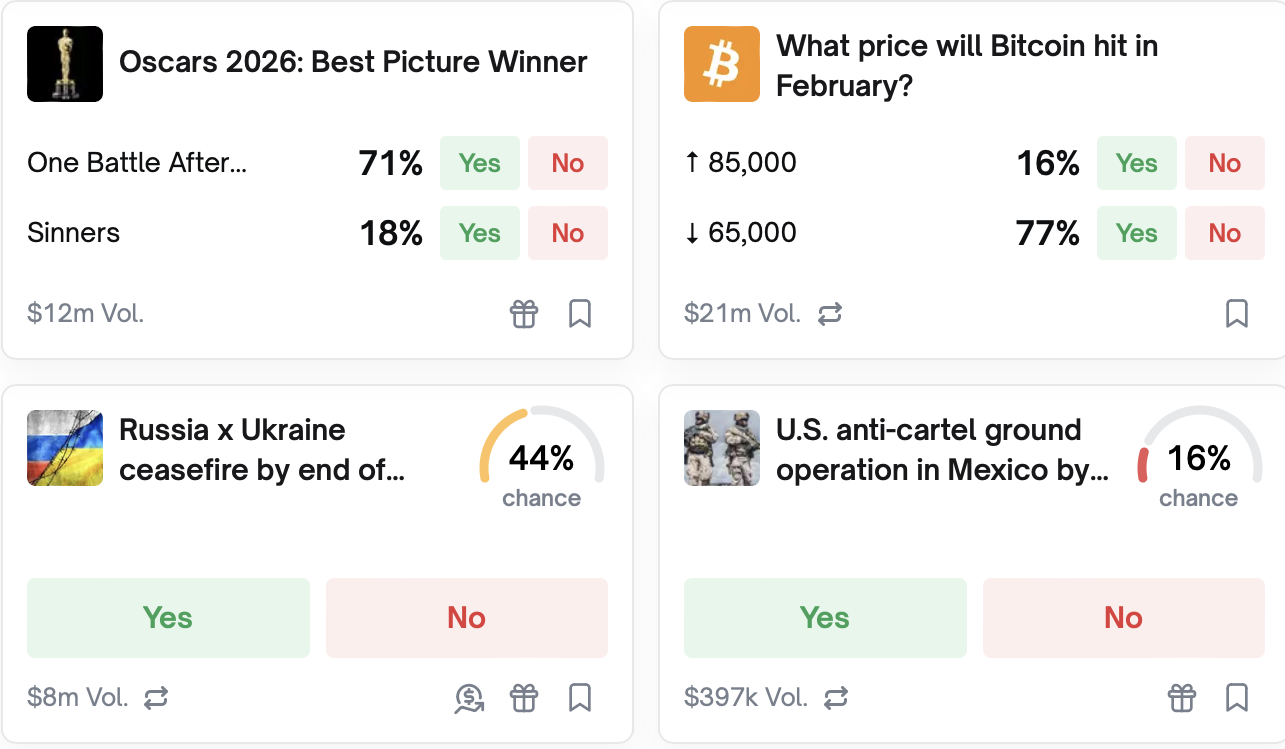
Event contracts on Polymarket. Source: Polymarket
Polymarket is an onchain prediction market where users trade contracts tied to the outcomes of real-world events using stablecoins as collateral, including markets on cryptocurrency prices, political outcomes and other events.
USDC is currently the second-largest stablecoin behind Tether’s USDt (USDT), with a market capitalization of about $70.77 billion, according to Defillama data.
Related: Polymarket, Kalshi clash over groceries as prediction markets boom
While Polymarket and Kalshi remain the leading prediction market platforms, several major crypto exchanges have recently entered the space.
In mid-December, Gemini launched its in-house prediction market, Gemini Predictions, making event-based trading available across all 50 US states following regulatory approval, while Coinbase announced a prediction market in partnership with Kalshi a day later.
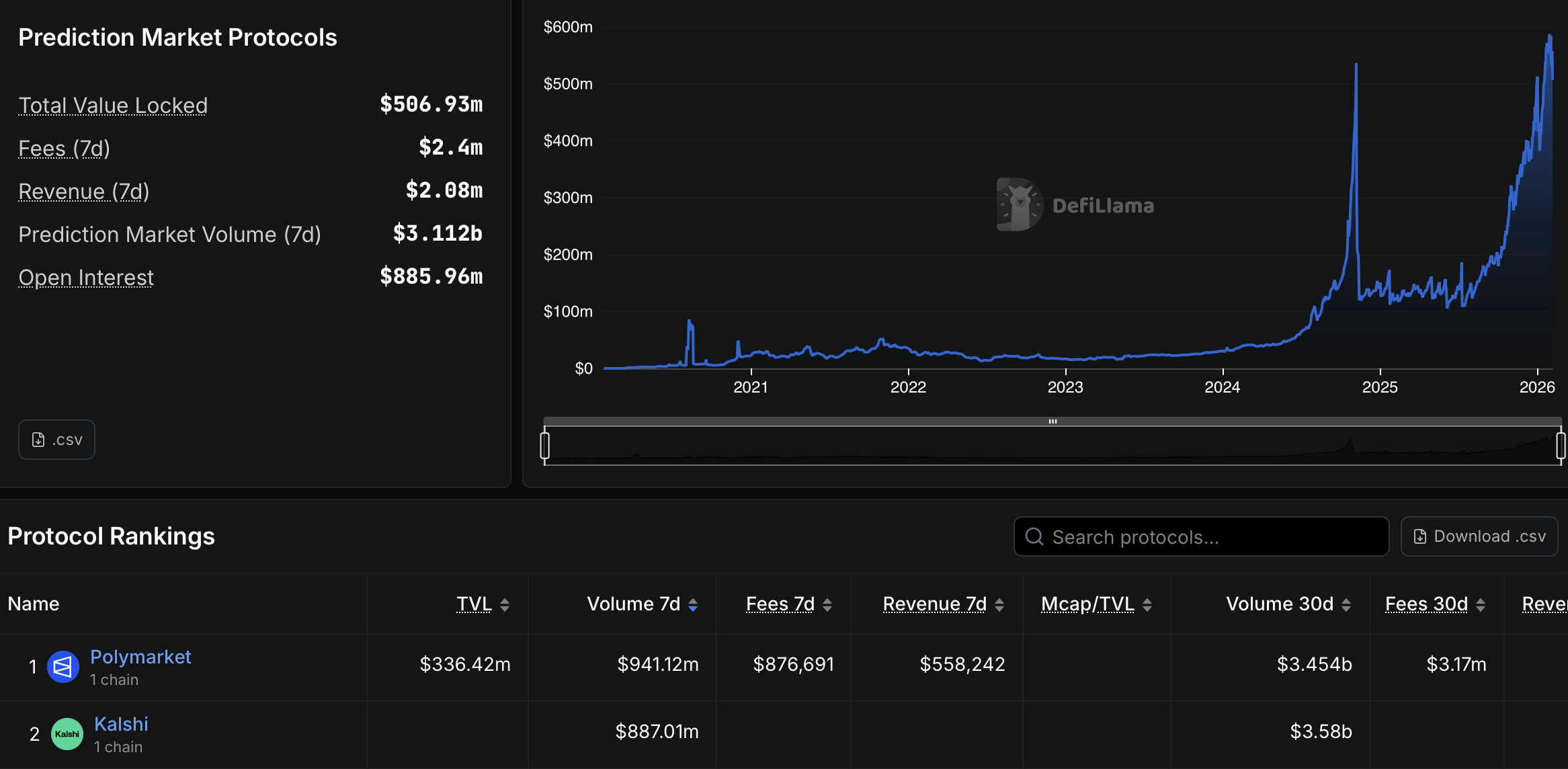
Prediction market protocols. Source: Defillama
On Tuesday, Crypto.com launched its prediction markets business as a standalone platform, OG, operated by Crypto.com Derivatives North America and available only to US users.
Retail brokerage Robinhood and sports betting platform DraftKings also rolled out prediction markets in 2025, further crowding a category that first gained significant momentum during the 2024 US presidential election.
Despite the growing popularity of prediction markets, some analysts have raised concerns that they may be vulnerable to insider trading, citing instances in which traders appeared to profit from nonpublic information or by influencing data used to set market prices.
US states have also raised challenges, with Kalshi facing legal scrutiny from gaming regulators in Massachusetts, New York and several other states over whether its event contracts constitute gambling.
Magazine: The critical reason you should never ask ChatGPT for legal advice