


 Written by Marcel Pechmanformer writerEdited by Ray Salmondformer editor
Spot Bitcoin ETF outflows total $2.9B as BTC price drops to new 2026 low
MarketsPublishedFeb 4, 2026
Bitcoin’s 12-day ETF outflows, derivatives data and the crypto market in tandem trading with tech stocks suggest traders will continue to cut exposure to risk assets.

Key takeaways:
- Heavy outflows from Bitcoin exchange-traded funds and massive liquidations show that the market is purging highly leveraged buyers.
- Bitcoin options metrics reveal that pro traders are hedging for further price drops amid a tech stock sell-off.
Bitcoin (BTC) slid below $73,000 on Wednesday after briefly retesting the $79,500 level on Tuesday. This downturn mirrored a decline in the tech-heavy Nasdaq Composite, driven by a weak sales outlook from chipmaker AMD (AMD US) and disappointing United States employment data.
Traders now fear further Bitcoin price pressure as spot exchange-traded funds (ETFs) recorded over $2.9 billion in outflows across 12 trading days.
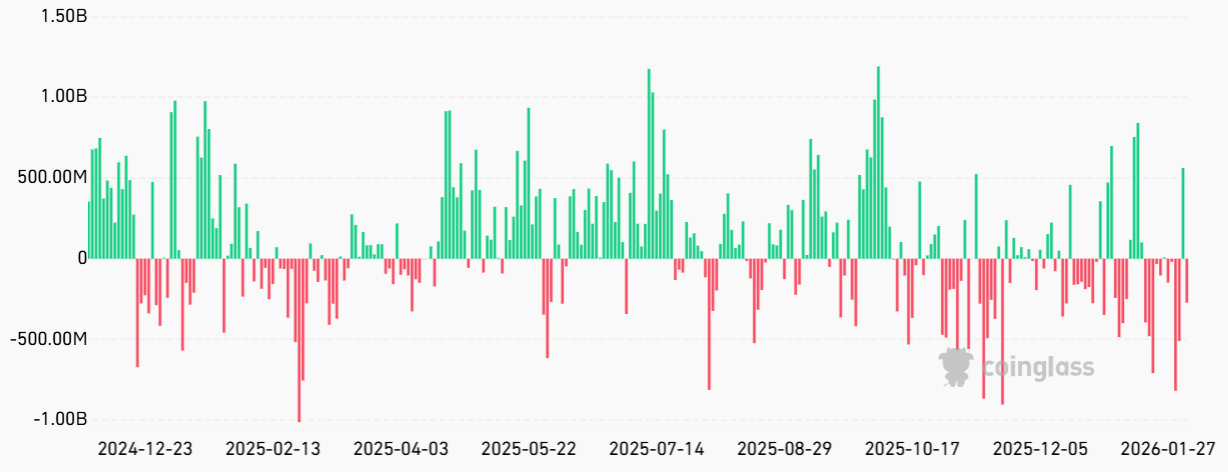
Bitcoin spot ETFs daily net flows, USD. Source: CoinGlass
The average $243 million daily net outflow from the US-listed Bitcoin ETFs since Jan. 16 nearly coincides with Bitcoin’s rejection at $98,000 on Jan. 14. The subsequent 26% correction over three weeks triggered $3.25 billion in liquidations for leveraged long BTC futures. Unless buyers deposited additional margin, any leverage exceeding 4x has already been wiped out.
Some market participants blamed the recent crash on the lingering aftermath of the $19 billion liquidation on Oct. 10, 2025. That incident was reportedly triggered by a performance glitch in database queries at Binance exchange, resulting in delayed transfers and incorrect data feeds. The exchange acknowledged having technical issues during the sell-off and disbursed over $283 million in compensation to affected users.
According to Haseeb Qureshi, managing partner at Dragonfly, huge liquidations at Binance “could not get filled, but liquidation engines keep firing regardless. This caused market makers to get wiped out, and they were unable to pick up the pieces.” Qureshi added that the October 2025 crash did not permanently “break the market,” but noted that market makers “will need time to recover.”
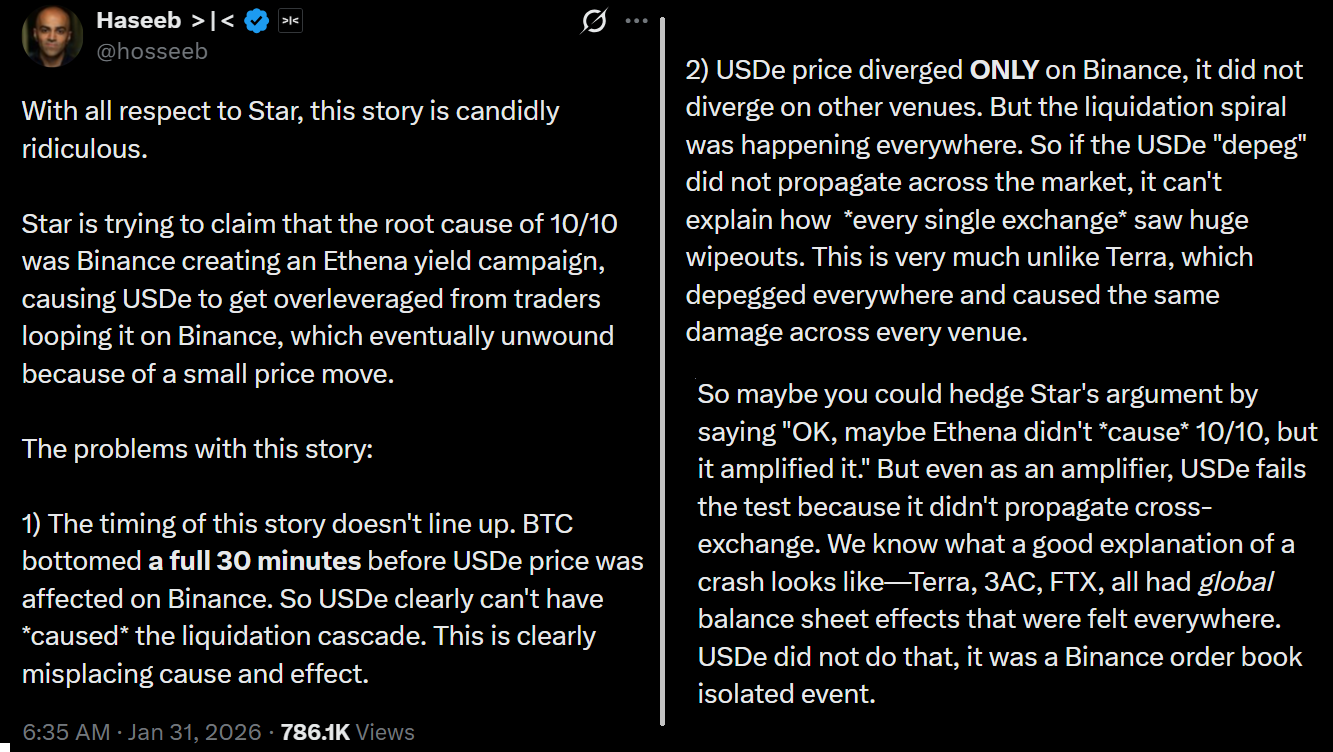
Source: X/hosseeb
The analysis suggests that cryptocurrency exchanges’ liquidation mechanisms “are not designed to be self-stabilizing the way that TradFi mechanisms are (circuit breakers, etc.)” and instead focus solely on minimizing insolvency risks. Qureshi notes that cryptocurrencies are a “long series” of “bad things” happening, but historically, the market eventually recovers.
BTC options skew signals traders doubt $72,100 bottom
To determine if professional traders flipped bearish after the crash, one should assess BTC options markets. During periods of stress, demand for put (sell) instruments surges, pushing the delta skew metric above the 6% neutral threshold. Excess demand for downside protection typically signals a lack of confidence from bulls.
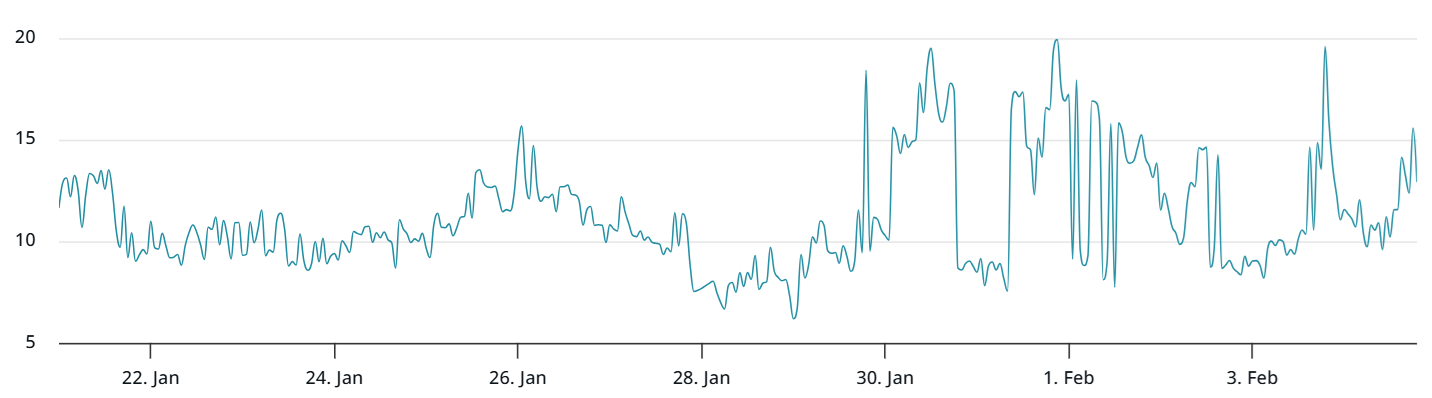
BTC 30-day options 25% delta skew (put-call) at Deribit. Source: laevitas.ch
The BTC options delta skew reached 13% on Wednesday, a clear indication that professional traders are not convinced Bitcoin’s price has found a bottom at $72,100. This skepticism stems partly from fears that the tech sector could suffer from increased competition as Google (GOOG US) and AMD roll out proprietary artificial intelligence chips.
Related: Bitcoin open interest falls by $55B in 30 days–What’s next for BTC price?
Another source of discomfort for Bitcoin holders involves two unrelated and unfounded rumors. First, a $9 billion Bitcoin sale by a Galaxy Digital customer in 2025 was previously attributed to quantum computing risks. However, Alex Thorn, Galaxy’s head of research, denied those rumors in an X post on Tuesday.
The second speculation involves Binance’s solvency, which gained traction after the exchange faced technical issues that temporarily halted withdrawals on Tuesday. Current onchain metrics suggest that Bitcoin deposits at Binance remain relatively stable.
Given the current uncertainty in macroeconomic trends, many traders have opted to exit cryptocurrency markets. This shift makes it difficult to predict whether Bitcoin spot ETF outflows will continue to apply downward pressure on the price.


Subscribe to daily byte-sized crypto news from Cointelegraph
This article is produced in accordance with Cointelegraph's Editorial Policy and is intended for informational purposes only. It does not constitute investment advice or recommendations. All investments and trades carry risk; readers are encouraged to conduct independent research.
More on the subject